

 English
 Français
 русский
 عربى
عربى Español
Content
- 1 What Makes a Foldable Play Mat Different from a Regular Play Mat?
- 2 Materials Used in Foldable Play Mats: What's Safe and What to Avoid
- 3 Safety Certifications to Look for on a Foldable Play Mat
- 4 Choosing the Right Size and Thickness for Your Foldable Play Mat
- 5 Foldable Play Mat Comparison: Popular Options Side by Side
- 6 How to Use a Foldable Play Mat at Each Stage of Baby's Development
- 7 Cleaning and Maintaining Your Foldable Play Mat
- 8 Common Mistakes to Avoid When Buying a Foldable Play Mat
- 9 Foldable Play Mat for Travel: What to Look for in a Portable Option
What Makes a Foldable Play Mat Different from a Regular Play Mat?
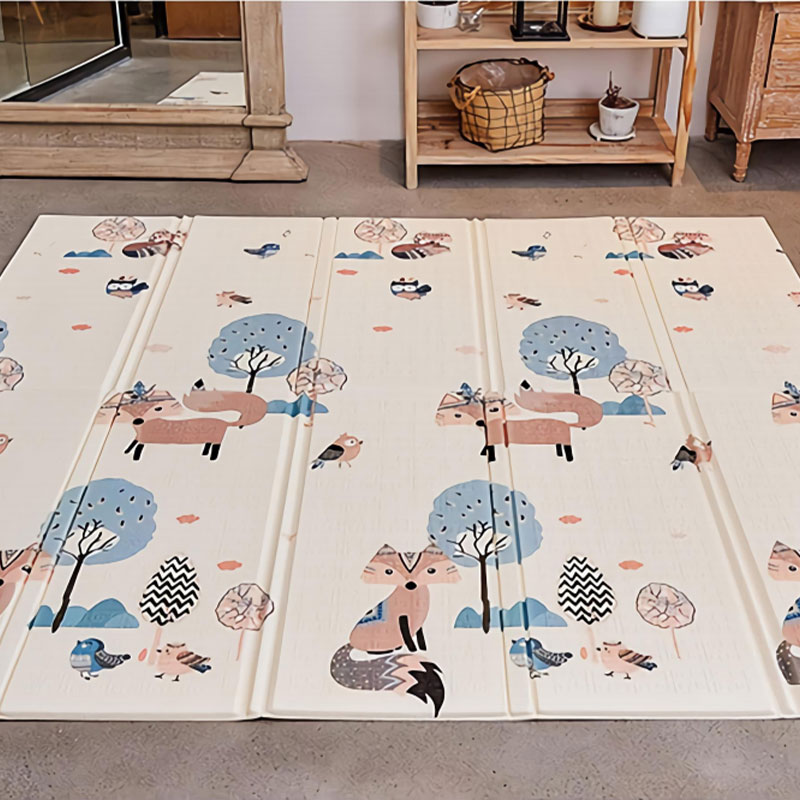
A foldable play mat is a padded floor surface designed specifically to fold into a compact form for easy storage and transport — as opposed to traditional foam puzzle tile mats, rolled gym mats, or fixed nursery rugs that either can't be compacted conveniently or lose their shape after repeated folding. The defining feature of a folding play mat is a series of built-in fold lines or a bi-fold/tri-fold construction that allows the mat to collapse down to a fraction of its open size while maintaining a flat, even surface when unfolded and in use.
This portability-without-compromise design makes foldable play mats one of the most practical baby and toddler floor products on the market. Unlike interlocking foam tiles that scatter and require reassembly, a foldable baby mat opens in seconds, lies flat on any floor surface, and folds back up just as quickly. For parents in apartments, small homes, or anyone who travels frequently, the ability to get a safe padded play surface up and put away without effort is a genuine daily convenience rather than a marketing talking point.
Beyond portability, folding foam play mats also serve as a year-round multipurpose floor surface — equally useful as a tummy time mat for newborns, a crawling surface for infants, an activity and play space for toddlers, and even a yoga or exercise mat for parents. The best foldable play mats are designed with this dual-use versatility in mind, with surfaces that work for both delicate baby skin and regular adult use without showing wear on one side disproportionately.
Materials Used in Foldable Play Mats: What's Safe and What to Avoid
Material safety is the single most important factor when choosing a foldable play mat for babies and young children. Infants spend significant time with their faces, hands, and bare skin in direct contact with the mat surface — and they mouth, chew, and lick anything within reach. The foam and surface materials in a folding play mat must be genuinely free of harmful chemicals, not just marketed as such.
XPE Foam (Cross-Linked Polyethylene)
XPE foam is currently the most widely recommended material for premium foldable baby play mats, and for good reason. It is a closed-cell foam, meaning its structure doesn't absorb liquids — spills stay on the surface and wipe clean rather than soaking into the mat. XPE foam is free from formamide, BPA, phthalates, and heavy metals, and it does not contain the chemical additives associated with traditional EVA foam health concerns. It is also more durable and resilient than standard EVA, holding its shape and cushioning properties well over extended use. Most high-end folding play mats from brands like Toki Mats, Lovevery, and Baby Care use XPE foam as their primary material.
EVA Foam (Ethylene Vinyl Acetate)
EVA foam is the most common material in budget to mid-range foldable floor mats for babies. It is lightweight, flexible, reasonably cushioning, and inexpensive to manufacture. The safety concern with EVA foam centers on formamide — a chemical used in the manufacturing process to create foam's cellular structure. Formamide can off-gas from EVA foam, particularly when new, and has been flagged by European health regulators as a potential concern for young children. High-quality EVA foam mats from reputable manufacturers are formamide-free and will state this explicitly. When shopping for EVA-based foldable play mats, always look for mats that specifically state "formamide-free" and carry relevant safety certifications rather than assuming all EVA products meet this standard.
PU Leather and Fabric Surface Covers
Many foldable play mats combine a foam core with a PU leather (polyurethane synthetic leather) or fabric surface covering. PU leather surfaces are easy to wipe clean, have a premium aesthetic, and are more resistant to surface abrasion than bare foam. The foam core beneath the surface layer is still the primary safety consideration, but the surface material matters too — low-quality PU leather can contain plasticizers or coatings that are not appropriate for direct skin contact with infants. Look for PU leather surfaces that are specifically certified as skin-safe and food-grade if the mat will be used with children under 18 months who are actively mouthing objects and surfaces.
Materials to Avoid
When evaluating a foldable baby mat, steer away from products that use PVC (polyvinyl chloride) foam as the base material. PVC often contains phthalate plasticizers that have been associated with endocrine disruption, and it can off-gas at room temperature. Similarly, avoid mats with strong chemical odors fresh out of the packaging — a pronounced "new plastic" smell is a reliable indicator of off-gassing chemicals that you don't want your baby's face pressed against during tummy time. Any mat that doesn't specify its foam material or provide third-party test results should be treated with caution regardless of price point.
Safety Certifications to Look for on a Foldable Play Mat
Safety certifications provide third-party verification that a foldable play mat has been tested against specific chemical and physical safety standards. They're one of the most reliable ways to distinguish genuinely safe products from those that simply use safety language in their marketing without substantiation.
- OEKO-TEX Standard 100: This is one of the most comprehensive and widely recognized textile and foam safety certifications globally. A product certified to OEKO-TEX Standard 100 has been tested for over 100 harmful substances including formaldehyde, heavy metals, pesticides, phthalates, and pH levels. For baby products, look specifically for OEKO-TEX certification at the "Product Class I" level, which applies to items intended for babies and young children under 3 years old and uses the strictest testing thresholds.
- ASTM F963 (US Toy Safety Standard): The American Society for Testing and Materials F963 standard covers toy safety requirements in the United States, including chemical content limits for materials that come into contact with children. Play mats certified to ASTM F963 have been tested against lead, phthalates, and other regulated substances relevant to child safety.
- EN 71 (European Toy Safety Standard): The EN 71 standard is the European Union equivalent of ASTM F963 and applies broadly to toys and children's products sold in EU member states. EN 71 Part 3 specifically addresses chemical migration limits from toy materials. Products certified to EN 71 have met stringent European chemical safety requirements.
- CPSC Compliance (US Consumer Product Safety Commission): Products sold in the US are legally required to comply with CPSC regulations covering phthalate limits, lead content, and other chemical restrictions for children's products. Look for a Children's Product Certificate (CPC) from the manufacturer, which documents compliance with applicable CPSC requirements based on third-party testing.
- GreenGuard Gold: GreenGuard Gold certification (from UL) verifies that a product meets strict chemical emission standards for indoor environments, with particular focus on schools and healthcare settings where children are present. It's a less common certification for play mats but represents a high standard when present.
Choosing the Right Size and Thickness for Your Foldable Play Mat
Size and thickness are the two most practically important specifications for a foldable crawling mat or baby play mat — and they involve genuine tradeoffs between cushioning, portability, and usable play space. Getting these right for your specific situation prevents the common frustration of buying a mat that's either too small, too thin, or too bulky to store conveniently.
Play Mat Size: How Large Do You Actually Need?
The most common sizes for foldable play mats fall into a few broad categories. Small mats (around 120 x 120 cm / 4 x 4 ft) are suitable for newborn tummy time and early infant use when the baby isn't yet mobile. Medium mats (around 140 x 200 cm / 4.5 x 6.5 ft) provide adequate space for a crawling infant with some surrounding buffer zone — typically the practical minimum for most families. Large mats (180 x 200 cm / 6 x 6.5 ft and above) accommodate active toddlers, multiple children playing simultaneously, and dual use as an adult exercise surface.
For most families, a medium-to-large foldable play mat in the 140–200 cm width range is the most practical choice. A mat that's just large enough for the baby now will feel cramped within a few months as the child becomes mobile. It's generally better to size up once rather than buy a small mat and replace it with a larger one later. Consider also where the mat will be used — a mat that fits well in a dedicated nursery may feel oversized in a small living room, while a mat sized for a living room may feel too small in an open-plan space.
Thickness: Balancing Cushioning and Practicality
Thickness in a folding foam play mat directly determines its cushioning and impact absorption. The most common thickness options are 1 cm (10mm), 1.5 cm (15mm), and 2 cm (20mm). A 1 cm mat provides minimal padding and is only appropriate over thick carpet — on hardwood or tile floors, it offers inadequate protection from falls for babies and toddlers learning to sit and pull to stand. A 1.5 cm mat is the practical minimum for hard floor surfaces and suitable for most everyday use. A 2 cm thick foldable play mat provides noticeably better cushioning for falls and is worth the slightly increased bulk for families with active toddlers on hard floors.
Keep in mind that thicker mats fold to a larger package when stored and are heavier to carry. If travel portability is a primary requirement, a 1.5 cm mat in a compact fold pattern will be meaningfully easier to transport than a 2 cm mat of the same dimensions. For home use where the mat stays in one room, thickness should take priority over folded size since storage is less of a constraint.
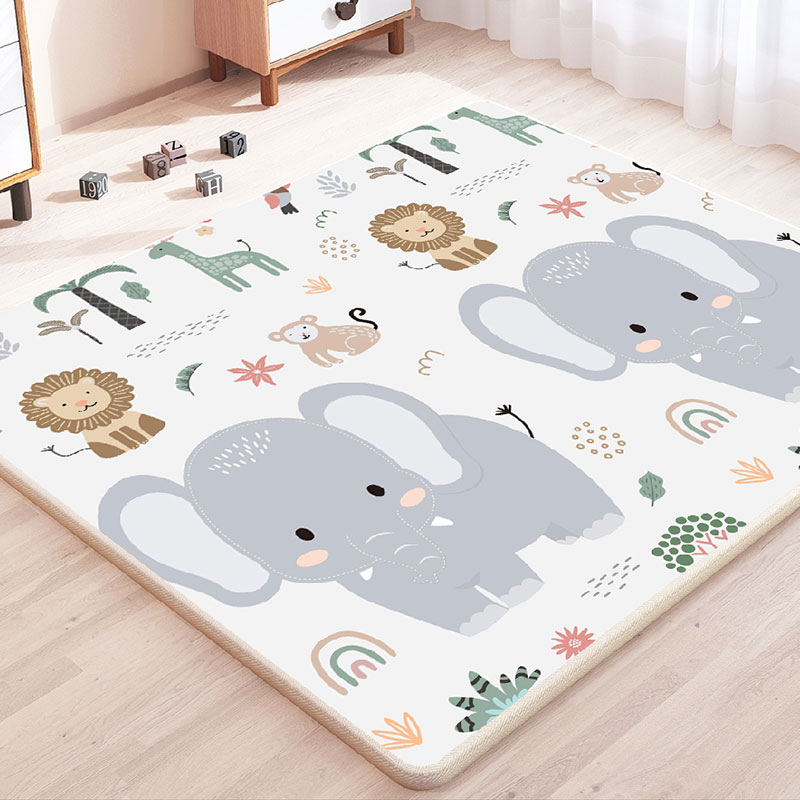
Foldable Play Mat Comparison: Popular Options Side by Side
To make the selection process easier, here's a comparison of key specifications across different foldable play mat categories to help you match options to your needs and budget.
| Category | Material | Typical Thickness | Size Range | Best For | Price Range |
| Budget Portable Mat | EVA Foam | 1 cm | 120×120 cm | Travel, carpeted floors | $30–$60 |
| Mid-Range Home Mat | EVA Foam + PU Surface | 1.5 cm | 140×200 cm | Everyday home use | $80–$150 |
| Premium XPE Mat | XPE Foam | 1.5–2 cm | 140×200 cm | Safety-conscious parents | $150–$300 |
| Large Family Mat | XPE or EVA Foam | 2 cm | 180×200 cm+ | Multiple kids, toddlers | $200–$400 |
| Travel Compact Mat | Thin XPE or EVA | 0.8–1 cm | 120×150 cm | Trips, grandparents' home | $50–$100 |
How to Use a Foldable Play Mat at Each Stage of Baby's Development
One of the most compelling reasons to invest in a quality foldable baby mat is its usefulness across multiple developmental stages — from the first weeks of life through toddlerhood and beyond. Getting the most out of your mat means understanding how to adapt its use as your child grows.
Newborn Stage (0–3 Months): Tummy Time Foundation
For newborns, a foldable play mat serves primarily as a dedicated tummy time surface. Supervised tummy time on a firm, padded surface is recommended by pediatricians to strengthen neck, shoulder, and core muscles that support later motor development milestones. A folding play mat provides the right surface firmness — supportive enough to allow muscle effort but cushioned enough to be comfortable for a baby with limited head control. Position the mat on a flat floor surface, place the baby face-down with arms forward, and remain actively engaged and supervising throughout every tummy time session.
Infant Stage (3–9 Months): Rolling, Sitting, and Reaching
As babies begin to roll, push up, and eventually sit independently, the play mat becomes a safe contained floor zone where falls are cushioned and surface hygiene is controlled. At this stage, the size of the mat starts to matter more — a baby who can roll end-to-end covers surprisingly more ground than a stationary newborn. Ensure the mat is large enough to allow rolling in both directions with a safety buffer at the edges, and consider placing soft bolsters or rolled blankets at the perimeter if the mat sits on a hard floor surface with no surrounding padding.
Crawling Stage (6–12 Months): The Most Active Mat Use Period
The crawling stage is when a foldable crawling mat gets its most intensive use. A baby covering the full mat surface repeatedly throughout the day needs a mat that grips the floor without sliding, has no trip-hazard edges that curl up, and can withstand significant abrasion from knees and palms without surface degradation. Anti-slip backing is an important feature to confirm during this stage — a mat that slides on hardwood floors as a baby pushes off from it is both frustrating and potentially unsafe. Wipe the mat surface and backing daily during this stage as babies transfer germs, food residue, and drool onto the surface continuously.
Toddler Stage (1–3 Years): Play, Falls, and Dual Use
For toddlers who are pulling to stand, cruising furniture, taking first steps, and experiencing frequent falls, the impact cushioning of a thick foldable play mat becomes its most critical property. At this age, falls from standing height onto a hard floor are genuinely jarring and potentially injurious — a 2 cm thick mat provides meaningful impact reduction compared to no mat. Toddlers also use the mat as a surface for messy play, art activities, snacks, and imaginative games, which means easy cleaning is just as important as cushioning. The dual-sided design common in many premium foldable play mats — with one illustrated or colorful side for the child and a solid neutral side — allows parents to orient the mat depending on the activity and room aesthetic.
Cleaning and Maintaining Your Foldable Play Mat
A foldable baby mat that is used daily will accumulate food residue, drool, diaper blowout remnants, paint, and general grime at a rate that requires a consistent and effective cleaning routine. The good news is that quality foldable play mats are designed for exactly this kind of frequent cleaning — the key is using the right method for the material to avoid damaging the surface or compromising the foam structure beneath.
For daily spot cleaning, a damp microfiber cloth with a small amount of baby-safe dish soap or a diluted white vinegar solution (1 part vinegar to 3 parts water) is sufficient for most surface spills and dirt. Wipe in circular motions and follow with a clean damp cloth to remove any soap residue, then allow the surface to air dry completely before folding and storing. Avoid soaking the mat with excessive liquid — while the closed-cell structure of XPE foam resists liquid absorption better than open-cell foams, prolonged moisture exposure at fold seams and edges can eventually compromise adhesion and surface integrity.
For deeper weekly cleaning, lay the mat flat in a bathtub or shower and wash the full surface with a soft-bristled brush and gentle soap, rinse thoroughly, and stand upright to air dry in a well-ventilated space before folding. Never put a foldable foam play mat in a washing machine or dryer — the agitation and heat will destroy the foam structure and potentially delaminate surface coatings. Avoid harsh chemical cleaners, bleach at full concentration, and solvent-based sprays, as these can degrade foam materials and surface finishes even on high-quality mats.
Common Mistakes to Avoid When Buying a Foldable Play Mat
The foldable play mat market includes a wide range of quality levels, and the difference between a well-made mat and a poor one isn't always obvious from product photos or basic descriptions. Being aware of the most common purchasing mistakes helps parents avoid buying something that ends up being replaced within a few months.
- Prioritizing aesthetics over safety certifications: Many beautifully designed foldable play mats with appealing prints and colors lack any meaningful third-party safety certification. A mat that looks great in nursery photos but has no OEKO-TEX, EN 71, or ASTM certification should raise questions about its chemical safety. Always check certifications before committing, regardless of how appealing the design is.
- Buying too small for future needs: A mat that fits a newborn perfectly will feel cramped for a crawling six-month-old. Size up when in doubt — a mat that feels slightly generous when the baby is small will feel exactly right within a few months. The cost difference between a medium and large mat is usually modest compared to the cost of replacing a mat that's outgrown too quickly.
- Ignoring the fold pattern and stored size: Some mats fold more compactly than others depending on the number of fold panels and fold direction. Before purchasing, check the folded dimensions against your available storage space — a mat that folds to 60 x 60 cm stores in almost any cupboard, while one that folds to 60 x 140 cm needs a dedicated space. Also check whether the mat's carrying handle or strap (if included) is comfortable for the weight of the mat when carried.
- Not checking anti-slip backing: A foldable play mat without effective non-slip backing on hard floors is a genuine safety hazard — a baby pushing up to crawl or a toddler running and stopping will displace a mat that slides easily. Check that the mat has a textured or rubberized anti-slip backing, and verify in reviews that it actually holds position on the floor type you have at home.
- Trusting "non-toxic" claims without certification evidence: The phrase "non-toxic" is unregulated and can be applied to any product without substantiation. It is marketing language, not a safety certification. Always look for the specific certification names (OEKO-TEX, EN 71, ASTM F963) and verify that they apply to the specific product rather than just the brand's general manufacturing claims.
- Overlooking edge and seam quality: The fold seams and edges of a foldable play mat are its most structurally stressed points. Low-quality mats develop cracking, peeling, or separation at these points within months of regular use. Look for mats with reinforced stitching at fold seams, rounded rather than sharp edges, and surface coverings that extend around the mat's perimeter rather than leaving exposed foam at the edges.
Foldable Play Mat for Travel: What to Look for in a Portable Option
For families who travel frequently — whether for holidays, visits to relatives, or regular commuting between two homes — a travel-specific foldable play mat is a genuinely useful investment. The priorities shift somewhat compared to a primary home mat: folded size and weight take precedence, while maximum thickness and largest possible surface area become secondary considerations.
The best travel-oriented folding play mats fold down to a size that fits inside a standard overnight bag or attaches to a stroller frame, typically around 40 x 50 x 8 cm folded. They're usually 0.8–1.2 cm thick — thin enough to fold to a compact package without being uncomfortably firm on carpeted surfaces. Many travel play mats come with a dedicated carry bag or integrated carry strap, which makes transporting them through airports or packing them into a car boot straightforward.
One practical tip for travel mat use: wipe the mat with antibacterial baby-safe wipes before each use when away from home, since you can't always control or predict the cleanliness of floor surfaces in hotels, relatives' homes, or short-term rentals. Bringing your own familiar play surface also helps with baby's comfort and sense of security in unfamiliar environments — an underrated benefit that many parents only discover after their first trip with a portable mat.