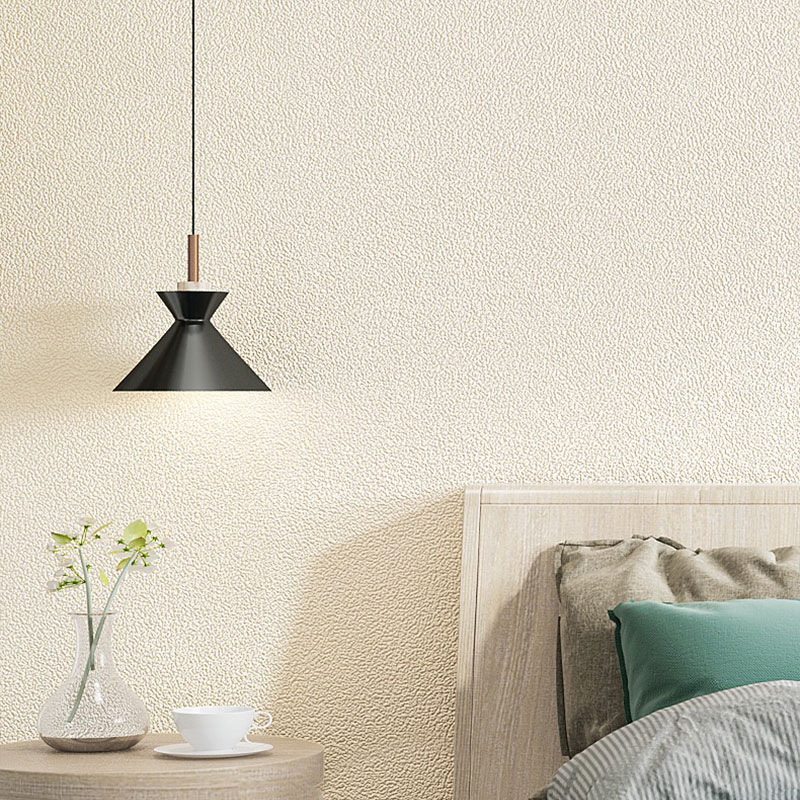
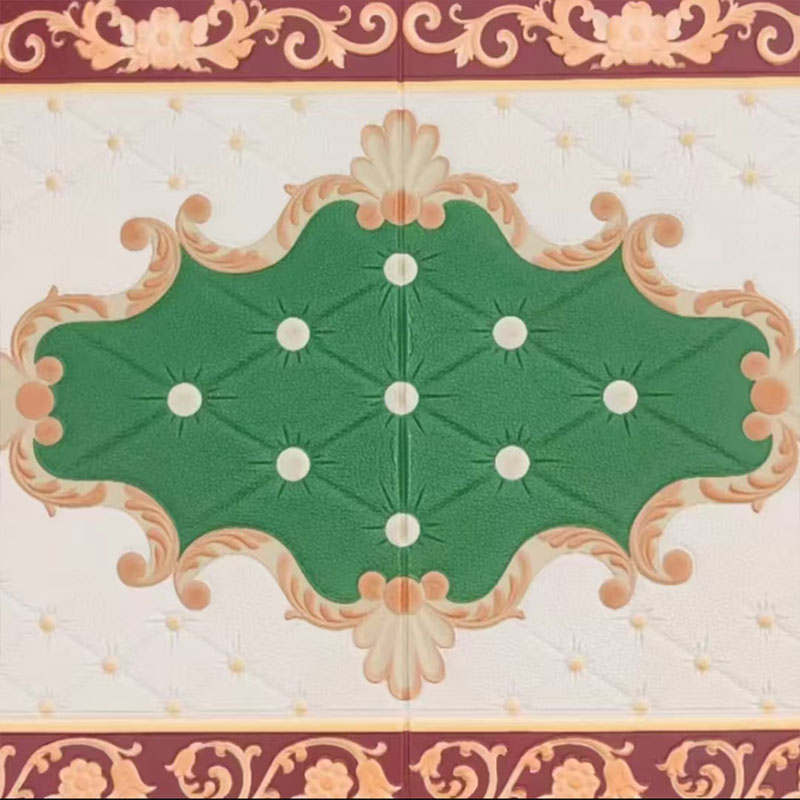
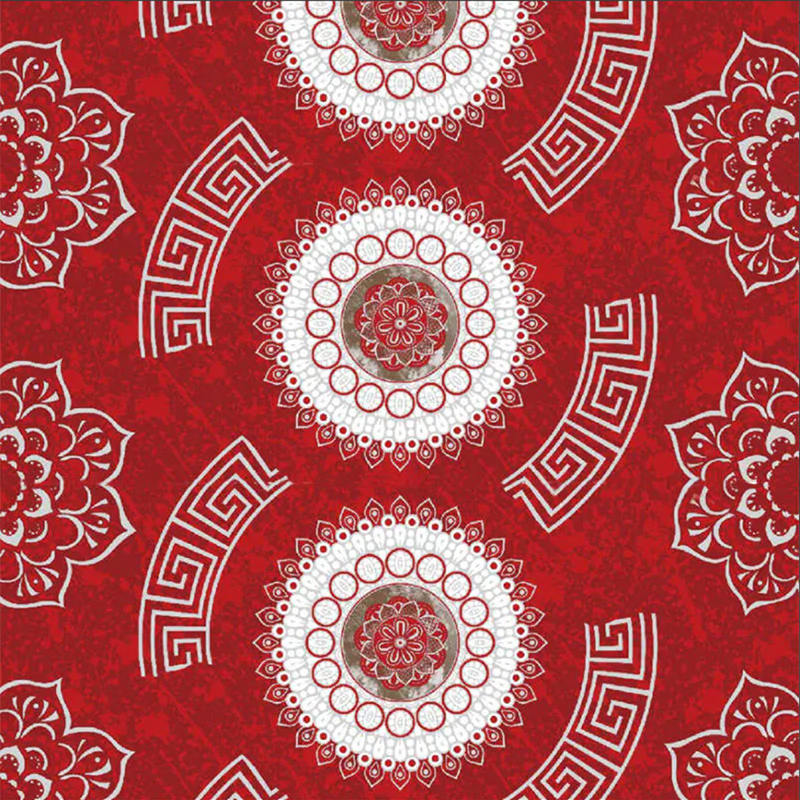
Floral wall stickers include linen wall stickers and kang wall stickers. Linen pattern wall paste is a decorative material with linen texture, often used in wall decoration, can simulate the texture and visual effect of linen.
Product features:
1. Realistic texture: The texture design of the linen wall sticker is very close to the real linen, which can add a natural and rustic feeling to the wall.
2. Easy to clean: Unlike real linen, the surface of the linen wall is usually specially treated and easy to clean and maintain.
3. Waterproof and moisture-proof: linen wall stickers usually have waterproof and moisture-proof characteristics, suitable for kitchen, bathroom and other humid environment.
4. Environmental protection and safety: high-quality linen wall stickers are usually made of environmentally friendly materials, non-toxic and harmless, suitable for family use.
5. Easy installation: wall stickers usually come with back glue, simple installation, just stick the wall sticker on the clean wall.

A foldable crawling mat rarely gets the attention it deserves. It arrives folded in a box, unfolds ...
Exterior wall decorative film is a printed, flexible film that is bonded to the outside face of a w...
Some materials announce themselves; decorative material film rarely does. It is the printed layer t...
A crawling mat looks almost too simple to think about: a soft, colorful surface rolled out on the f...
Composite packaging decorative material film is one of those quietly powerful materials that sits b...
The realism of a burlap texture wall sticker depends less on the printed color layer than on the depth of the embossing roller used to press the surface. Shallow embossing, typically in the 0.1mm to 0.2mm range, produces a subtle grain that photographs well but tends to flatten out visually under diffuse daylight or ceiling-mounted panel lighting, since there isn't enough physical relief to cast shadow lines between the simulated warp and weft threads. Deeper embossing, closer to 0.3mm to 0.5mm, holds its shadow definition much better under angled or raking light, such as wall-washer fixtures or low-angle window light, because the peaks and valleys of the pattern actually block and scatter light the way a woven fiber would.
A hallway lit mostly by overhead fixtures benefits from deeper embossing so the surface doesn't look printed rather than woven, while a softly lit reading nook can use shallower embossing without losing believability. Specifying lighting conditions before choosing a roller pattern is one of the simplest ways to avoid a mismatch between the sample swatch and the finished wall.
The base film carrying the printed and embossed burlap pattern determines how a burlap texture decorative film behaves once it's on the wall far more than the surface design itself. Each substrate option trades off flexibility, moisture tolerance, and dimensional stability differently.
| Substrate | Typical Thickness | Flexibility | Best Suited For |
| PET film | 0.05mm–0.1mm | Low | Flat panels, furniture facing |
| BOPP film | 0.02mm–0.04mm | Medium | Lightweight roll goods, laminated tops |
| XPE foam | 1mm–3mm | High | Uneven walls, cushioned wall panels |
On our own production lines we run six-color presses up to 2400mm in working width, which lets us hold consistent grain color across a full roll of burlap texture decorative film so large walls don't show a visible seam where two rolls meet.
Burlap patterns are built from multiple overlapping color passes that simulate individual thread crossings, so even a small registration shift between print stations becomes far more noticeable than it would be on a solid color film. A shift of just 0.1mm to 0.2mm can cause the shadow lines meant to represent thread intersections to double up or separate, producing a faint moiré effect that reads as a printing defect rather than a fabric texture, especially under close inspection or macro photography used in online listings. Tighter registration control during multi-pass printing is therefore one of the more technically demanding parts of producing a convincing burlap texture wall sticker, and it's part of why print speed is often reduced slightly on woven-texture runs compared to simpler patterns.
The adhesive layer, not the decorative surface, usually determines whether a burlap texture wall sticker succeeds or fails on a given wall.
XPE and EPE foam-backed versions of burlap texture decorative film expand and contract slightly with changes in humidity and temperature, which over repeated cycles can cause edge lifting at seams if the lamination bond isn't strong enough to hold against that movement. This is more pronounced in kitchens, where temperature swings near cooking areas are frequent, and in bathrooms, where humidity spikes during showers. Using a solvent-free compounding process for the adhesive-to-foam bond, rather than a lower-cost dry lamination, generally holds up better against this kind of repeated stress because the bond line has fewer microscopic voids where moisture can collect and weaken adhesion over time.
Because the burlap effect depends on a regular, repeating thread pattern, small installation mistakes are far more visible on a burlap texture wall sticker than they would be on a plain-colored film.
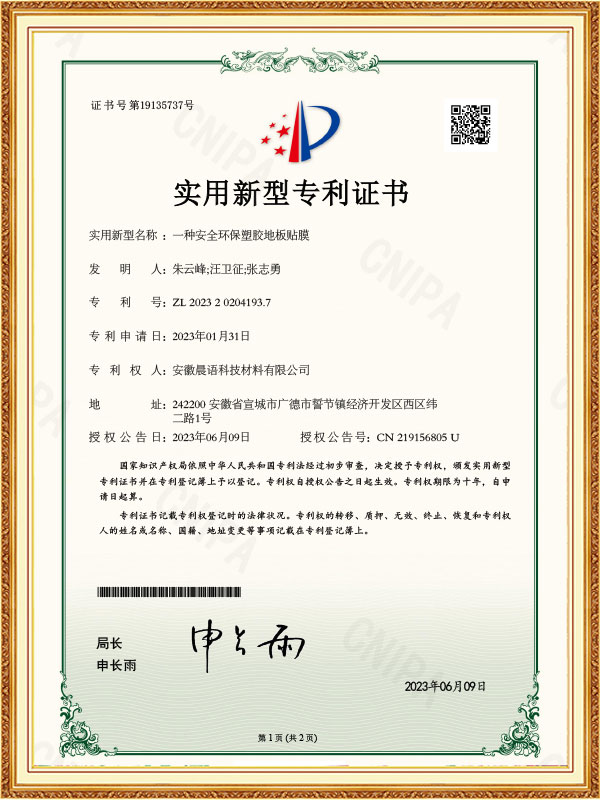
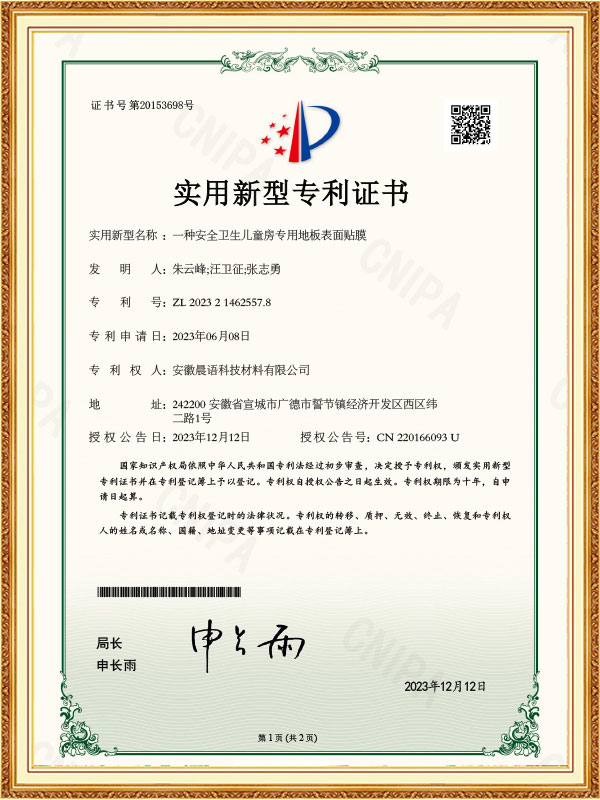
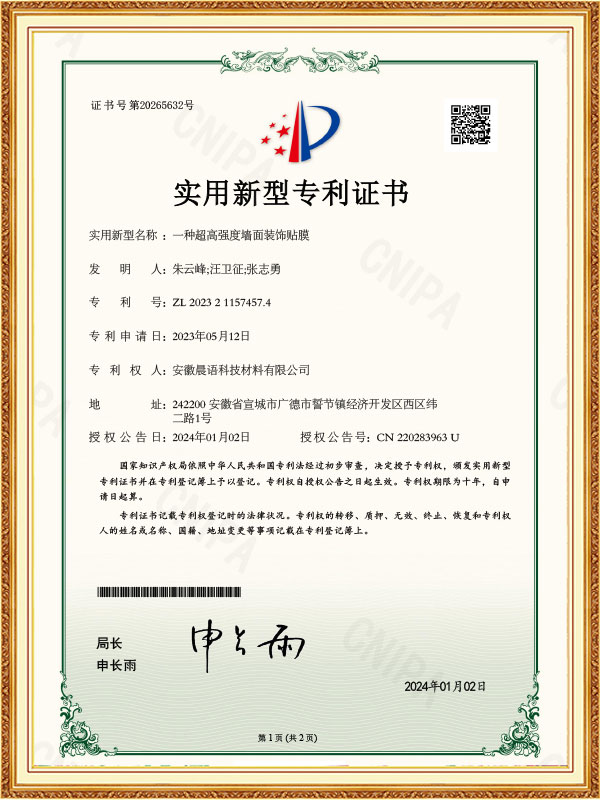
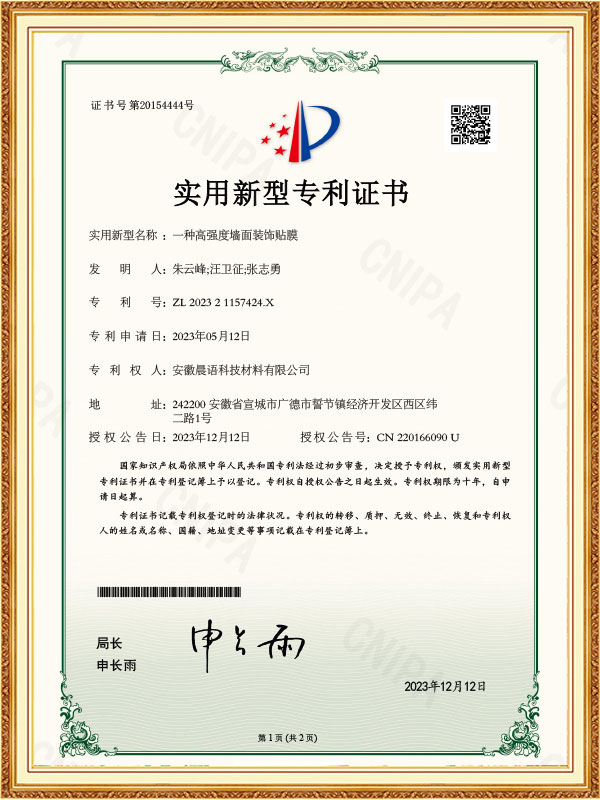
Having worked through these failure points repeatedly in our own product testing, including the utility model patents we've obtained around children's room floor and wall films, we build tolerance for handling stress directly into every burlap texture decorative film we produce rather than leaving it purely to installation technique.
Copyright © Anhui Morning Language Science and Technology Materials Co., Ltd. All Rights Reserved.
 Burlap Texture Wall Sticker Factory



 English
 Français
 русский
 عربى
عربى Español