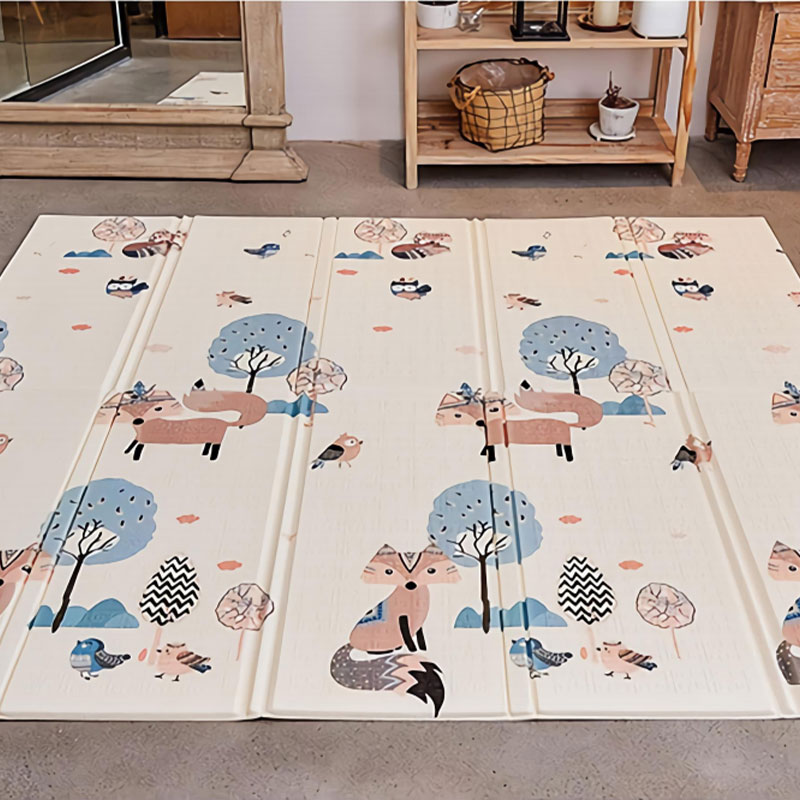
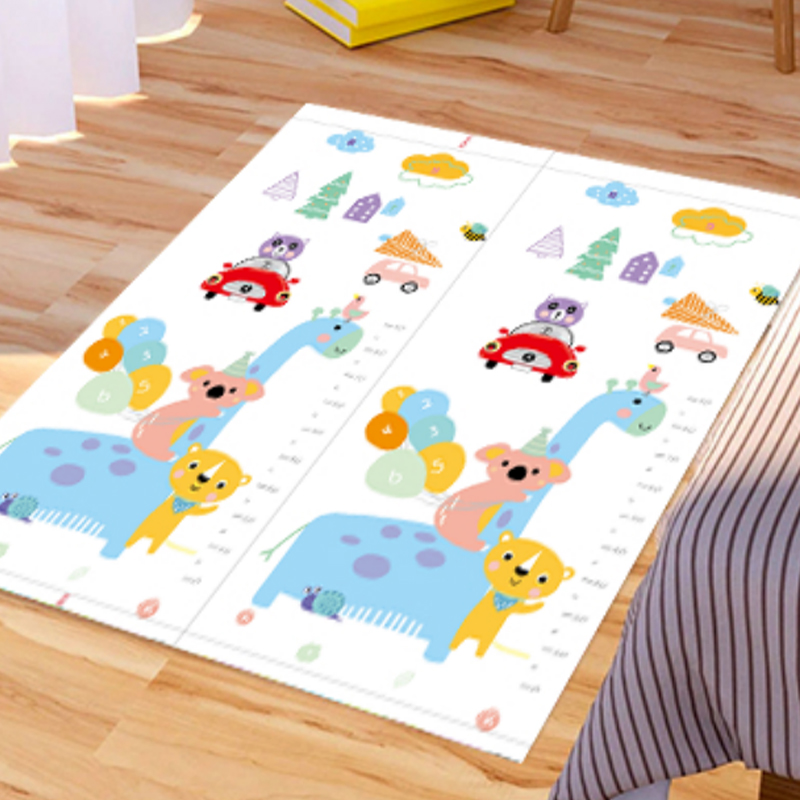
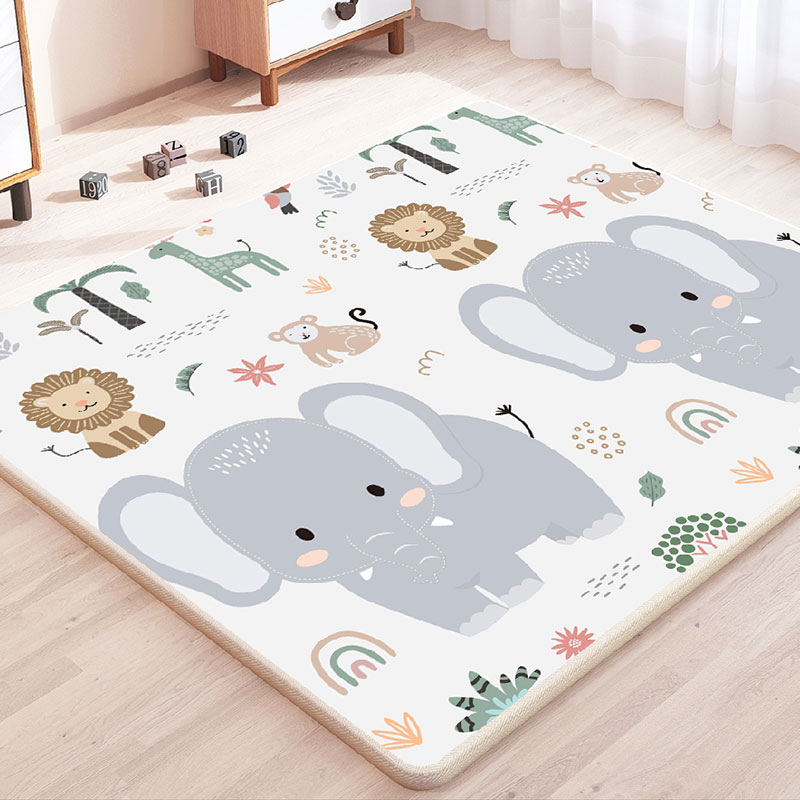
A climbing mat is a soft cushion designed for infants and young children and is usually used to provide a safe and comfortable space to crawl and move around. The thickness is generally between 0.5cm and 2cm, and the thicker cushion can provide a better cushioning effect and protect the baby from hard surface damage. Material selection XPE, EPE, PVC and other non-toxic, tasteless, safe and environmental protection materials.

A foldable crawling mat rarely gets the attention it deserves. It arrives folded in a box, unfolds ...
Exterior wall decorative film is a printed, flexible film that is bonded to the outside face of a w...
Some materials announce themselves; decorative material film rarely does. It is the printed layer t...
A crawling mat looks almost too simple to think about: a soft, colorful surface rolled out on the f...
Composite packaging decorative material film is one of those quietly powerful materials that sits b...
Most parents judge a crawling mat by thickness alone, but density is actually the property that determines how well it absorbs impact. A low-density XPE core feels soft when pressed by hand, yet it compresses quickly under a crawling baby's knees and loses its cushioning within months. A higher-density closed-cell XPE foam, by contrast, resists permanent compression and keeps its rebound even after thousands of crawling cycles. When we run compression-recovery tests on our own XPE cores, we specifically look at how quickly the foam returns to its original height after sustained pressure, because that recovery rate is a much better predictor of long-term comfort than the initial thickness measurement printed on the packaging.
Density is usually listed in kg/m³. A mat below 25kg/m³ tends to be economy-grade and better suited for occasional use, while 30-45kg/m³ is generally the sweet spot for daily crawling and tummy-time use. Anything above 45kg/m³ starts trading comfort for rigidity, which suits play mats used more like exercise flooring than infant crawling surfaces.
The crease pattern of a foldable crawling mat is not just a convenience feature — it is a structural design decision. Folding always concentrates stress along a narrow line, and if that line is not engineered correctly, the coating film can crack, whiten, or delaminate from the foam core long before the rest of the mat shows wear. Manufacturers reduce this risk by scoring the foam slightly along the fold before laminating the printed film, which redistributes bending stress away from the surface layer. This is one of the details our production line pays close attention to, since a fold line that whitens after a few dozen folds is one of the most common complaints buyers raise about lower-grade foldable mats.
| Fold Type | Typical Panel Count | Best Use Case |
| Bi-fold | 2 panels | Small rooms, quick storage |
| Tri-fold | 3 panels | Balanced portability and coverage |
| Accordion | 4+ panels | Large play areas, travel bags |
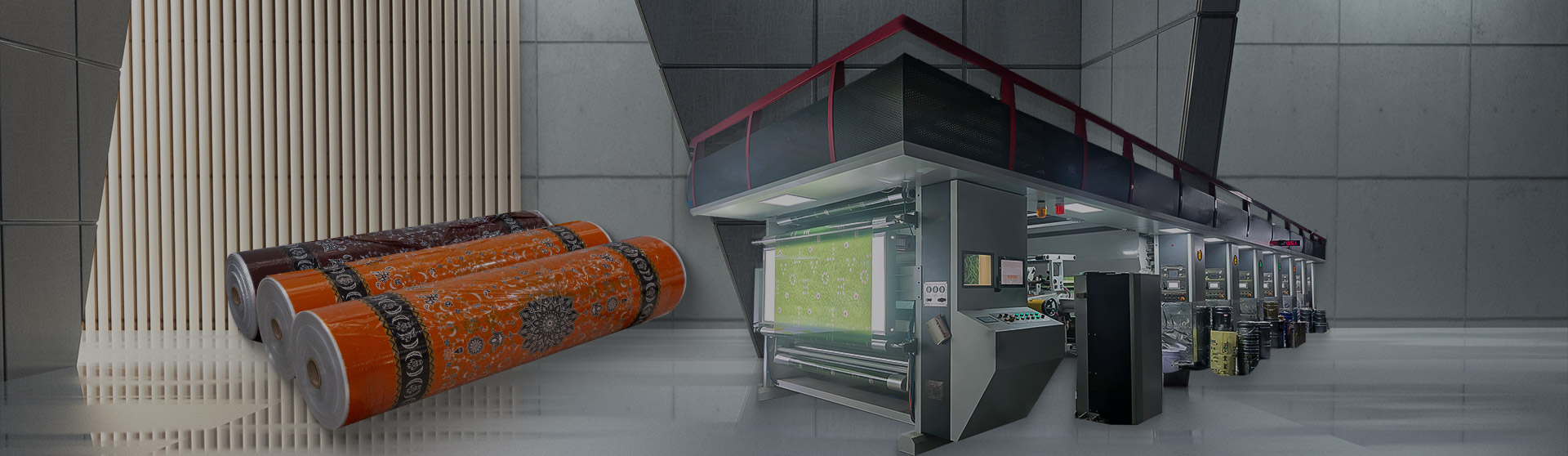
The colorful pattern on a foldable play mat is not purely decorative. The printed film laminated onto the foam acts as the first line of defense against moisture, food stains, and abrasion from knees and toys. Cheaper mats sometimes skip this lamination step and print directly onto raw foam, which allows spills to seep into the cell structure and become impossible to fully clean. A properly laminated surface, whether it's a color-printed EPE film or a coated XPE film, creates a continuous barrier that keeps liquids on top of the mat rather than inside it. We produce this printed film ourselves using five- and six-color presses, which lets us keep ink adhesion and color consistency tight across every batch rather than relying on a separate supplier whose quality may vary.
Thickness selection should depend on what's beneath the mat, not just on how soft the surface feels in the store. On carpeted floors, a thinner mat of around 1-1.5cm is often enough, since the carpet itself already provides underlying cushioning. On hardwood, tile, or concrete, a thickness of 2cm or more is worth considering, because the hard subfloor transmits impact directly through a thin mat. Choosing a mat that's too thick for a carpeted room can actually create instability, making the surface feel spongy and uneven for a baby learning to crawl or stand.
One of the most overlooked failure points on a foldable crawling mat is the edge seam where panels connect. If the connecting strip is too rigid relative to the foam panels, repeated folding creates a stress point that eventually causes the edge to curl upward, creating a tripping hazard rather than a flat play surface. Better designs use a connecting material with flexibility closer to that of the foam itself, so the whole mat folds and unfolds as one continuous surface instead of hinging awkwardly at the seam. When customers ask us about durability, this seam behavior is usually the first thing we check, since it tends to reveal design shortcuts faster than almost any other part of the mat.
A crawling mat sold only in one domestic market rarely needs to withstand more than a narrow humidity and temperature range. Export-grade production is different: a mat shipped to humid Southeast Asian climates has to resist mold growth in the foam core, while one shipped to colder regions needs to stay flexible rather than stiffening and cracking at low temperatures. Because our products are exported to Europe, the Americas, Africa, Indonesia, Thailand, and Myanmar, we test our composite films and foam cores across this wider range of humidity and temperature conditions rather than designing solely around one regional climate, which is part of why the finished mats hold up consistently across such different environments.
Copyright © Anhui Morning Language Science and Technology Materials Co., Ltd. All Rights Reserved.
 Crawling Mat Factory



 English
 Français
 русский
 عربى
عربى Español