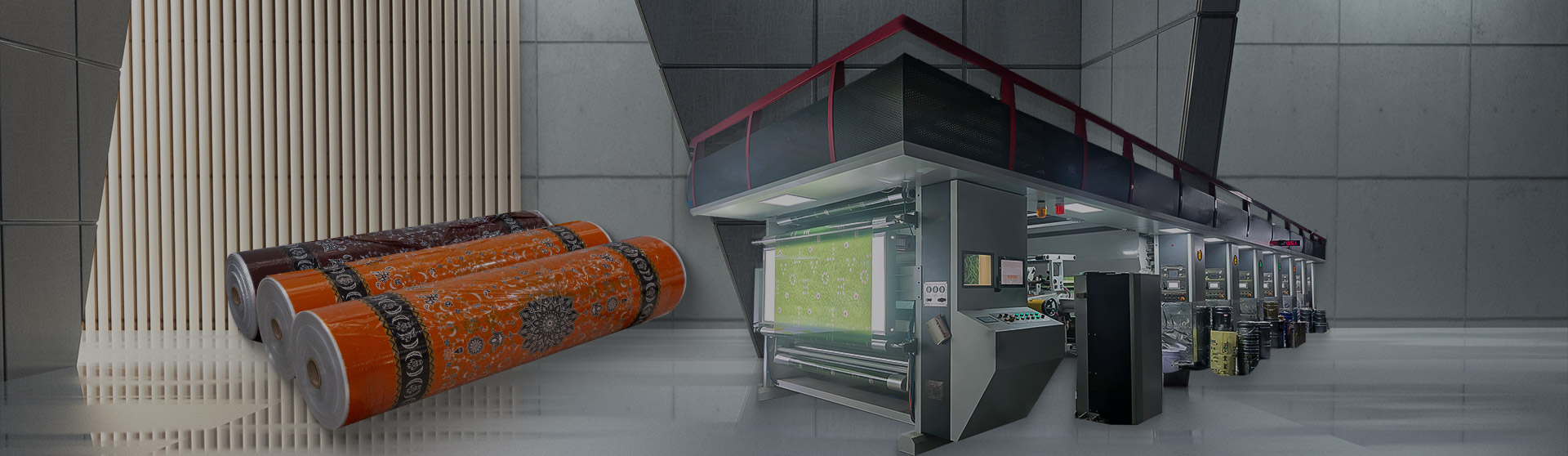
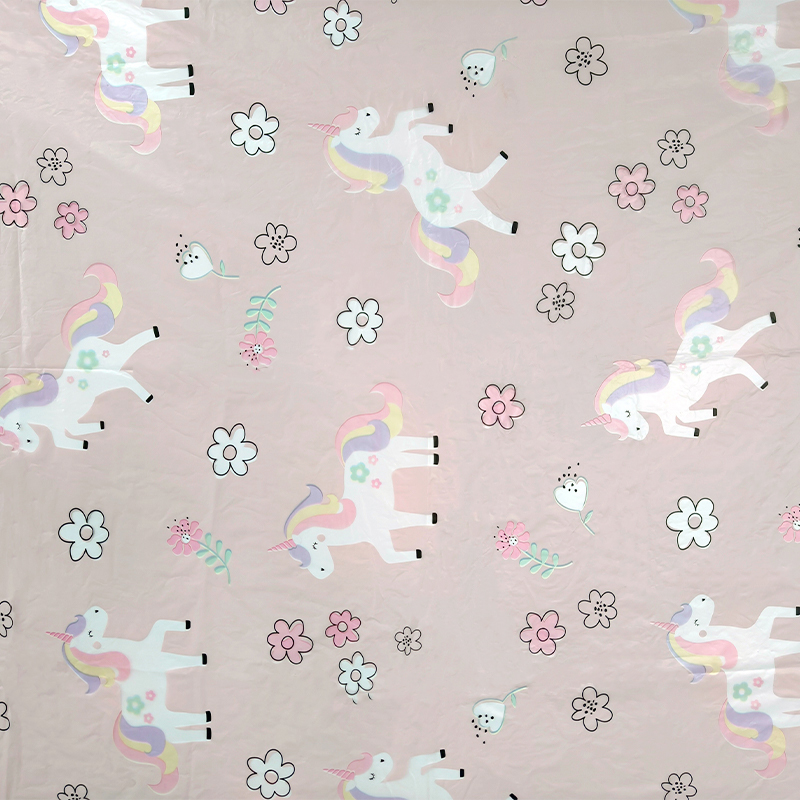
Printed composite film is a multi-layer material widely used in the packaging industry, usually composed of a variety of plastic films, aluminum foil or paper through an adhesive compound. It has excellent barrier property, mechanical strength and printability, and is often used in industrial packaging film and decorative film.
Main features:
1. Multi-layer structure: Usually composed of 2-5 layers of different materials, each layer has a specific function (such as barrier, strength, printing, etc.).
2. High barrier property: can effectively block oxygen, water vapor, light, etc., extend product shelf life.
3. Good printing performance: The surface is suitable for high-quality printing and improves the visual effect of the packaging.
4. High mechanical strength: good tensile and tear resistance, suitable for industrial packaging and decorative film.

A foldable crawling mat rarely gets the attention it deserves. It arrives folded in a box, unfolds ...
Exterior wall decorative film is a printed, flexible film that is bonded to the outside face of a w...
Some materials announce themselves; decorative material film rarely does. It is the printed layer t...
A crawling mat looks almost too simple to think about: a soft, colorful surface rolled out on the f...
Composite packaging decorative material film is one of those quietly powerful materials that sits b...
The lamination method used to bond a printed composite film to its backing layer directly affects odor level, bonding strength, and production speed. Solvent-free compounding uses a reactive polyurethane adhesive that cures without releasing solvent vapor, which shortens curing time and reduces the risk of residual odor — an important factor for wall-covering and children's room products where indoor air quality is a concern. Dry lamination, by contrast, uses a solvent-based adhesive that is dried before bonding; it generally produces slightly higher initial tack and is often preferred for films requiring extra rigidity or for smaller, more customized production runs. We run both a 2100mm solvent-free compounding line and a 1350mm dry compounding line, which lets us match the bonding process to the end-use requirement rather than forcing every order through a single method.
| Process | Odor Level | Curing Time | Typical Use |
| Solvent-Free | Very Low | Short | Wall film, children's room floor film |
| Dry Lamination | Moderate | Longer | Rigid decorative panels, small-batch orders |
Buyers often focus on how many colors a printing press can lay down, but registration accuracy — how precisely each color layer aligns with the ones printed before it — has a much bigger impact on the finished look of a wood-grain, marble, or cartoon pattern. Even a 0.1mm misalignment across a six-color run can produce visible ghosting or blurred outlines, which becomes especially obvious on fine line art used in children's room floor mats. Wider presses also introduce more tension variation across the web, so mechanical stability at full width becomes as important as the number of print stations.
PET, VMPET, and BOPP each bring a different balance of strength, barrier performance, and printability, and choosing the wrong one for a given surface can shorten the service life of a finished panel. PET offers high tensile strength and dimensional stability, making it a common carrier layer for prints that need to resist stretching during installation. VMPET adds a vacuum-metalized layer that improves moisture and light barrier properties, which helps prevent the discoloration that can occur when decorative film is exposed to humidity or sunlight over time. BOPP is valued for its clarity and gloss, so it is frequently chosen when a bright, reflective finish is the priority rather than maximum barrier performance. In our own production, we keep all three substrate types on hand so a pattern designed for a humid bathroom wall isn't accidentally run on a substrate better suited to a dry indoor floor mat.
Peel strength testing measures how much force is needed to separate the printed layer from its backing, and it is one of the most reliable indicators of whether a composite film will hold up under daily foot traffic or repeated cleaning. A result is typically reported in N/15mm, and a healthy bond for floor mat applications generally stays well above the point where the layers separate cleanly rather than tearing the film itself. If a sample fails by delaminating along a clean, smooth line rather than tearing the base material, that is usually a sign of insufficient adhesive coverage or an incompatible adhesive-substrate pairing rather than a problem with the print itself.
Printed composite film is sensitive to temperature swings, humidity, and prolonged pressure, all of which can cause blocking (layers sticking together), curling, or uneven adhesive cure after the roll leaves the factory. Rolls should be stored upright on their cores rather than stacked flat, since stacking concentrates pressure unevenly across the roll and can leave permanent indentations. A stable storage environment, ideally between 15-30°C with moderate humidity, also helps keep the adhesive layer curing at a predictable rate, which matters most in the days immediately after lamination.
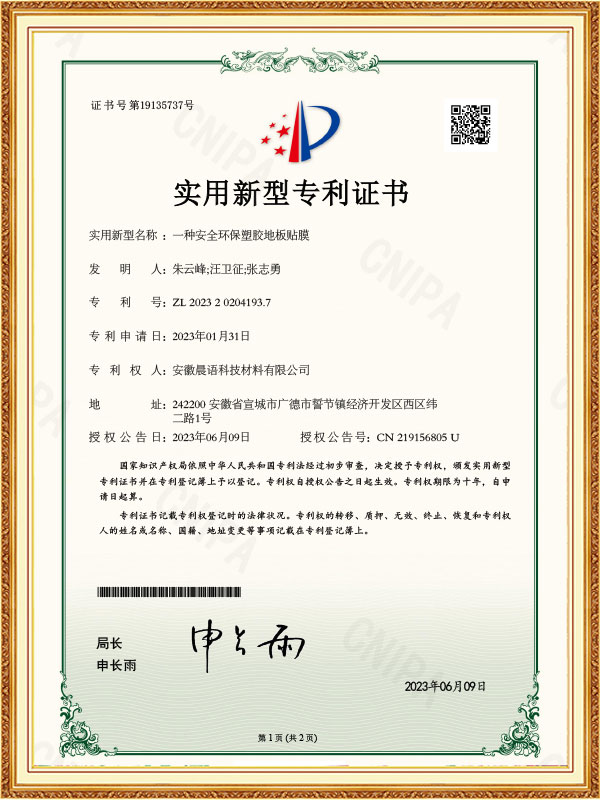
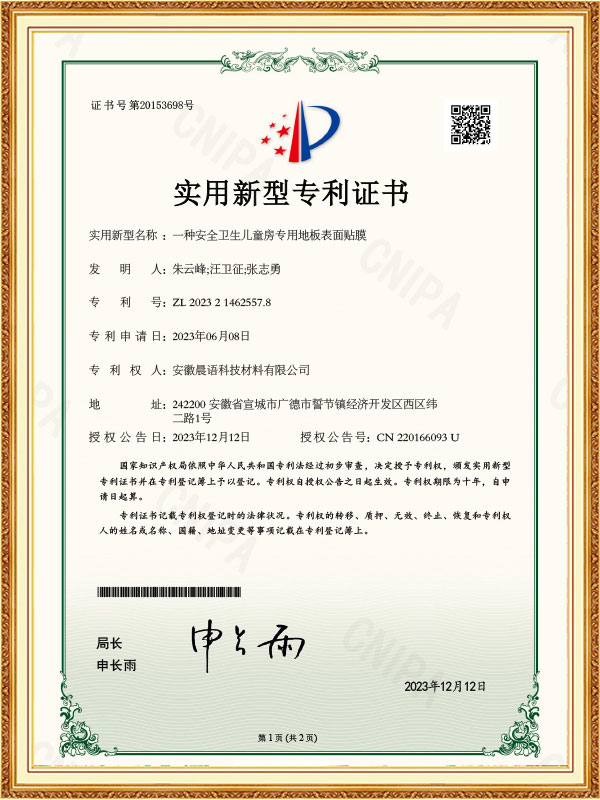
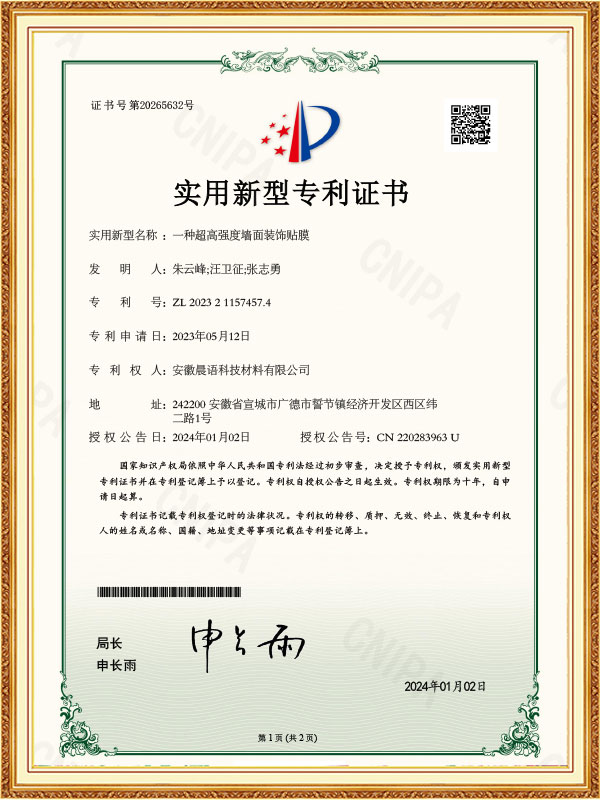
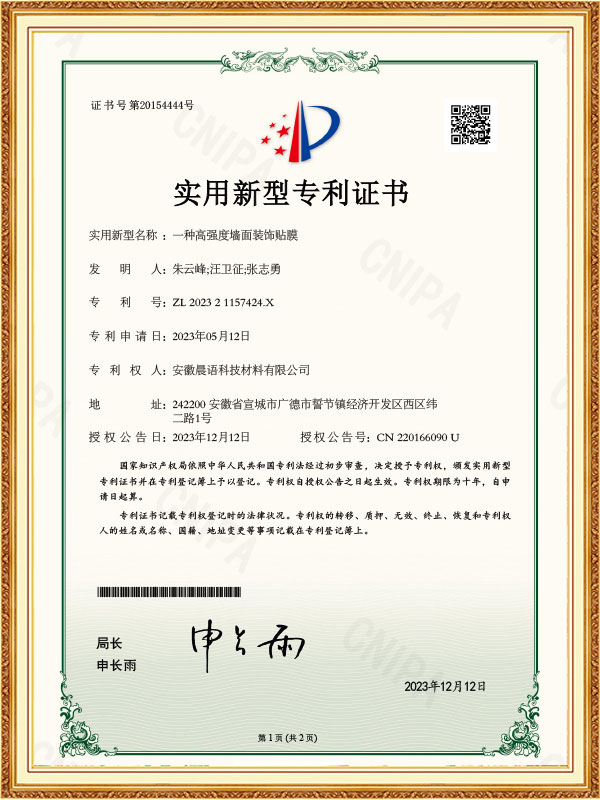
Floor and wall film intended for children's rooms carries different practical demands than general decorative film: it needs a slip-resistant surface texture, rounded pattern edges that hide seams well, and a print that stays vivid under repeated scrubbing. We've pursued several utility model patents specifically around children's room floor and wall film construction, focused on improving surface durability without sacrificing the softness and print clarity that make a room feel welcoming. When evaluating a supplier for this category, it's worth asking not just about pattern variety but about how the surface layer performs after repeated cleaning cycles, since that is where lower-grade composite film tends to show wear first.
Copyright © Anhui Morning Language Science and Technology Materials Co., Ltd. All Rights Reserved.
 Printed composite film Factory



 English
 Français
 русский
 عربى
عربى Español