

 English
 Français
 русский
 عربى
عربى Español
A foldable crawling mat rarely gets the attention it deserves. It arrives folded in a box, unfolds in seconds, and then quietly becomes the place where a baby first rolls over, sits up, and finally pushes off across the floor. Parents tell us the same thing again and again: it is the one purchase that stays in daily use long after the bouncer and the play gym have been packed away.
We manufacture these mats, so we look at them a little differently from most shoppers. What follows is what we have learned on the factory floor, and from customers around the world, about thickness, foam cores, printed surfaces, and the small details that decide whether a mat lasts two years or ten.
Content
Why Foldable Mats Quietly Won the Floor
A decade ago, most play mats were rolls. They were comfortable enough, but awkward to store and almost impossible to carry up a flight of stairs with a baby on one hip. Folding solved a very ordinary problem: where does the mat live when nobody is using it? Folded into a rectangle roughly the size of a weekend bag, it slides behind a door, under a sofa, or into the boot of a car.
The seams do more than make storage easy. They create natural panels, so an adult can flip one section back while the rest of the mat stays flat, or fold a soiled corner out of the way without moving the whole surface. For families in smaller flats, that flexibility matters far more than any pattern printed on the film.
What Really Decides Comfort and Longevity
Three things decide how a mat feels on the first day and how it feels two years later: the thickness of the panel, the foam core inside it, and the printed film bonded to the top.
Thickness and Cushioning
On a carpeted floor, one centimetre is often enough for tummy time. On tile or hardwood, 1.5 cm to 2 cm gives noticeably better protection when a toddler sits down harder than expected. Thicker is not automatically better, though: a very thick mat is heavier to drag across a room and bulkier on the shelf. We usually suggest choosing the thinnest panel that still feels comfortable under your own knees, since that is roughly the pressure a crawling baby applies. If you would like to go deeper into the numbers, our note on how panel thickness affects comfort and safety walks through it step by step.
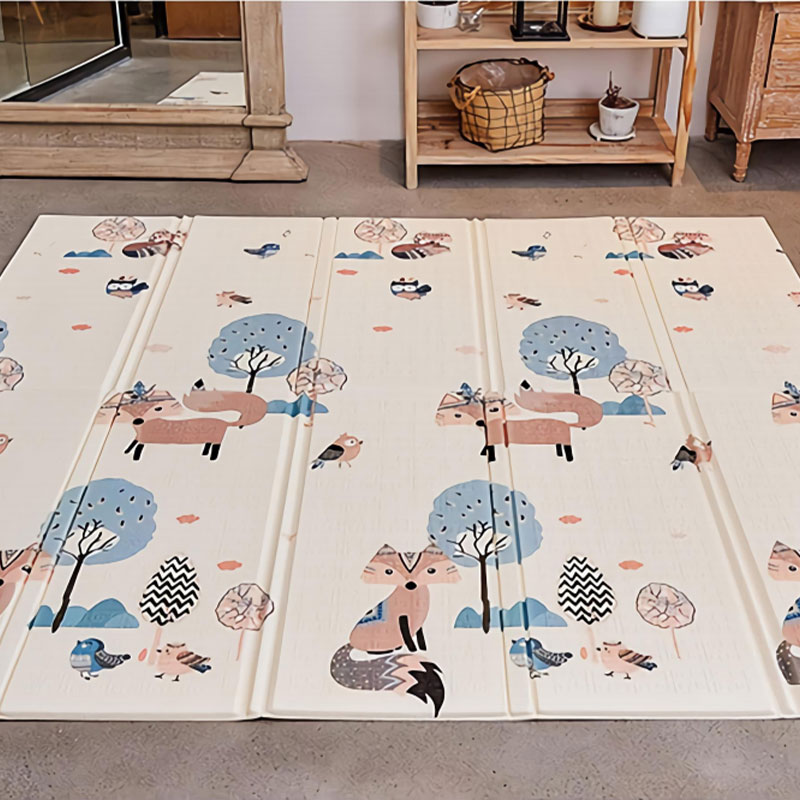 Foldable Baby Crawling Mat with EPE or XPE FoamFoldable baby crawling mat with 0.5–2 cm thickness, printed film, non-slip surface, and easy-clean design; useful for choosing thickness across floor types.View Product →
The Foam Core Inside
Almost every foldable mat on the market is built on EPE or XPE foam. They look similar in a photograph and behave quite differently underfoot.
| Feature | EPE foam core | XPE foam core |
|---|---|---|
| Cell structure | Independent, bead-like cells | Fine, cross-linked closed cells |
| Feel underfoot | Soft and springy | Firm, dense and quiet |
| Folding behaviour | Bends easily, holds a crease | Recovers shape with fewer marks |
| Printed surface | Suits simple, bold patterns | Holds finer detail and colour |
| Typical setting | Travel and occasional use | Daily use and permanent play corners |
Neither core is the wrong choice. The real question is how often the mat will be unfolded, and how much a crisp, detailed print matters to you.
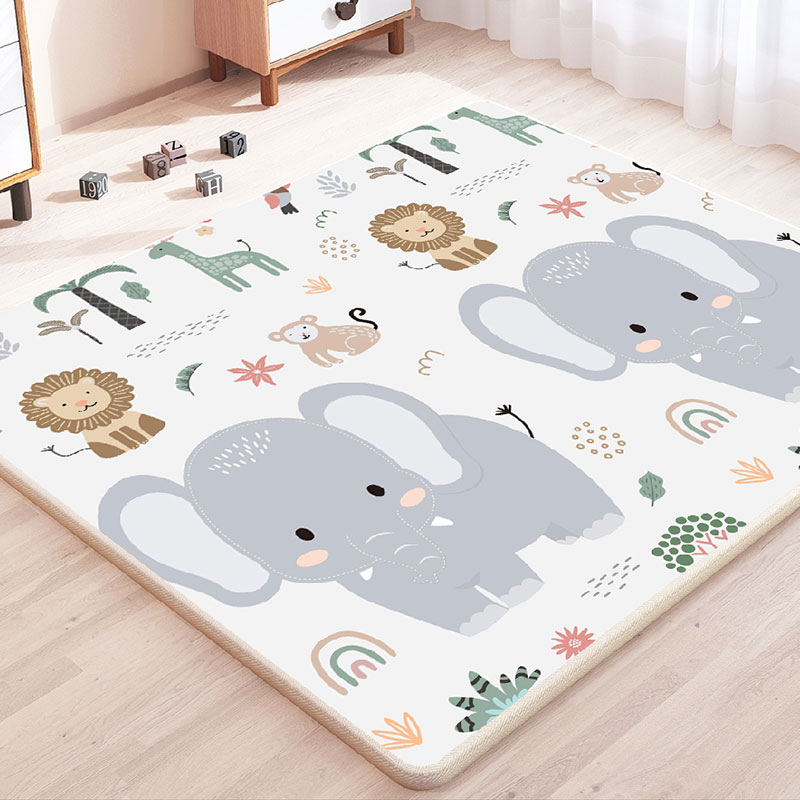 XPE Folding Mat for Home Use with Matte PE FilmFoldable XPE mat with matte PE film printing, designed to reduce glare and fold quickly for compact storage in home or play settings.View Product →
The Printed Surface Film
The pattern on a good mat is not paint. It is a printed film laminated to the foam, which is why the colour survives wiping, spilled juice and sunlight through a window. We print on five- and six-colour presses up to 2400 mm wide, then bond the film to the foam so the ink sits safely beneath a protective layer. A matte finish keeps glare down under ceiling lights and hides scuff marks; a glossier film shows colour more vividly but reflects more. Both should feel smooth rather than tacky, and both should wipe clean with a damp cloth.
Folding Memory and Storage
A well-made mat folds along the same seams for years. To keep those creases healthy, avoid stacking heavy boxes on a folded mat for months at a time, and try not to leave it folded in a hot car. Foam has a memory; give it a chance to lie flat again and it will.
Matching the Mat to the Room and the Stage
Different rooms ask for different panels. These are the combinations our customers come back to most often:
- Nursery or bedroom: a thicker panel beside the cot, foldable so it can be tucked away at night.
- Living room play corner: an XPE folding mat that stays out all day and still looks tidy.
- Homes with tile floors: a firmer, denser panel that cushions knees and elbows better.
- Grandparents' flat: a lightweight mat one person can carry and unfold alone.
- Garden, park or camping: a moisture-proof mat with a wipeable surface and a quick fold.
For outdoor trips we usually suggest keeping a separate, lighter mat rather than dragging the living room one through grass and sand. A moisture-proof picnic mat with a printed top layer folds thin, shakes clean and doubles as a dry spot under a tent.
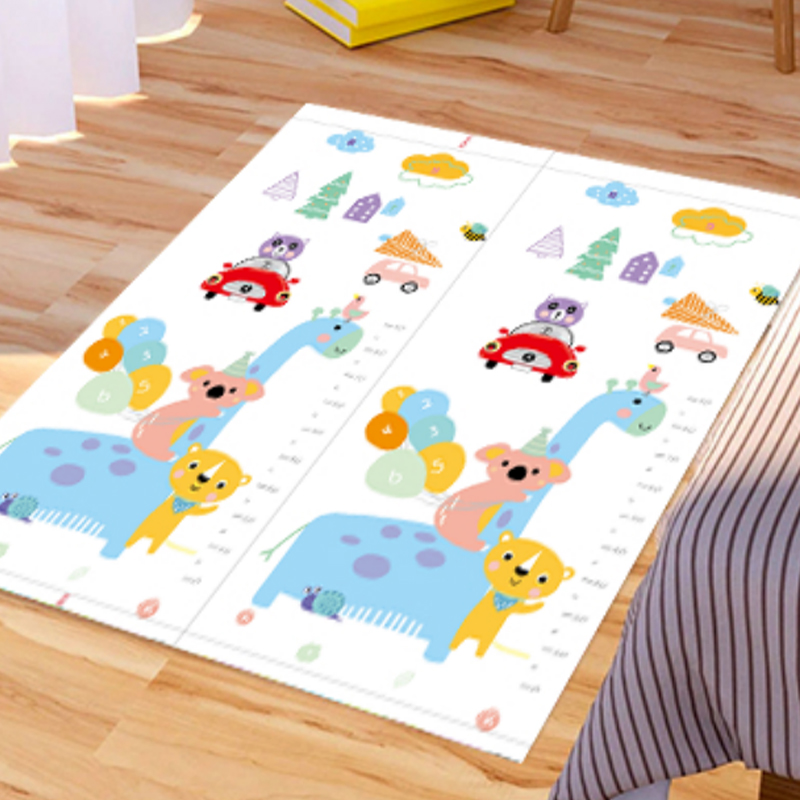 Foldable Moisture-Proof Picnic Mat for Camping and BeachFoldable picnic mat with PE printed surface, PE cotton middle, and VMPET backing; moisture-proof and dirt-proof for grass, beach, camping, or indoor play.View Product →
Cleaning and Everyday Care
Printed films are tough, but a small routine keeps them looking new for years:
- Wipe spills with a damp cloth and mild soap, then dry the surface.
- Skip solvents and abrasive creams, which dull the print over time.
- Let the mat dry completely before folding it away.
- Vacuum the print side with a soft brush head instead of beating the foam.
- Refold along the same seams each time so the creases stay even.
How These Mats Are Made
We are Anhui Morning Language Science and Technology Materials Co., Ltd., based in the Guangde Economic Development Zone in Anhui Province. Since 2019 we have produced printed composite films and the mats built on them, working with two five-colour presses, two six-colour presses with a maximum print width of 2400 mm, an extrusion laminator, a solvent-free laminator, a dry laminator, high-speed slitters and inspection equipment.
The route a mat takes through our factory is straightforward: film printing, lamination onto EPE or XPE foam, slitting to panel width, edge finishing, inspection and folding. Because printing and lamination happen under one roof, we can adjust a colour, a matte level or a panel size without waiting on a third party, which keeps sampling quick and repeat orders consistent. Our films and mats ship to Europe, the Americas, Africa and markets across Southeast Asia, and our work in children's room floor surface films and decorative wall films has been recognised with several utility patents.
If you are buying for your own home, keep the decision simple. Measure the space, decide where the mat will live once it is folded, then match thickness and foam to the floor underneath. Parents rarely regret a slightly firmer XPE panel for a permanent play corner, or a lighter EPE mat for travel and weekends away.
If you are sourcing mats for a shop, a nursery brand or a rental service, the same logic applies to your customers, with one addition: consistency between orders matters as much as the first sample. Tell us the panel size, the foam, the print and the finish you need, and we will build a sample that shows exactly what your next container will look like.