

 English
 Français
 русский
 عربى
عربى Español
Exterior wall decorative film is a printed, flexible film that is bonded to the outside face of a wall to change how that surface looks, and often how it performs as well. It is not paint, and it is not cladding. Think of it as a printed skin: a base film, a printed design layer, an adhesive system and a protective top layer, produced in rolls and cut to the width of the wall it will cover.
We are Anhui Morning Language Science and Technology Materials Co., Ltd. From our manufacturing base in Guangde, Anhui, we have been printing, laminating and slitting decorative films since 2019, and our material now ships to Europe, the Americas, Africa and Southeast Asia. The questions customers ask about exterior use are always the same: will it stay put, will it fade, and will it still look presentable three years from now. This guide answers those questions from the factory floor rather than from a showroom.
Content
- 1 What Exterior Wall Decorative Film Is Made Of
- 2 Why Exterior Walls Are a Harder Job Than Interiors
- 3 How It Compares with Traditional Exterior Finishes
- 4 Where Exterior Wall Decorative Film Works Best
- 5 Choosing the Right Film for Your Project
- 6 Installation Details That Decide the Result
- 7 Maintenance and Realistic Expectations
- 8 From Our Factory to Your Facade
What Exterior Wall Decorative Film Is Made Of
Almost every exterior wall film is built from the same four layers, and the quality of each layer decides how the finished product behaves outdoors.
- Base film. PET, VMPET or BOPP film carries the print and gives the product its dimensional stability.
- Print layer. Marble veins, tile grids, stone speckles, brick courses and fabric textures are printed in five or six colors, depending on the design.
- Adhesive. The adhesive governs initial tack and long-term holding power, especially on exterior substrates that are slightly rough or uneven.
- Protective layer. A topcoat or a laminated film shields the print from ultraviolet light, rain and everyday abrasion.
How those layers are joined matters as much as what they are. We run extrusion lamination, solventless lamination and dry lamination on the same site, so the bonding method can be matched to the film structure instead of forcing every order through one process.
Self-Adhesive Film or Laminated Panel?
Self-adhesive rolls are the practical choice when a wall is already sound and simply needs a new face. Laminated panels suit projects where the substrate needs extra rigidity, or where the film becomes part of a manufactured building product. Both start with the same printed film; only the backing changes.
Why Exterior Walls Are a Harder Job Than Interiors
Indoor film has an easy life. Outdoors, the same material faces a much tougher set of conditions, and it is worth being honest about them before choosing a product.
- Ultraviolet light. Sun exposure is the main cause of fading and of base film becoming brittle over time.
- Rain and humidity. Water finds every seam and every lifted edge, and freeze-thaw cycles widen small faults quickly.
- Temperature swings. An exterior wall heats and cools far more than an interior one, so film and substrate expand at different rates.
- Dirt and biological growth. Dust, pollen and, in damp climates, mould and algae settle on textured surfaces and make them look tired.
None of this rules the material out for exterior work. It simply means the base film, the adhesive and the protective layer all have to be chosen for the climate the wall sits in, and the surface has to be prepared properly. A moisture-resistant construction helps a great deal, and that is the thinking behind one of our most requested products, the PVC waterproof and moistureproof wall sticker.
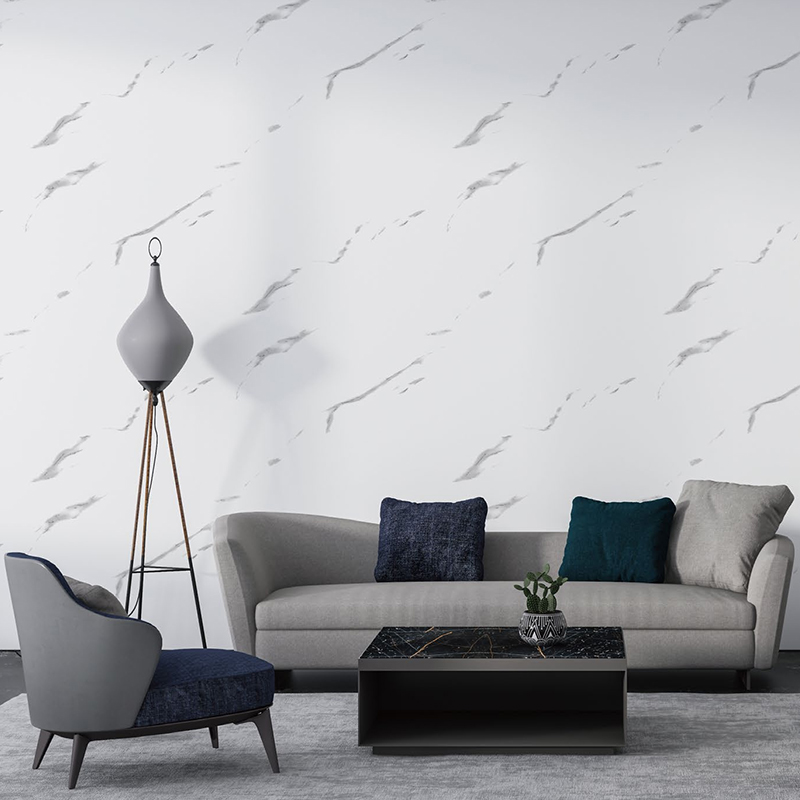
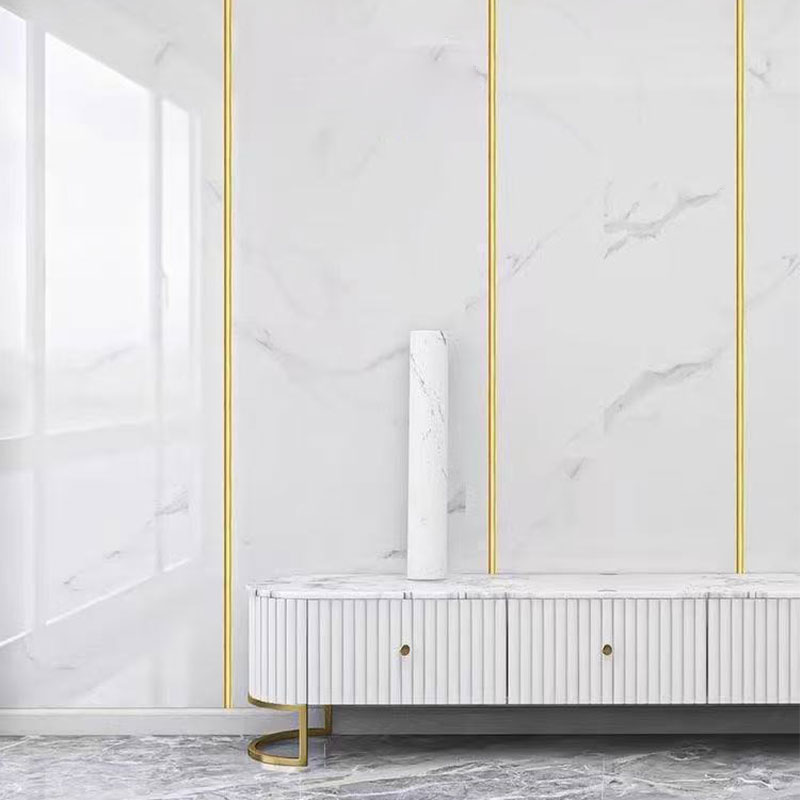 PVC Waterproof Moisture-Proof Marble Wall Sticker for Humid SpacesA removable PVC sticker with a marbled look for kitchens, bathrooms, and toilets, offering moisture resistance and an affordable alternative to retiling or repainting.View Product →
How It Compares with Traditional Exterior Finishes
A decorative film is rarely competing with nothing. Usually it is competing with repainting, retiling or leaving the wall alone.
| Finish | Weight added | Typical installation | Maintenance | Suits |
|---|---|---|---|---|
| Exterior paint | Negligible | Several days with drying time | Recoating every few years | Large, even surfaces |
| Ceramic or clay tile | High | Weeks, plus curing | Sealant and grout repairs | Wet areas, long-term builds |
| Natural stone cladding | Very high | Weeks, needs structural support | Occasional cleaning | Statement facades |
| Exterior wall decorative film | Very low | Usually days, no curing | Washing and edge checks | Renovation and feature walls |
Where Exterior Wall Decorative Film Works Best
We see the material used most successfully where the wall itself is sound and the goal is appearance rather than structural repair.
- Balcony walls and recessed terraces, where the film is sheltered from direct rainfall.
- Entrance, reception and shop-front feature walls that need a specific look without a full rebuild.
- Prefabricated and modular buildings, where lightweight finishes reduce transport weight.
- Rental and short-lease commercial spaces, where the finish has to be reversible.
- Covered walkways, boundary panels and garden walls in mild climates.
Where a stone or marble look is wanted for a sheltered elevation, a gilded finish is often the design customers come back to, because it holds detail well when seen from a distance.
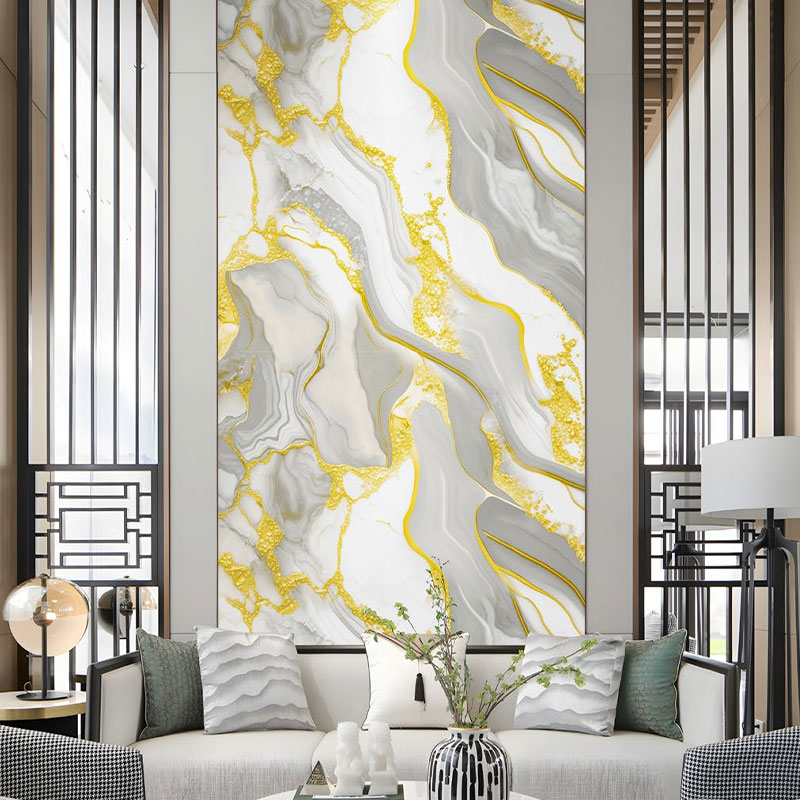 Gilded Marble Wall Sticker with Simulated Tile FinishA water-resistant, cost-effective decorative sticker for flat, smooth walls, reproducing gilded marble or tile looks without the cost and labor of real stone.View Product →
Choosing the Right Film for Your Project
Four specifications decide most of the outcome. Get these right and the rest usually follows.
- Base film and thickness. Thicker film resists scuffing and handles rougher substrates, but needs more care at corners.
- Adhesive type. Match the adhesive to the substrate, since smooth render, concrete, metal sheeting and previously painted surfaces behave differently.
- Protective layer. For sun-facing walls, ask what the film does under UV, not just what it looks like on delivery.
- Roll width and print width. Wider film means fewer seams, and on a large elevation seams are where problems start.
Width is where our equipment earns its keep. Our six-color presses print up to 2400 mm wide, which means a facade can often be covered with fewer, wider drops, and we hold PET, VMPET, BOPP, EPE and XPE rolls in the plant so a design change does not automatically mean a supplier change.
Installation Details That Decide the Result
Film is unforgiving of shortcuts in a way that paint is not. These are the steps that matter most outside.
- Clean and flatten the substrate. Dust, loose render and flaking paint all show up as bumps in the finished surface.
- Check moisture. Damp walls should be dried and treated before any film is applied.
- Plan the layout. Decide where the seams will fall before cutting, and keep them away from the most visible part of the wall.
- Work within the right temperature range. Cold surfaces reduce tack; very hot surfaces make the film hard to control.
- Seal the edges. Top and side edges take the worst of the weather and deserve extra attention.
Maintenance and Realistic Expectations
An exterior film is a finish, not a permanent structure. Treated well, it will hold its colour and its bond for years. Neglected, it will start to lift at the edges long before the print itself gives up.
- Rinse or wash the wall two or three times a year with water and a mild detergent.
- Check the perimeter once a season and press down any edge that has begun to lift.
- Avoid abrasive pads, solvent cleaners and high-pressure jets aimed at seams.
- In coastal or heavily polluted areas, shorten the cleaning interval.
If a section is damaged, it can usually be replaced in strips, which is one practical advantage of a roll-based finish over tile or render.
From Our Factory to Your Facade
Anhui Morning Language Science and Technology Materials Co., Ltd. was founded in 2019 in the Guangde Economic Development Zone, Anhui Province. Printing, extrusion lamination, solventless lamination, dry lamination, slitting and inspection all happen on one site, supported by two five-color presses, two six-color presses and dedicated testing equipment.
Wall film is one part of what we do. We also supply larger printed rolls to construction and packaging customers, including a 300 mm by 2100 mm printed composite film made for building and packaging work, which is the same printing and lamination capacity supplied in a different format.
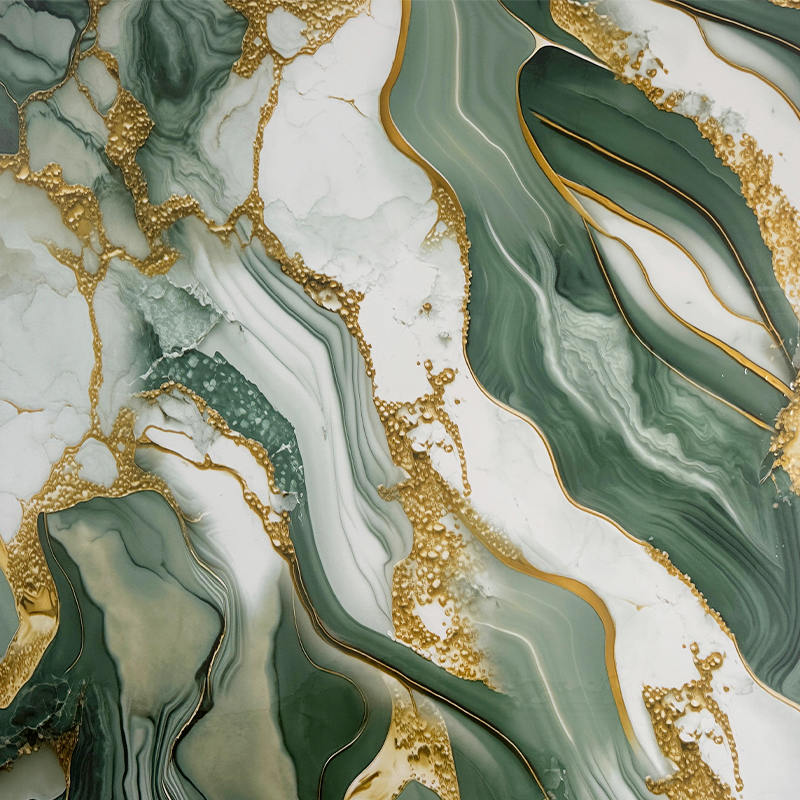 300mm-2100mm Printed Composite Film for Packaging and ConstructionA wide-width printed composite film series using solvent-free lamination, suitable for packaging and construction applications that need moisture and oxidation barrier protection.View Product →
If you are planning an exterior wall project, tell us about the substrate, the climate and the look you have in mind. We would rather tell you honestly whether film is the right answer than sell you something that is not. If the surface in question is a building panel rather than a wall, our printed composite film for construction article is a useful next step.