

 English
 Français
 русский
 عربى
عربى Español
Content
- 1 Why Every Baby Needs a Good Play Mat
- 2 Types of Baby Play Mats You'll Come Across
- 3 Baby Play Mat Materials and Safety: What Parents Need to Know
- 4 Baby Play Mat Size and Thickness: Getting the Basics Right
- 5 Comparing the Main Baby Play Mat Options Side by Side
- 6 Developmental Benefits of Using a Baby Play Mat Regularly
- 7 Features Worth Paying Extra For in a Baby Activity Mat
- 8 How to Keep a Baby Play Mat Clean and Hygienic
- 9 Common Mistakes Parents Make When Buying a Baby Play Mat
- 10 Getting the Most Out of Your Baby Play Mat at Every Stage
Why Every Baby Needs a Good Play Mat
A baby play mat is one of those items that starts earning its place in your home from the very first weeks of your baby's life and keeps delivering value well into the toddler years. At its most basic, a baby floor mat gives your infant a clean, cushioned, safe space to lie, stretch, roll, and eventually crawl — away from hard floors and the everyday hazards that come with them. But a well-chosen baby mat does much more than just protect from bumps. It becomes the central stage for your baby's earliest physical and cognitive development, a place where tummy time, reaching, grasping, kicking, and exploring all happen every single day.
The market for infant play mats has grown enormously in recent years, with options ranging from simple padded foam squares to elaborate activity gyms with hanging toys, mirrors, and sensory panels. That variety is great for parents, but it also makes choosing the right mat genuinely confusing. This guide breaks down everything you need to know — from materials and safety considerations to size, thickness, and the developmental features worth paying for — so you can pick the baby play mat that actually suits your home and your baby's stage of development.
Types of Baby Play Mats You'll Come Across
Baby play mats come in several distinct formats, and understanding the differences helps narrow down your choice quickly. Each type suits a different stage of development or a different set of parent priorities.
Baby Activity Gym Mats
A baby activity mat or baby gym mat combines a padded floor mat with an overhead arch structure from which toys, mirrors, crinkle items, and teethers are suspended. These are designed primarily for newborns and young infants up to around six months, though many babies continue enjoying them longer. The hanging elements encourage visual tracking, reaching, and batting — all important early motor and sensory skills. Many activity gym mats also include built-in floor features like crinkly patches, contrasting patterns, and textured surfaces that engage babies during tummy time. The arch is usually removable, which extends the mat's usefulness once the baby starts sitting and crawling.
Foam Interlocking Play Mats
Interlocking foam tiles are among the most popular baby floor mat options for practical households. They connect like puzzle pieces to cover as large or as small an area as you need, and can be reconfigured or expanded as your baby grows. Most interlocking foam mats are made from EVA foam, which provides good cushioning for crawling and early walking. They're easy to wipe clean, lightweight, and affordable. The main trade-off is aesthetic — foam tiles tend to look utilitarian compared to fabric mats — and the edges and cutout pieces can become a mouthing hazard for babies who are exploring with their mouths, so supervision and proper assembly are important.
Padded Fabric Play Mats
Padded fabric baby play mats typically feature a quilted or filled fabric surface with a non-slip base. These tend to look far more attractive than foam tile options and blend more easily into living room décor. Many parents choose fabric mats specifically for this reason. They're softer and warmer to the touch than foam, which makes them particularly appealing for newborns doing tummy time. The downside is that fabric mats can be harder to clean — many are machine washable, but repeated washing can affect the padding and surface over time. Spot-cleaning is often the practical reality for everyday spills.
Tummy Time Mats
Tummy time mats are designed specifically for the tummy time practice that pediatricians recommend starting from birth. They tend to be slightly firmer than general play mats — a surface that's too soft isn't ideal for tummy time because babies need to push against some resistance to build neck and upper body strength. Many tummy time mats include a small bolster or wedge that can be placed under the baby's chest to make the position more comfortable for younger infants who haven't yet built the strength to hold their head up independently. Some feature built-in mirrors and high-contrast visual elements at baby eye level to keep the baby engaged and motivated to lift their head.
Large Padded Play Mats and Crawling Mats
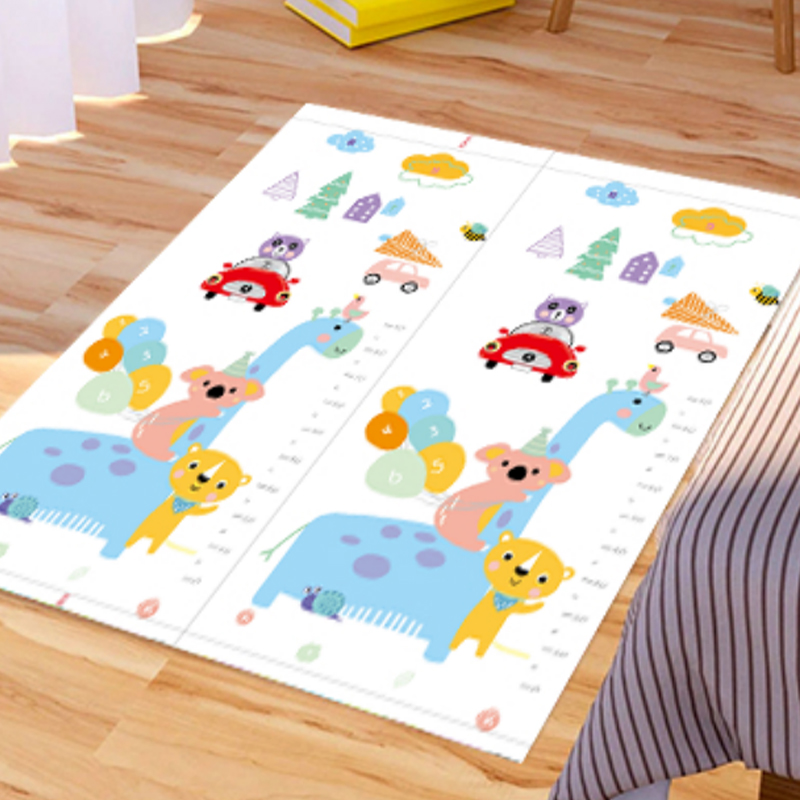
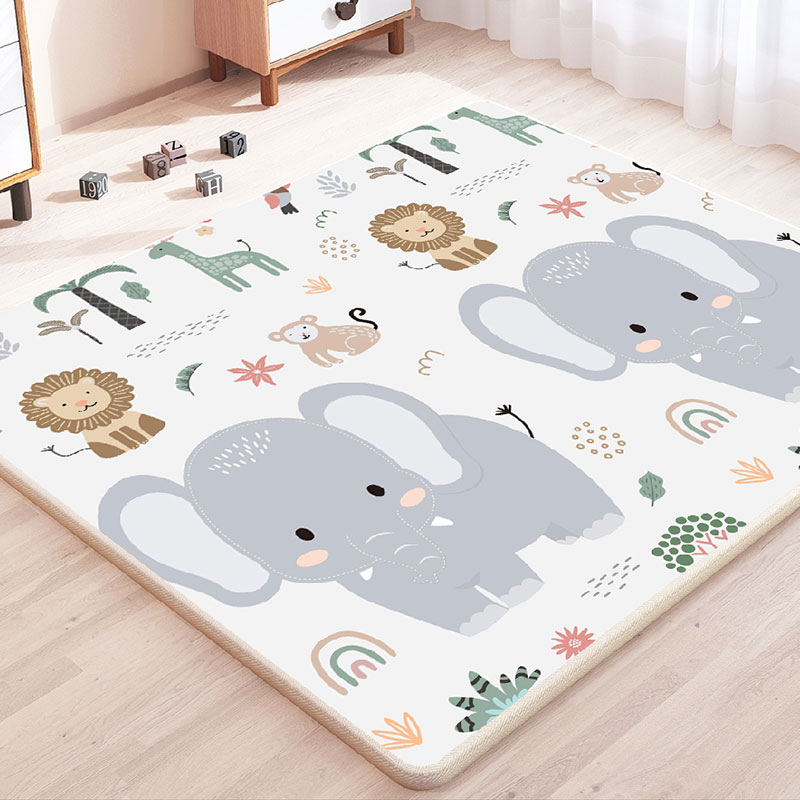
Once babies start rolling, crawling, and pulling themselves up, a larger surface area becomes important. Large padded baby crawling mats — often 150 cm × 200 cm or bigger — give active babies room to explore without immediately running into furniture edges. These mats typically have more substantial padding than infant activity mats, providing better fall protection for babies learning to sit and stand. Many are reversible with two different designs on each side, giving the mat longer visual appeal before the baby gets bored of looking at the same patterns.
Baby Play Mat Materials and Safety: What Parents Need to Know
Material safety is the most important consideration when choosing any baby product that will be in close, constant contact with your infant. Babies mouth everything — their hands, the mat surface, any toys attached to it — and they spend hours every day lying directly on the mat surface. The materials used in a baby play mat matter enormously for health and safety.
EVA Foam — What to Check
EVA (ethylene-vinyl acetate) foam is the most common material in baby foam play mats. It's lightweight, cushioning, and water-resistant. However, not all EVA foam is equal. Some lower-quality foam mats have been found to contain formamide, a chemical used in the foaming process that can off-gas from the foam surface. Several European countries have set strict limits on formamide levels in children's foam products. When buying an EVA foam baby mat, look for products that specifically state they are formamide-free and have been tested to ASTM F963, EN71, or equivalent safety standards. Certification labels from third-party testing labs are more reliable than self-declared claims.
PVC — Generally Best Avoided for Infants
Some baby floor mats use PVC (polyvinyl chloride) in their construction. PVC products can contain plasticizers called phthalates, which have been associated with hormonal disruption and are heavily regulated in children's products in many countries. While many PVC baby mats on the market meet legal phthalate limits, many pediatric health organizations advise parents to choose PVC-free options when possible — particularly for products that infants will be in direct skin contact with for extended periods.
XPE Foam — A Safer Alternative
Cross-linked polyethylene (XPE) foam has become increasingly popular as a baby mat material precisely because of its safety profile. XPE foam is free from formamide and phthalates, has good cushioning properties, is odorless, and is easy to wipe clean. It's slightly firmer than EVA foam of the same thickness, which actually makes it a good choice for tummy time mats where some surface resistance is beneficial. Many premium baby play mat brands have switched to XPE foam as their core material.
Fabric Covers and Dyes
For fabric-covered baby mats, check that the fabric and any prints or dyes used are free from AZO dyes and heavy metals, and are OEKO-TEX Standard 100 certified where possible. OEKO-TEX certification means the fabric has been tested for a comprehensive list of harmful substances and found to be safe for skin contact — a meaningful and independently verified assurance for parents.
Baby Play Mat Size and Thickness: Getting the Basics Right
Two practical specifications that parents often underestimate when buying a baby activity mat are size and thickness. Getting these right makes a significant difference to both usability and safety.
How Big Should a Baby Play Mat Be?
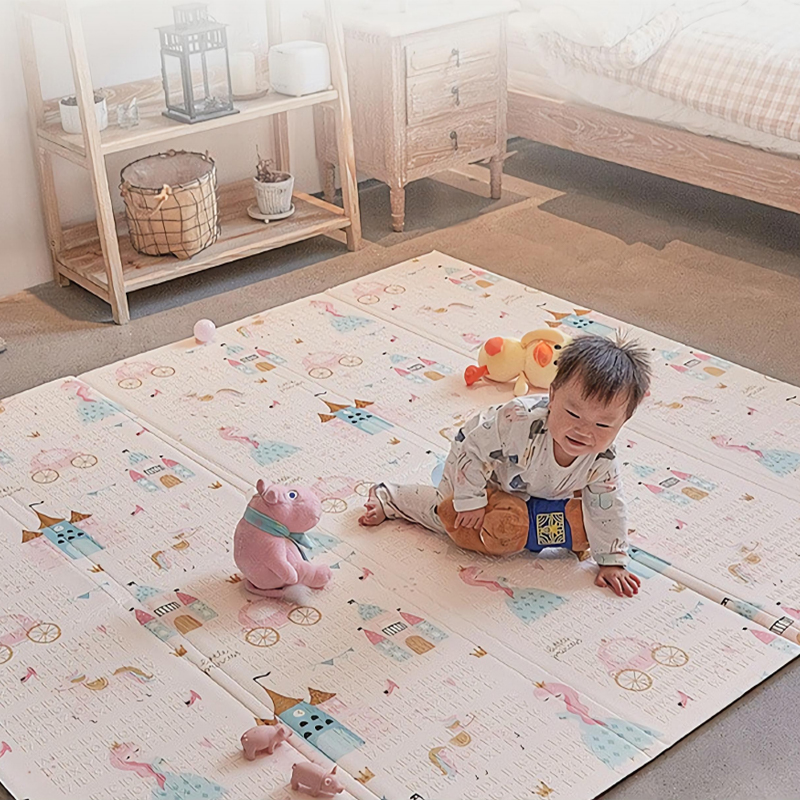
For newborns and young infants, even a relatively compact mat (around 90 cm × 90 cm or 100 cm × 100 cm) is sufficient because young babies don't move far. As your baby starts rolling and then crawling, a larger surface quickly becomes necessary. A general guideline is to aim for at least 150 cm × 150 cm for a mat that will serve an active crawler, and ideally larger if your space allows. Remember that babies will roll off the edges of mats, so the mat needs to be large enough that the baby can't easily reach the hard floor in the normal course of play. Some parents choose to use interlocking foam tile systems specifically because they can expand the covered area as their baby becomes more mobile.
How Thick Should a Baby Mat Be?
Mat thickness directly affects fall and impact protection. For newborns and young infants doing tummy time on a relatively flat surface, a thickness of 1–1.5 cm provides adequate cushioning. For older babies who are sitting and starting to pull themselves up — and who will inevitably topple sideways — a thickness of at least 2 cm and ideally 3–4 cm provides meaningfully better impact absorption. Very thick mats (4 cm or more) are sometimes marketed as superior, but extremely soft, deep foam can actually make it harder for young babies to develop core strength during tummy time because there's too much give beneath them. A medium-firm mat of 2–3 cm thickness is a practical sweet spot for most developmental stages.
Comparing the Main Baby Play Mat Options Side by Side
The table below provides a quick comparison of the main baby play mat types across the factors most parents care about:
| Mat Type | Best Age Range | Cushioning | Easy to Clean | Aesthetics | Best For |
| Activity Gym Mat | 0–6 months | Medium | Moderate | Good | Newborn sensory play |
| Foam Interlocking Tiles | 3 months–3 years | Medium–High | Very Easy | Basic | Crawling, active play |
| Padded Fabric Mat | 0–18 months | Medium | Moderate | Very Good | Living room use, décor-conscious homes |
| Tummy Time Mat | 0–4 months | Firm–Medium | Easy | Good | Early neck and core development |
| Large Crawling Mat | 6 months–3 years | High | Easy | Good–Very Good | Mobile babies, fall protection |
Developmental Benefits of Using a Baby Play Mat Regularly
A baby play mat isn't just a convenience item for parents — it plays a genuine role in supporting key developmental milestones. Understanding what's happening developmentally during floor play helps parents use the mat more intentionally and appreciate why time on the mat matters.
- Tummy time builds essential strength: Placing babies on their stomachs while awake and supervised is the primary way to develop the neck, shoulder, and core muscles needed for rolling, sitting, and crawling. A good baby tummy time mat makes this practice more comfortable and engaging, which means the baby tolerates and benefits from longer tummy time sessions.
- Visual and sensory stimulation: High-contrast patterns, bright colors, textures, and reflective surfaces on baby activity mats engage the developing visual system. In the early months, babies can only focus on objects close to their face, so features positioned at the right distance — hanging toys 20–30 cm above the baby, floor patterns at tummy time eye level — directly support visual development.
- Motor skill development through reaching and kicking: Hanging toys on a baby gym mat encourage babies to reach, bat, and eventually grasp — developing the hand-eye coordination and fine motor control that underpin so many later skills. Kicking at foot toys builds leg strength and early cause-and-effect understanding.
- Independent play and self-confidence: A safe, engaging play mat gives babies a defined space where they can explore and discover independently. Even very young babies begin to show preferences and reactions during floor play, which builds early confidence and self-directed attention — skills that matter far beyond infancy.
- Support for rolling, crawling, and walking transitions: As the baby becomes more mobile, a cushioned play surface that covers a generous area gives them the freedom to practice rolling, rocking on all fours, crawling, and cruising along furniture without the risk or discomfort of a hard floor. This freedom to move and experiment is fundamental to gross motor development.
Features Worth Paying Extra For in a Baby Activity Mat
Not every premium feature on a baby play mat justifies its price, but some genuinely add value. Here are the features that experienced parents and child development professionals tend to rate as worth the extra investment.
- Waterproof or water-resistant surface: Babies are messy. A waterproof or easily wipeable mat surface makes cleaning nappy leaks, spit-up, and food spills genuinely quick and easy rather than a prolonged process. Look for mats where the waterproofing is in the top fabric layer rather than just a backing coating that can crack and peel over time.
- Non-slip base: A mat that slides on hard floors is a hazard — both for the baby who might roll off the edge and for any adult who steps onto or near it. Rubber or silicone non-slip bases grip the floor securely and are a feature worth specifically checking for rather than assuming is present.
- Reversible dual-sided design: Many quality baby crawling mats feature two different designs — one on each side — which extends the mat's visual novelty and gives you the option of a more neutral design when guests are over or a more colorful side for active play sessions.
- Removable and machine-washable cover: For fabric-covered mats, a cover that can be fully removed and machine-washed is a significant practical advantage over mats that can only be spot-cleaned. Check the washing instructions carefully and confirm the cover retains its shape and padding after repeated washing before buying.
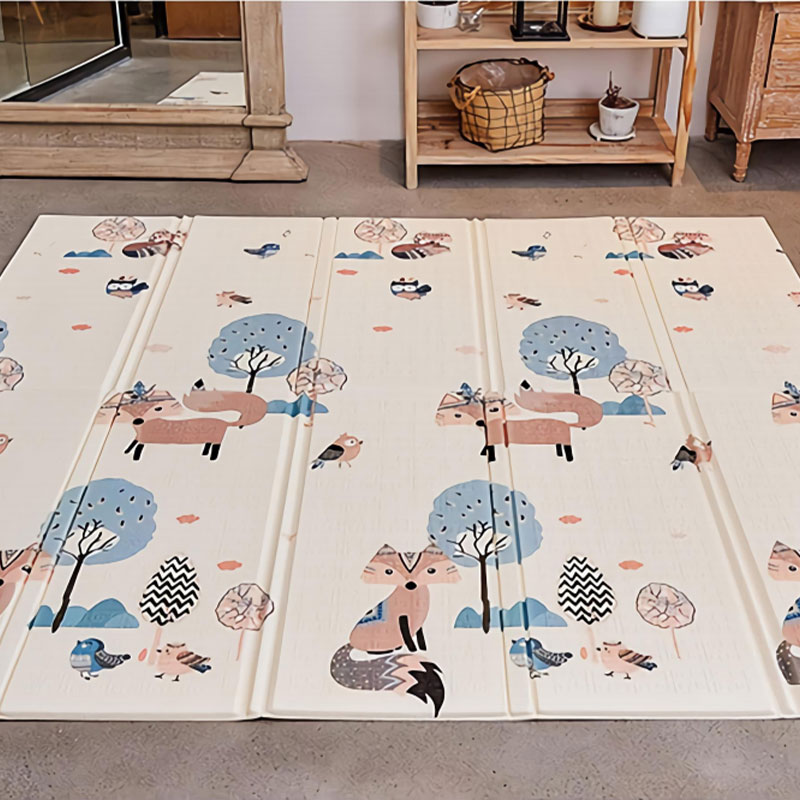
- Foldable or rollable for storage: If living space is limited, a baby mat that folds flat or rolls up for storage makes a real difference to how much floor space it occupies when not in use. Make sure folding mats don't create sharp fold lines or ridges in the foam that could be uncomfortable for the baby or a tripping hazard for adults.
- Certified safety testing: As discussed in the materials section, third-party safety certifications (OEKO-TEX, ASTM F963, EN71, CPSC compliance) are a meaningful signal of a manufacturer taking safety seriously. They should be documented on the product listing or packaging, not just mentioned in marketing copy.
How to Keep a Baby Play Mat Clean and Hygienic
A baby play mat that starts life clean and attractive can quickly become a source of bacterial growth and odors if it isn't maintained properly. Since babies spend significant time with their faces and mouths close to the mat surface, hygiene genuinely matters here. The right cleaning approach depends on the mat material.
Foam and Waterproof Surface Mats
For EVA foam, XPE foam, or fabric mats with waterproof surfaces, daily spot-cleaning with a mild soap solution and a damp cloth is the most practical routine. For a more thorough clean, wipe down the entire surface with a baby-safe disinfectant spray and allow to air dry completely before putting the baby back on it. Avoid soaking foam mats or submerging them in water, as moisture trapped inside the foam can lead to mold growth that is invisible on the surface but very much present in the material. Allow the mat to air out completely after cleaning before rolling or folding for storage.
Fabric Mats with Removable Covers
If your baby play mat has a removable fabric cover, aim to machine-wash it at least once every one to two weeks during heavy use, or immediately after any significant spills or contamination. Use a baby-safe, fragrance-free laundry detergent and wash on a gentle cycle at the temperature specified in the care label. Dry the cover fully before reassembling the mat — any residual dampness against the foam insert creates ideal conditions for mold.
Interlocking Foam Tiles
One underappreciated aspect of interlocking foam tile mats is that bacteria, crumbs, and moisture can accumulate in the seams between tiles. Periodically disassemble the tiles completely, wipe each piece on both sides, and clean the floor area beneath them before reassembling. This takes only a few minutes and prevents a significant buildup of grime that is invisible until the tiles are taken apart.
Common Mistakes Parents Make When Buying a Baby Play Mat
Even with good intentions, it's easy to buy a baby mat that doesn't actually suit your needs. Here are the most common mistakes worth avoiding.
- Buying too small: A mat that seems big enough for a newborn quickly becomes inadequate once the baby starts rolling and crawling. If you can only buy one mat, err on the side of larger rather than smaller to maximize how long it stays useful.
- Prioritizing looks over safety certifications: A beautiful mat with no safety documentation is a risk. Always check for safety certifications, especially for foam mats, before the aesthetic appeal influences the purchase decision.
- Ignoring cleaning requirements: A mat that looks perfect in product photos but can only be spot-cleaned will quickly look grimy with daily baby use. Before buying, read the cleaning instructions honestly and decide whether they are compatible with your daily routine.
- Choosing excessively soft foam: Very plush, deeply soft mats can actually hinder tummy time development because there's too little resistance for the baby to push against. A medium-firm surface is generally better for developmental purposes than the softest mat available.
- Forgetting about non-slip backing: This gets overlooked surprisingly often, and a mat that slides across a hardwood or tile floor is a real safety risk. Always confirm the base has adequate non-slip properties, especially for hard floor use.
Getting the Most Out of Your Baby Play Mat at Every Stage
A baby play mat is most valuable when it's used consistently and adapted to the baby's current developmental stage rather than left in a corner after the newborn phase. In the first few months, the mat is primarily a tummy time surface and a place to lie under a baby gym. From around four to six months, it becomes the arena for rolling practice and early reaching. From six to nine months, it's where crawling begins. From nine months onward, it's where the baby pulls up, cruises, takes first steps, and plays with stacking toys, shape sorters, and building blocks.
Rotating the toys and features associated with the mat keeps it fresh and stimulating as the baby's interests and abilities evolve. Adding a low basket of age-appropriate toys beside the mat extends play sessions and encourages the baby to reach, move toward, and explore independently. The mat itself doesn't need to be expensive or elaborate to do its job well — what matters most is that it's safe, appropriately sized, easy to keep clean, and used regularly as a dedicated space for floor play and exploration from the earliest weeks of your baby's life.