

 English
 Français
 русский
 عربى
 Español

Printed composite film is the sort of material most people handle every day without ever naming it. It wraps the coffee bag in the cupboard, sits beneath the laminate on a shop counter, and gives a wall sticker its stone-like surface. The idea underneath it is simple: print something worth looking at onto a film, then bond that film to one or more additional layers so the printed image survives handling, moisture and time.
We make this material on five- and six-colour presses with three different lamination routes behind them. What follows is the version of the explanation we usually end up giving customers in the first conversation — what the material is, how it is built, and where it earns its place.
Content
What "Printed Composite Film" Actually Covers
The word composite is carrying a lot of weight in that name. Strictly, a printed composite film is any flexible web that carries printed graphics and is built from two or more layers bonded together. That single definition stretches across a broad family: reverse-printed barrier films for food pouches, surface-printed decorative films for interior walls, and printed films laminated onto foam for mats and floor coverings.
Two production logics dominate, and they behave very differently. In reverse printing, the ink is laid on the inside of a transparent film, so the film itself becomes the protective window — the usual choice when the printed side will face a product or sit against a sealing layer. In surface printing, the ink stays on the outside and generally needs a protective coat or a further lamination over it. That is common in decorative work, where visual impact matters more than barrier performance.
Knowing which logic a supplier is working with tells you a good deal about durability, cost, and the end use the film was designed for.
A Layer-by-Layer Look at the Structure
Exact constructions vary by job, but most printed composite films are assembled from the same functional blocks.
| Layer | Typical materials | What it does |
|---|---|---|
| Print carrier | BOPP, PET, PVC | Holds the artwork and gives the film stiffness and gloss |
| Ink system | Solvent-based or water-based inks | Delivers colour, opacity and image detail |
| Bonding layer | Adhesive, extruded PE, tie resin | Keeps the layers together over the life of the product |
| Barrier layer | VMPET, aluminium foil, EVOH | Blocks moisture, oxygen and light where needed |
| Seal layer | PE, CPP | Allows heat sealing on packaging lines |
| Backing (optional) | EPE or XPE foam, non-woven | Adds cushioning, thickness or grip |
Not every job uses every row. A decorative wall film may stop after the print carrier and a protective top layer, while a construction membrane might add an adhesive backing and a release liner. The table is a map, not a mandate — the useful question is always which functions the end product actually needs.
How the Film Comes Together on Our Lines
Whichever structure is chosen, production follows the same broad sequence, with the detail shifting at each step:
- Artwork and cylinder preparation. Colour targets, registration marks and repeat length are agreed before a metre of film is printed.
- Printing. Five- and six-colour presses, with a maximum printing width of 2400mm, cover both narrow packaging runs and wide decorative work.
- Adhesive or extrudate application. Depending on the route, a solventless or solvent-based adhesive is applied and dried, or a molten PE layer is extruded directly onto the web.
- Lamination. Extrusion, solventless and dry-bonding lines each suit different material combinations and barrier requirements.
- Curing. Adhesive-bonded laminates are left to reach full bond strength before further handling — rushing this stage is one of the most common causes of delamination later.
- Slitting and inspection. Rolls are cut to the customer's width and checked for registration drift, streaks and bond defects.
The machinery behind each step is listed on our production process page, if you would like to match a structure against the equipment available.
Where Printed Composite Film Earns Its Keep
The same base capability shows up in very different markets, and that is part of what makes the material interesting to work with.
Flexible packaging
This is where the barrier conversation matters most. A film for packaging typically pairs a reverse-printed PET or BOPP outer layer with a VMPET or foil barrier and a PE sealant layer. The printing sells the product on the shelf; the barrier keeps it fresh. When a customer asks us to reduce cost without losing shelf life, the answer is almost always found in tuning the barrier layer rather than thinning the print.
Construction and building surfaces
Construction work follows a different brief. Width matters more than barrier, weather resistance matters more than seal strength, and the print often has to hold up on large flat surfaces where any registration error is immediately visible. Our wide-format capacity was built with this kind of work in mind, and the standard 300mm × 2100mm format covers the smaller end of the range.
 Wide-Format Printed Composite Film for Packaging and ConstructionA 300–2100 mm composite film with PET/BOPP and PET/PE structures, solvent-free lamination and barrier properties for packaging and construction applications.View Product →
Decorative and consumer products
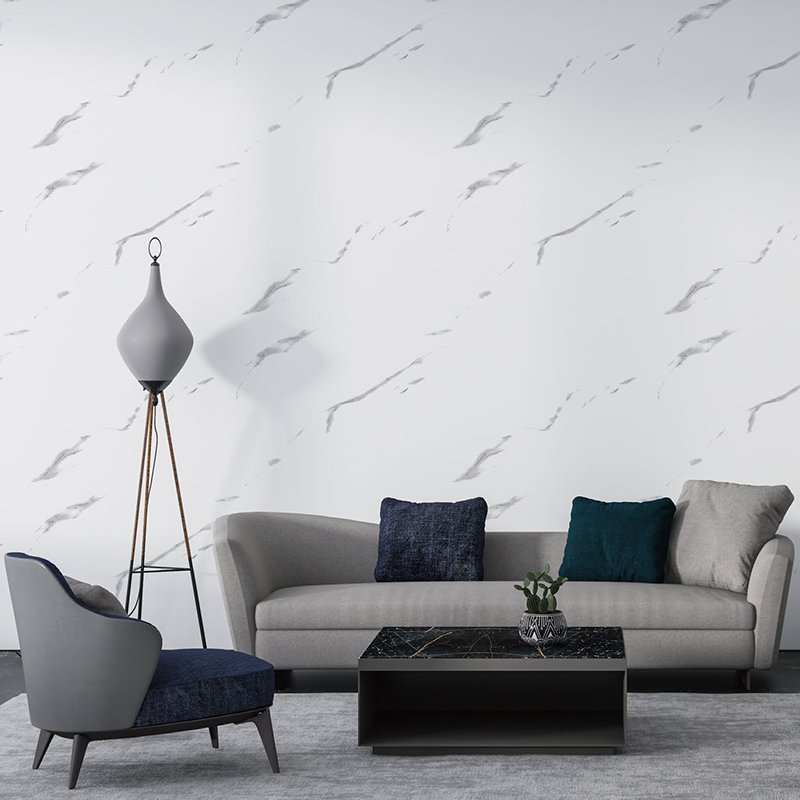
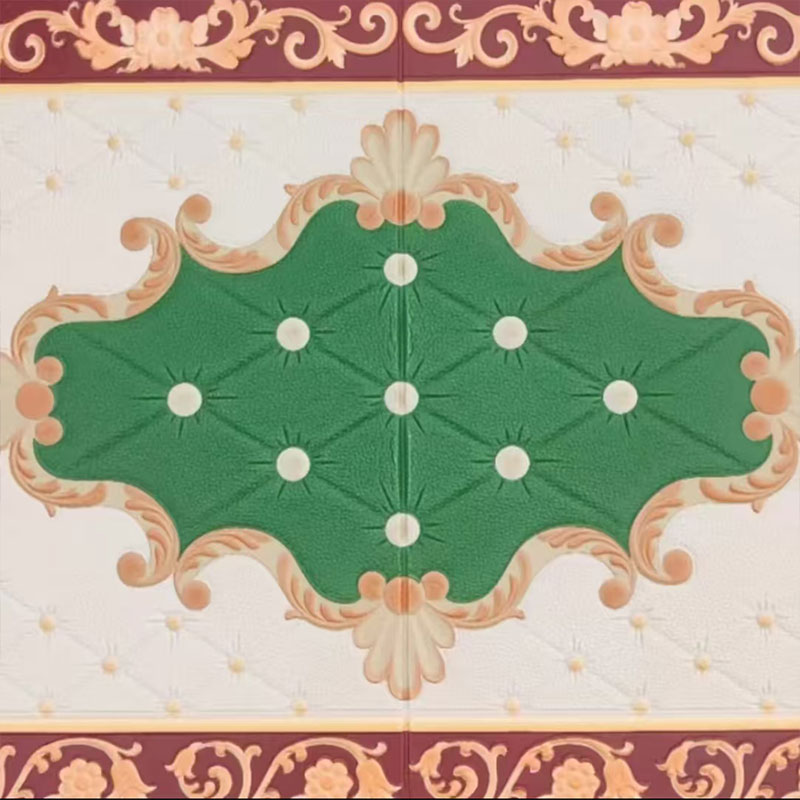
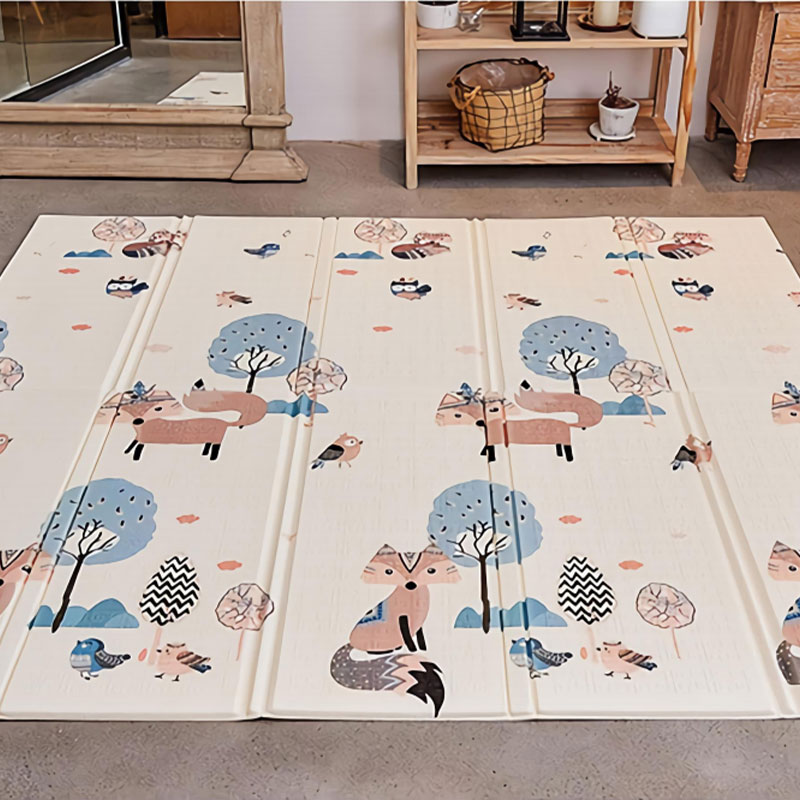
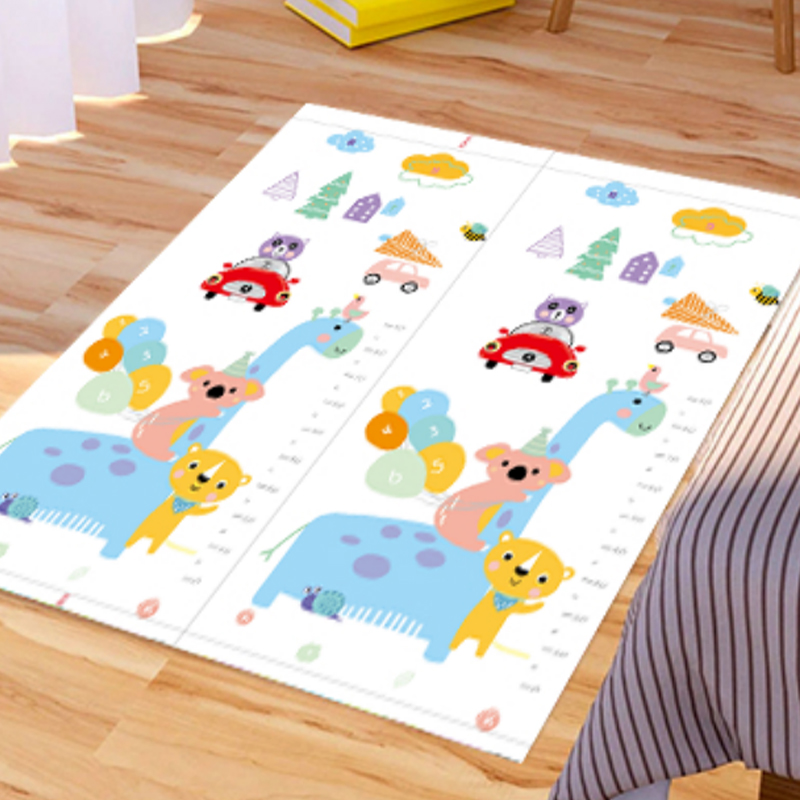
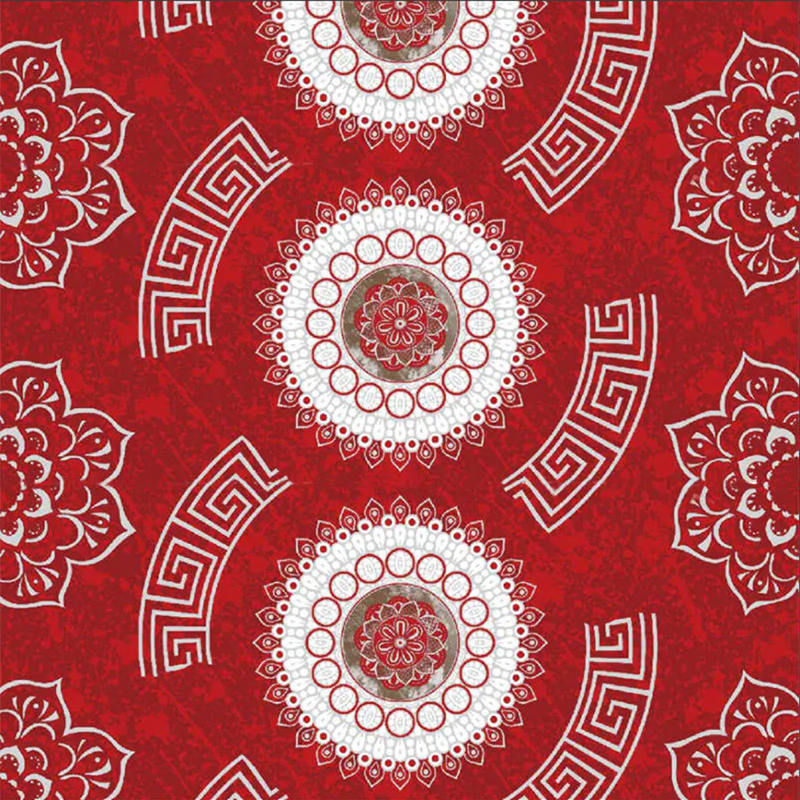
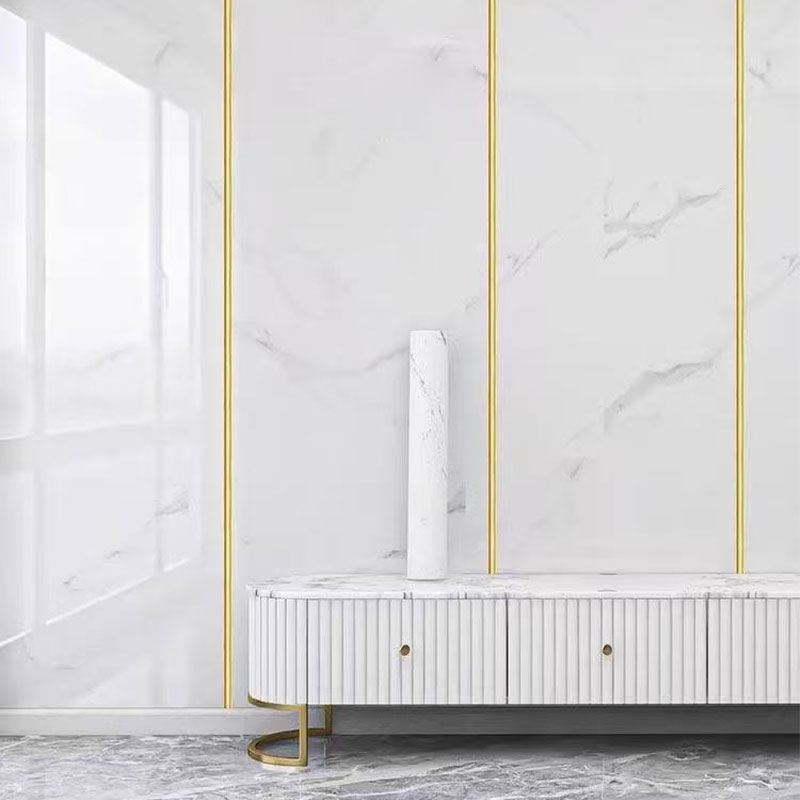
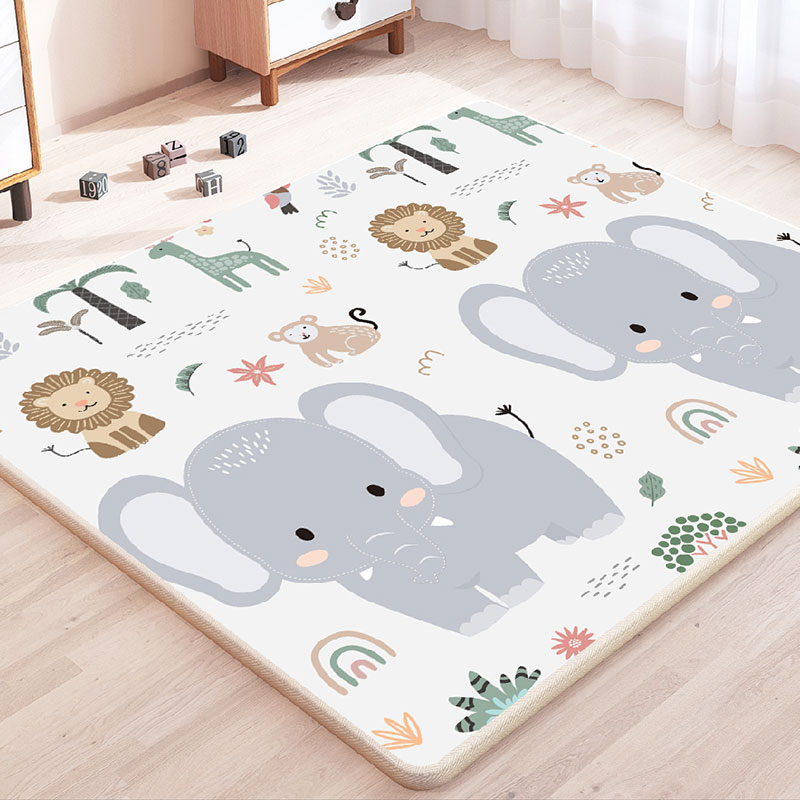
The decorative side is where printed composite film becomes something a household actually sees. A marble-effect wall sticker, a linen-textured surface film, the printed skin on a folding mat — all of them begin as a printed film bonded to a suitable backing. The print has to look convincing at arm's length and still resist wiping, so surface durability gets as much attention as colour accuracy.
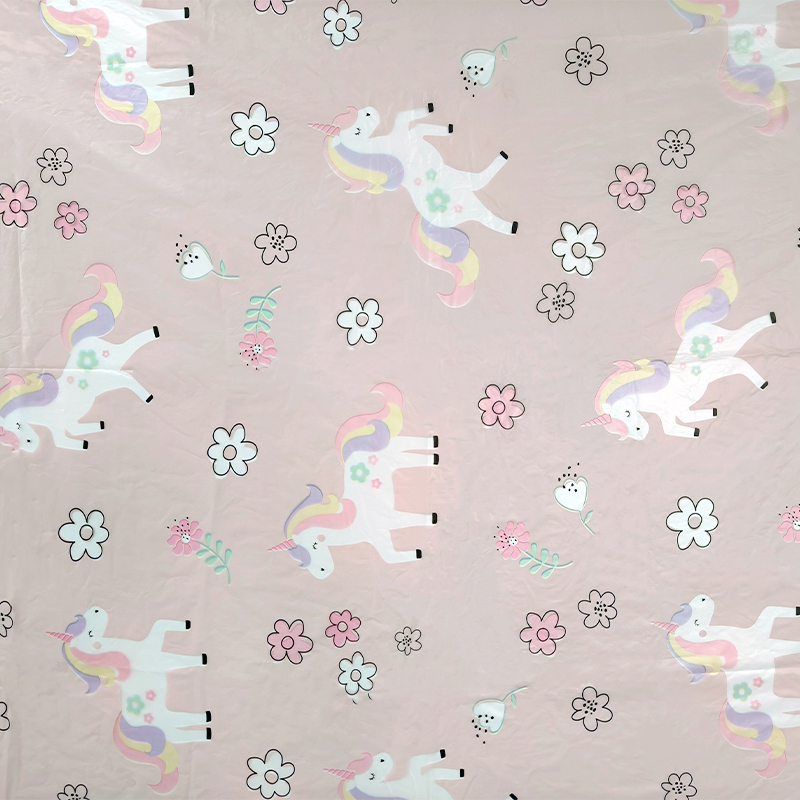 Large-Format Color Printing Film for Packaging and DecorationA 600–2400 mm printed composite film with strong ink adhesion, scratch resistance and moisture barrier, suited to wide-format packaging and decorative applications.View Product →
 Gilded Marble Wall Sticker for Interior Wall DecorationA simulated marble wall covering with strong adhesion and water resistance for flat, smooth residential surfaces, offering a cost-effective alternative to real tiles.View Product →
Choosing a Structure That Fits the Job
When a customer sends a sample and asks us to match it, the specification usually settles around five questions:
- What does the film have to survive? Moisture, grease, sunlight and abrasion each push the structure in a different direction.
- Which side faces out? Reverse printing protects the ink but limits the substrates you can use; surface printing is visually more flexible but needs a protective layer.
- How wide and how long? Roll width drives which press the job runs on, which affects both lead time and unit cost.
- Is a seal required? Heat-sealable packaging needs a sealant layer; decorative films rarely do.
- What is the packing and shipping route? Large-diameter rolls are efficient but need handling equipment at the other end.
Answer those and most of the structure decides itself. There is a longer breakdown of structures and applications in our guide to printed composite film types and structures. Where a genuine choice remains, we would rather run a short trial roll than argue about a data sheet.
Practical Notes from the Shop Floor
Corona treatment fades. Treated film does not stay treated forever. If a roll sits in storage for months before conversion, ink adhesion and bond strength can drop, so order to the production schedule rather than to the warehouse shelf.
Registration is a process, not a setting. Wide webs drift as tension and temperature change. Good printers watch it continuously rather than checking once at the start of a run.
Curing time is not optional. Solventless and dry-bonded laminates continue building bond strength for hours or days after lamination. Slitting too early produces rolls that look fine and fail later.
Printed composite film is not a glamorous material, but it is a genuinely versatile one, and most of its value sits in the details: which layer goes where, how the ink is protected, and how patiently the bond is allowed to develop. If you are working through a specification and want a second opinion on the structure, we are always happy to talk it through.