

 English
 Français
 русский
 عربى
 Español

Marble has a way of making a room look finished. It also has a way of making a small damp patch look like a much bigger problem. After years of printing and laminating decorative films for walls, the question we hear most often from people planning a marble finish is refreshingly simple: will it survive the steam?
This guide answers that honestly. We will look at where a moisture-proof marble wall sticker earns its keep, where it does not, and how to install one so the edges stay tight through a few humid summers.
Content
- 1 Why Moisture Decides Whether Your Marble Wall Ages Well
- 2 What a Moisture-Proof Marble Wall Sticker Actually Is
- 3 Room by Room: Where It Holds Up and Where It Doesn't
- 4 Choosing a Roll That Will Still Look Good in Two Years
- 5 Installation, Step by Step
- 6 Keeping It Looking Like Stone
- 7 What Buyers Ask Us Before Ordering
Why Moisture Decides Whether Your Marble Wall Ages Well
Water vapour is persistent. It drifts through grout lines, around sockets and behind panels, then condenses on whatever surface happens to be cooler. Real marble is porous, so it absorbs that moisture, and the sealer that protects it wears thin in wet rooms far faster than most people expect. The result is the familiar set of complaints: cloudy patches, dark tide lines, and grout that never quite dries.
A film-based wall sticker takes a different approach. Instead of trying to repel water at the surface of a porous stone, it puts a non-porous printed film between the wall and the room. Water beads on the face rather than soaking in, and a wipe with a damp cloth deals with most of what lands there. That is the whole idea, and it works — provided the film is specified for the room and the edges are treated with the same care as the face.
One distinction is worth making early, because it saves disappointment. Waterproof usually means the material will not be damaged by contact with water. Moisture-proof means it resists the slower, quieter attack of humid air and condensation. A good marble wall sticker is both, but the second quality is the one that matters in a bathroom or a laundry, and it depends as much on the adhesive and the seams as on the film itself.
What a Moisture-Proof Marble Wall Sticker Actually Is
Strip away the marketing and most of these products share the same structure: a printed PVC face film, an adhesive layer, and a release liner that comes off before installation. The face carries the marble print — veining, shading, the faint translucency that makes stone look like stone. Underneath, an acrylic adhesive holds the film to the wall without creeping in warm, damp conditions.
The film itself is made in stages. A wide roll of PVC or PET base is printed on a multi-colour press, then laminated to add thickness, opacity or a matte finish, and finally slit down to the widths retailers and installers actually use. If you would like to see how that chain works in practice, our production process page walks through the printing, laminating and slitting steps that make a wall sticker behave the way it does.
For rooms with real humidity, look for a film with a sealed, non-porous face and a matte rather than a high-gloss finish. Gloss shows every water mark and every ripple in the wall behind it. Matte hides both, and it reads as stone rather than as vinyl.
 PVC waterproof and moisture-proof wall stickerPVC waterproof and moisture resistant wall stickers are suitable for kitchens, bathrooms and other humid environments with excellent moisture resistance. Removable, re...View Product →
Room by Room: Where It Holds Up and Where It Doesn't
The same roll performs very differently depending on how much water it meets and how well the room dries out between exposures. The table below reflects what we see in the field, both from our own installations and from feedback we get from distributors who sell into wet-climate markets.
| Location | Moisture exposure | Expected result |
|---|---|---|
| Bathroom wall above the tiles, away from the shower | Steady steam, occasional splashes | Reliable, if seams and edges are sealed |
| Kitchen splashback behind the hob | Grease, steam, easy wiping | Good; keep heat sources at a distance |
| Laundry or utility wall | High humidity, poor airflow | Good with a matte film and tight seams |
| Inside a shower enclosure | Constant direct water | Not recommended |
| Living room, hallway, bedroom accent wall | Dry | Excellent; years of trouble-free service |
| Rental kitchen or apartment refresh | Medium | Excellent; easy to replace at move-out |
| Exterior wall, balcony or facade | Rain and ultraviolet light | Not recommended |
The pattern is straightforward: the film thrives where it can dry off between exposures. A bathroom wall that airs out after a shower is a very different environment from the inside of a shower cubicle, even though both feel wet when you walk in.
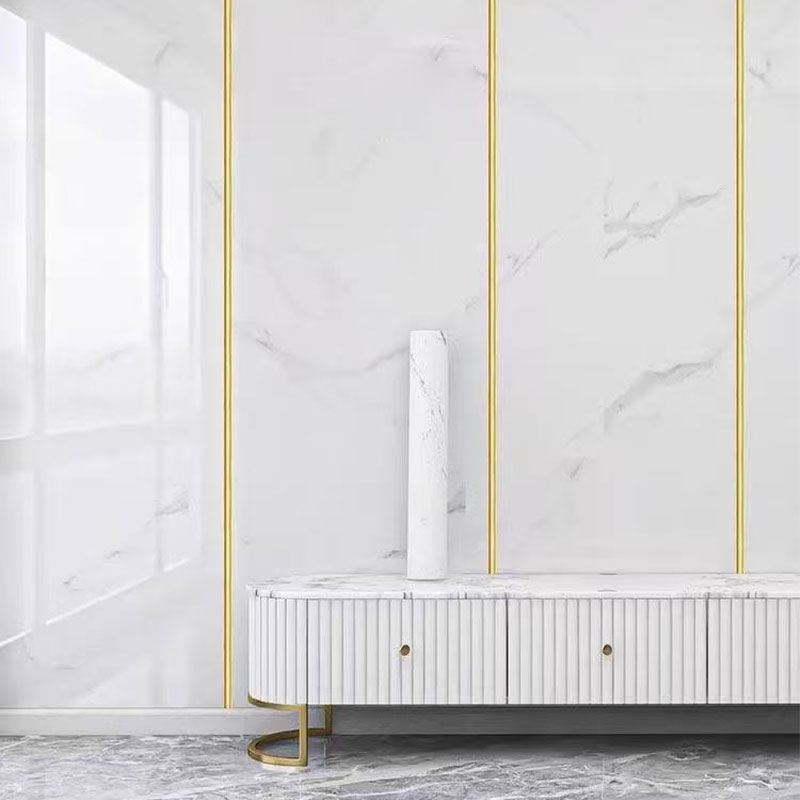
The look matters too. Crisp, cool veining in a matte print suits a bathroom beautifully, while metallic foil finishes belong in dry rooms where they can catch the light without water spotting. That is where a
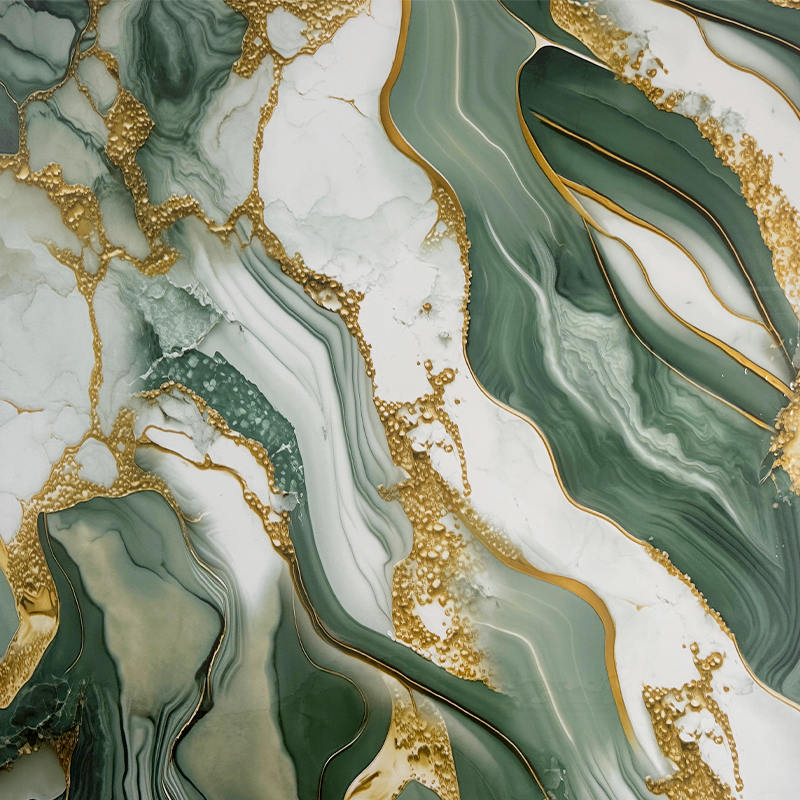
 Gilded Marble Wall Sticker for Dry InteriorsA metallic marble wall sticker for dry rooms such as bedrooms, dining areas and hallways, bringing a light-catching gilded finish to flat, smooth walls.View Product →
gilded marble finish shines — bedrooms, dining areas, a hallway that needs a little warmth.
Choosing a Roll That Will Still Look Good in Two Years
Two rolls can carry an identical photograph of marble and behave nothing alike. These are the checks worth making before you buy:
- Film thickness. Anything under about 0.08 mm feels flimsy and telegraphs every bump in the wall. A slightly thicker face is easier to work with and hides imperfections.
- Adhesive type. Acrylic adhesives tolerate warmth and humidity far better than cheap rubber-based alternatives, which can slide or leave residue.
- Print quality. Look closely at the veins and the shading between them. Sharp, continuous veining means a proper multi-colour print; blurry edges and visible dots mean a cheap one.
- Finish. Matte for wet rooms and imperfect walls, satin for living spaces, gloss only where the surface underneath is genuinely flat.
- Repeat pattern. If you are covering a wide wall, check how the pattern repeats so adjacent drops line up without an obvious join.
- Roll width and length. Measure the wall and plan the cuts before ordering; a narrow roll means more seams, and seams are where moisture gets in.
If you are weighing this against tiling or a full stone panel, a practical comparison of marble sticker options can help you judge the trade-offs in cost, effort and lifespan.
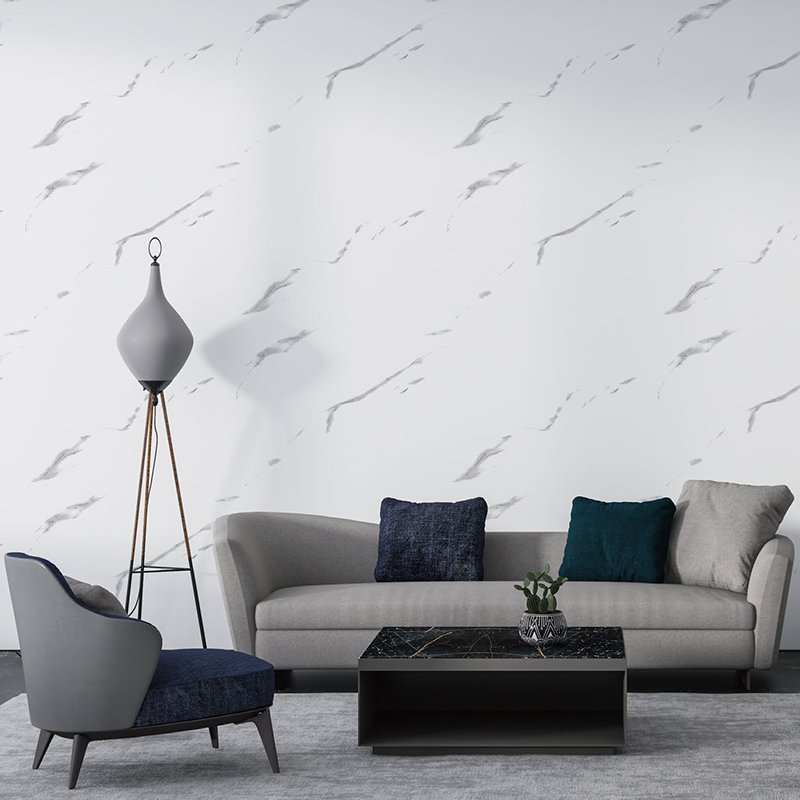 Modern Marble Peel-and-Stick Wall StickerA peel-and-stick marble-look film for kitchens, bathrooms and living rooms, a practical option to review when comparing wall-covering effort and cost.View Product →
Installation, Step by Step
Most failures we are asked about are installation failures, not material failures. The sequence below is the one we recommend to installers working in humid rooms.
- Let the wall dry. Fresh plaster, damp patches and recently cleaned surfaces need time. Aim for a surface that feels dry to the palm and has no dark patches.
- Clean and degrease. Warm water with a little mild detergent, then a clean rinse. Grease and soap residue will defeat any adhesive.
- Check the surface. Fill cracks, sand high spots, and prime dusty or chalky walls with a suitable sealer. Texture will show through a thin film.
- Test a corner. Stick a small offcut and leave it overnight. If it lifts, the wall needs priming or the adhesive is wrong for the job.
- Mark a plumb line. Work from the centre of the wall outward or from a true vertical, never from a corner that may be out of square.
- Peel and press in sections. Remove 20 to 30 cm of backing at a time and smooth with a felt-edged squeegee, working from the centre to the edges to push air out.
- Handle seams deliberately. Either butt the joins tightly or overlap by a few millimetres and cut through both layers for an invisible seam. Do not stretch the film as you go; it will shrink back later.
- Seal the edges in wet rooms. A thin bead of clear sanitary silicone along the top, bottom and any cut edges is the single most effective moisture defence you can add.
Keeping It Looking Like Stone
Maintenance is genuinely simple. Wipe with a damp cloth and a drop of mild soap, then buff dry with a soft towel so no streaks are left behind. Avoid abrasive pads, solvents and steam cleaners, all of which dull the print or soften the adhesive. Every few months, run a fingertip along the seams and the bottom edge; if a corner has lifted, press it back with a little gentle warmth and reseal it before water finds its way underneath. In a bathroom, opening a window or running the fan after a shower does more for the life of the film than any product you could buy.
What Buyers Ask Us Before Ordering
Most of our trade customers are buying for someone else — a retailer stocking a shelf, an importer filling a container, a fit-out contractor covering forty apartment kitchens. Their questions tend to be practical ones. Can the marble pattern be customised? Yes, within the limits of our presses. Can we print wide enough to reduce seams? Our six-colour presses run up to 2400 mm, which is why large-format work rarely needs a joint down the middle. Will the film survive a long sea freight in a hot climate? It will, provided it is stored flat, out of direct sun, and kept in its original wrap until installation.
If you are weighing up specifications for a particular market, the answers to the questions we are asked most often are collected on our FAQ page, and we are always happy to talk through a specific project directly.
A moisture-proof marble wall sticker is not a substitute for stone, and it is not sold as one. It is a sensible, affordable way to get a stone look onto a wall that would otherwise be plain, in rooms where a little humidity is a fact of life rather than a disaster. Choose a film with a sealed matte face, prepare the wall properly, seal the edges, and it will look convincing for a long time — and if you would like to compare finishes or request samples, we are glad to help.