

 English
 Français
 русский
 عربى
عربى Español
Content
- 1 What Is an XPE Folding Mat and What Makes XPE Different?
- 2 XPE vs. EVA vs. NBR: How Folding Mat Materials Compare
- 3 Common Uses for XPE Folding Mats
- 4 Thickness Guide: Which XPE Folding Mat Thickness Do You Need?
- 5 Key Features to Look for in an XPE Foldable Mat
- 6 Standard Sizes of XPE Folding Mats and What They Cover
- 7 How to Clean and Care for Your XPE Folding Mat
- 8 XPE Folding Mat for Babies: What Parents Should Know
- 9 Tips for Getting the Most Out of Your XPE Folding Mat
- 10 Is an XPE Folding Mat Worth the Money?
What Is an XPE Folding Mat and What Makes XPE Different?
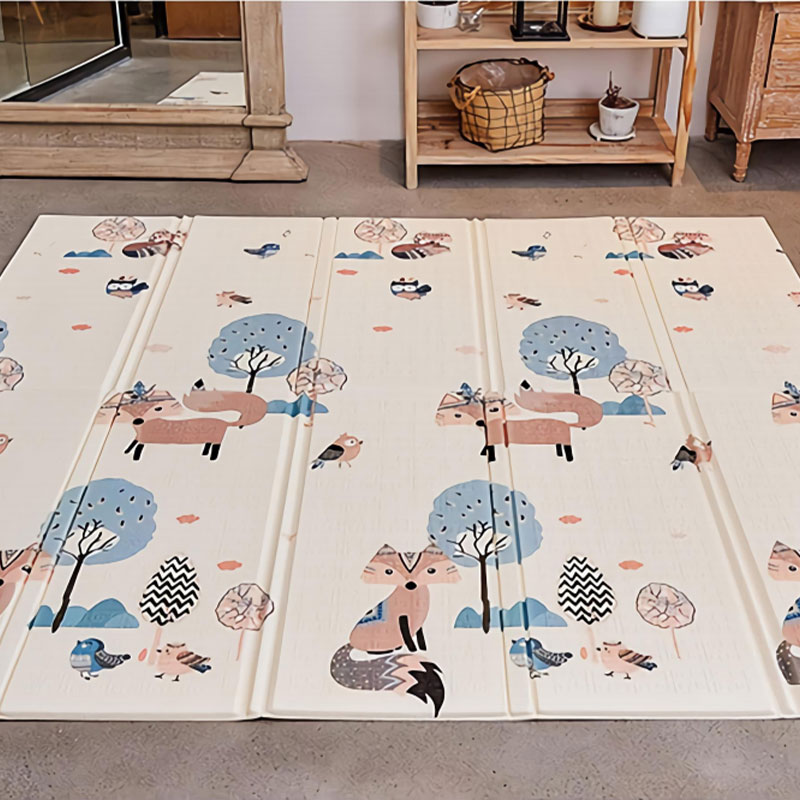
An XPE folding mat is a thick, cushioned exercise or activity mat made from cross-linked polyethylene (XPE) foam, designed to fold into compact sections for easy storage and transport. The "folding" format typically means the mat is divided into connected panels — anywhere from 4 to 10 sections — that fold flat like an accordion when not in use. This makes XPE foldable mats a popular choice for home gyms, children's play areas, yoga and stretching routines, martial arts practice, and gymnastics training.
XPE foam stands apart from other foam materials commonly used in mats. Unlike EVA (ethylene-vinyl acetate) foam or standard polyurethane foam, XPE is a chemically cross-linked closed-cell foam. The cross-linking process creates a denser, more uniform molecular structure, which translates into better resilience, improved shock absorption, superior water resistance, and a longer service life. XPE foam does not absorb moisture into its core the way open-cell foams do, which means it resists mold, mildew, and bacterial growth — a significant advantage in gym and play mat applications.
XPE is also free from formamide, phthalates, BPA, and heavy metals in quality-certified versions, making XPE folding mats a preferred option for infant crawling mats and children's play surfaces where material safety standards matter most.
XPE vs. EVA vs. NBR: How Folding Mat Materials Compare
When shopping for a foldable exercise mat or gym mat, you'll encounter several foam material types. Understanding the differences helps you choose the right product for your specific use case rather than just picking the cheapest option available.
| Property | XPE Foam | EVA Foam | NBR Foam |
| Cell Structure | Closed-cell (cross-linked) | Closed-cell | Open-cell |
| Water Resistance | Excellent | Good | Poor — absorbs moisture |
| Shock Absorption | Excellent | Good | Very good |
| Durability | Very high | Moderate | Moderate |
| Child Safety Certifications | Widely available (CE, EN71) | Variable by manufacturer | Less common |
| Odor | Low | Can be strong initially | Moderate rubber smell |
| Price Range | Mid to premium | Budget to mid | Mid to high |
For most buyers, XPE folding mats represent the best overall balance of safety, durability, and hygiene. EVA foam mats are fine for light use but compress and degrade faster under repeated impact. NBR mats are excellent for yoga due to their grip but are unsuitable for baby play mats because they absorb sweat and spills deeply.
Common Uses for XPE Folding Mats
The XPE foldable mat is one of the most versatile pieces of padded equipment available for home and professional use. Its combination of cushioning, water resistance, portability, and easy cleaning makes it suitable across a wide range of activities.
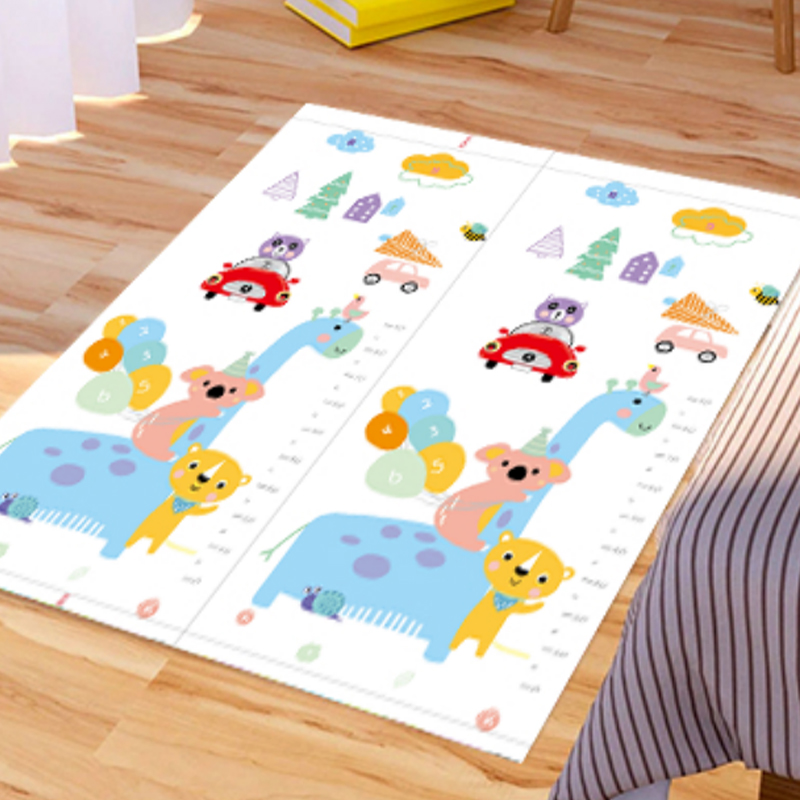
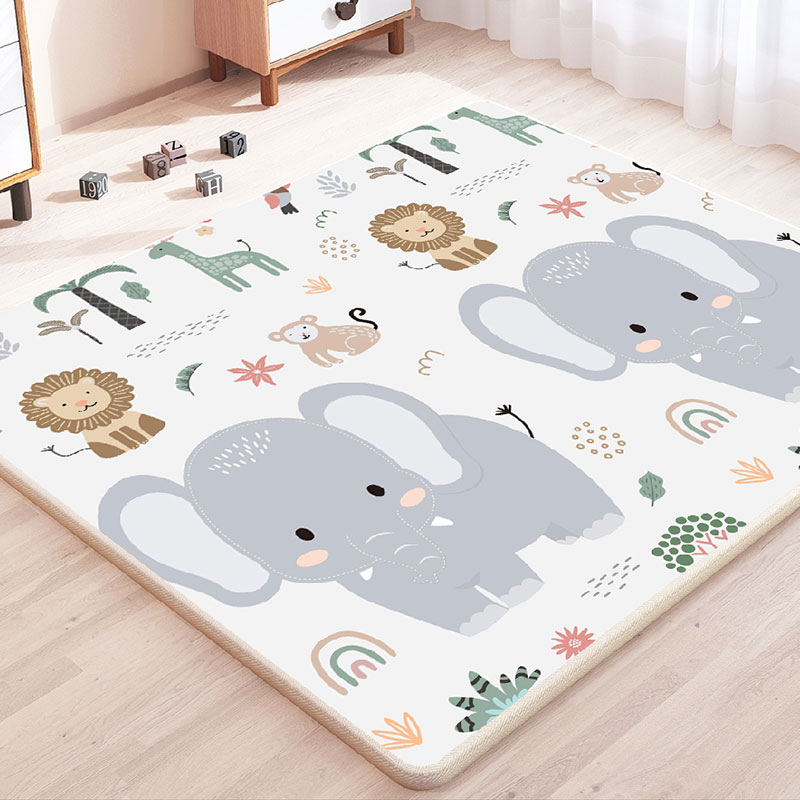
Baby and Toddler Play Mats
One of the most popular applications for XPE folding mats is as a safe crawling and play surface for infants and toddlers. The thick XPE foam cushions falls and impacts while the closed-cell structure ensures spilled milk, food, and other liquids wipe clean from the surface rather than soaking in. Parents particularly appreciate that certified XPE foam mats are free from formamide — a chemical found in some cheap EVA foam mats that can be harmful to young children.
Home Gym and Fitness Training
XPE folding gym mats provide a padded surface for floor exercises, core workouts, stretching, yoga, Pilates, and bodyweight training. Their density provides enough resistance to hold position during exercises without the mat compressing flat, while the cushioning protects wrists, knees, and spine during ground-level movements. Because they fold flat into a narrow bundle, they take up minimal storage space — a major advantage in apartment gyms or shared living spaces.
Gymnastics and Tumbling
Thicker XPE folding gymnastics mats — typically 4 to 6 cm (1.5 to 2.4 inches) — are used for forward rolls, cartwheels, handstand practice, and beginner tumbling at home. The folding format allows the mat to be set up and stored quickly, which is ideal for children who practice in living rooms or playrooms. For serious gymnastics training, these mats complement rather than replace professional spring floors and crash pads.
Camping and Outdoor Activities
Lightweight XPE folding sleeping mats are a staple of backpacking and camping gear. The closed-cell XPE foam provides thermal insulation from the cold ground while the folding panels make packing straightforward. Unlike inflatable sleeping pads, an XPE foam folding mat cannot puncture or deflate — a key reliability advantage in rugged outdoor environments.
Martial Arts and Self-Defense Training
XPE foldable mats are widely used for light martial arts practice, including beginners' judo, taekwondo forms, and self-defense drills at home. Their impact absorption reduces the risk of bruising from falls and throws, while the non-slip surface texture helps prevent slipping during dynamic footwork. Serious dojo training still requires thicker interlocking foam tiles or crash mats, but for home practice an XPE folding mat is an accessible and affordable starting point.
Thickness Guide: Which XPE Folding Mat Thickness Do You Need?
Thickness is the single most important spec when choosing an XPE folding mat, and the right choice depends entirely on how you plan to use it. Thicker mats provide more cushioning and impact protection but are heavier and take up more space when folded. Use the guide below as a starting point:
| Thickness | Best For | Not Suitable For |
| 10–15 mm (1–1.5 cm) | Yoga, stretching, light Pilates, camping sleep mat | Impact training, gymnastics, baby play |
| 20–25 mm (2–2.5 cm) | General fitness, baby crawling mat, floor exercises | Tumbling, heavy impact sports |
| 30–40 mm (3–4 cm) | Toddler play, beginner gymnastics, home gym multi-use | Advanced tumbling, competition-level training |
| 50–60 mm (5–6 cm) | Gymnastics tumbling, martial arts falls, high-impact floor work | Yoga, balance exercises (too soft underfoot) |
If you are buying an XPE folding mat for a young baby who is just learning to sit and crawl, a 20 mm mat is the most common recommendation — enough to cushion toppling falls without being so thick that it creates instability for a child learning to balance. For older children doing cartwheels and rolls, step up to at least 40 mm.
Key Features to Look for in an XPE Foldable Mat
Not all XPE folding mats are manufactured to the same standard. These are the features worth scrutinizing before making a purchase:
- Safety Certifications: Look for EN71 (European toy safety), ASTM F963 (US toy safety), or REACH compliance for XPE folding mats intended for children. These certifications confirm the foam has been tested for formamide, heavy metals, and other chemical hazards. Reputable brands display their certifications prominently in product listings.
- Surface Texture: The surface of a quality XPE folding mat should have a non-slip texture — either a subtle embossed pattern or a slightly grippy skin finish. A completely smooth surface becomes slippery when moisture is present, which is a safety risk, especially for toddler mats.
- Hinge Quality: The panels of a folding mat are connected by hinges or bonded fabric seams. Low-quality hinges crack and split after repeated folding and unfolding, causing the mat to tear apart along the fold lines. Look for reinforced fabric tape hinges or double-stitched seams that flex without cracking.
- Density Rating: XPE foam density is measured in kg/m³. Higher-density foam (80–120 kg/m³) holds its shape under repeated use and provides more consistent cushioning over time. Low-density XPE (below 60 kg/m³) compresses permanently faster and loses its protective qualities sooner.
- Folded Dimensions: Before buying, check what size the mat folds down to and compare it against your storage space. A 6-panel mat folds to roughly one-sixth of its open length — a 180 cm mat folds to approximately 30 cm — but the folded thickness depends on the number of panels and individual panel thickness.
- Carrying Handle or Strap: A built-in carrying handle or elastic strap is a small but practical detail that makes transporting and storing the mat significantly more convenient. Look for handles rated for the mat's full weight, particularly on heavy 6 cm gym mats.
- Double-Sided vs. Single-Sided Design: Some XPE folding mats feature two different surface textures — one smooth and one textured — on each side, allowing the user to choose the surface that suits their activity. This adds versatility without requiring two separate mats.
Standard Sizes of XPE Folding Mats and What They Cover
XPE foldable mats come in a wide range of sizes. The most common configurations in the market are listed below, with practical notes on who each size suits best:
- 120 × 60 cm (4-panel): Compact size suited for yoga and individual stretching. Covers enough space for a single adult in most floor poses but is too narrow for dynamic gymnastics movements. Popular for travel and camping use.
- 150 × 100 cm (4–6 panel): A versatile mid-size mat for individual fitness use, toddler play in smaller rooms, or paired yoga sessions. Wide enough for most Pilates and core exercise routines.
- 180 × 100 cm (6-panel): One of the most common XPE folding gym mat sizes. Provides sufficient length for an adult to lie down fully extended, making it ideal for stretching, gymnastics rolls, and floor exercises.
- 200 × 120 cm (6–8 panel): A generous size suited to children's play rooms, larger home gyms, and multi-person fitness use. Often used as a designated safe floor zone for toddlers in family living areas.
- 240 × 120 cm and above (8–10 panel): Large-format XPE folding mats for gymnastics training, martial arts, and professional home gym setups. These heavier mats typically weigh 8–15 kg and include carrying handles for practical transport.
How to Clean and Care for Your XPE Folding Mat
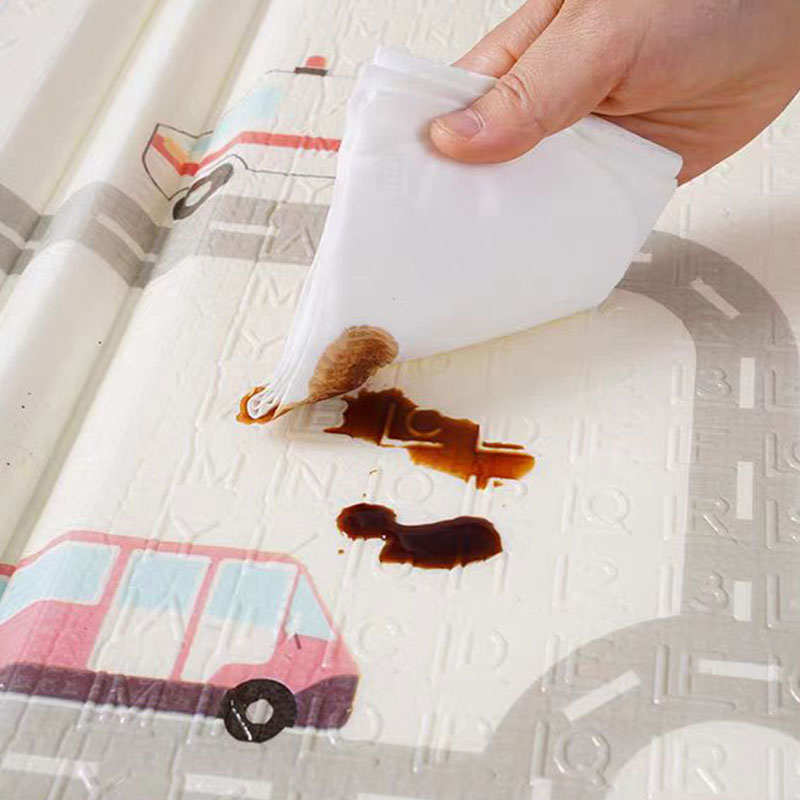
One of the biggest advantages of XPE over open-cell foam mats is how easy XPE folding mats are to clean. The closed-cell surface does not trap sweat, bacteria, or odors in the same way that NBR or standard foam mats do. Proper care extends the mat's lifespan considerably and maintains hygienic conditions, especially important for baby play mats and shared fitness equipment.
- Daily cleaning: Wipe the surface down with a damp cloth or microfiber towel after each use. For baby mats, a mild soap-and-water solution is sufficient for everyday spills and drool.
- Deep cleaning: For gym sweat or heavier soiling, use a diluted solution of white vinegar and water (1:3 ratio) or a foam-safe gym mat cleaner. Apply with a cloth, wipe thoroughly, and allow to air dry completely before folding for storage.
- Avoid submerging in water: Although XPE is water-resistant, fully submerging a folding mat can allow water to seep into the hinge seams and linger between panels, creating conditions for mildew at the fold points. Surface cleaning is preferred over full submersion.
- Never use bleach or harsh solvents: Strong chemical cleaners can degrade the XPE foam surface, cause discoloration, and break down the material's structural integrity. Stick to mild, pH-neutral cleaning solutions.
- Dry before storing folded: Always allow the mat to air dry fully — ideally unfolded — before folding and storing. Storing a damp folded mat creates a moist, dark environment that encourages mold growth along the fold lines even on XPE.
- Store away from direct sunlight: Prolonged UV exposure degrades foam materials over time. Store your XPE folding mat in a cool, dry location out of direct sunlight when not in use to preserve its color and foam integrity.
XPE Folding Mat for Babies: What Parents Should Know
Choosing an XPE folding play mat for a baby or young child involves additional considerations beyond what you'd evaluate for an adult fitness mat. Infants spend extended periods in direct contact with the mat surface, and at crawling and mouthing stages they may come into direct oral contact with the material. Here's what to prioritize:
- Formamide-free certification: Formamide is a chemical used in the production of some foam products that can off-gas at room temperature. Premium XPE baby folding mats are certified formamide-free. Always check the product description or ask the seller for test reports if this is not clearly stated.
- Double-sided printing safety: Many baby XPE folding mats feature colorful printed patterns on one or both sides. Ensure the inks used are water-based, non-toxic, and rated safe for children. Look for EN71-3 compliance, which specifically covers chemical migration from printed surfaces.
- Edge safety: Babies crawl to and off the mat's edges. Look for XPE folding mats with smooth, rounded panel edges that don't have sharp foam cuts or exposed adhesive strips that a baby could pick at or ingest.
- Recommended thickness for babies: A 20 mm XPE folding mat is generally the sweet spot for babies — sufficient to cushion a backward topple or head bump during early sitting practice, without being so plush that it creates an unstable surface that impedes motor development.
Tips for Getting the Most Out of Your XPE Folding Mat
With a bit of care and smart usage, your XPE foldable mat will deliver years of reliable performance. These practical tips help maximize both the mat's lifespan and your experience using it:
- Lay the mat flat on a clean, dry floor: Avoid using the mat on rough concrete or abrasive surfaces that can scratch and wear down the XPE skin layer. Place it on wood, tile, or carpet for best surface longevity.
- Rotate the mat periodically: If you consistently use the same section of the mat — such as a center kneeling position for yoga — rotate or flip the mat regularly so foam compression is distributed evenly across all panels.
- Use a non-slip rug pad underneath: On smooth hard floors, placing a thin non-slip mat underneath your XPE folding gym mat prevents the entire mat from sliding during dynamic exercise movements.
- Don't drag it across floors: Dragging a folding mat rather than carrying it stresses the hinge connections and can cause the edge panels to separate over time. Always pick it up when moving it.
- Keep pets off the mat when possible: Pet claws — particularly from cats — puncture and scratch the XPE foam surface, compromising both its appearance and hygienic closed-cell structure. Store the mat folded and upright when not in use to keep it out of reach.
Is an XPE Folding Mat Worth the Money?
Compared to basic EVA foam puzzle tiles or cheap PVC gym mats, a quality XPE folding mat costs more upfront — typically $40–$150 depending on size and thickness. But the investment is justified for most buyers when you factor in the material's durability, superior shock absorption, resistance to compression set, and the hygiene advantages of a closed-cell surface that doesn't harbor bacteria or absorb moisture.
For parents outfitting a baby play space, the peace of mind from certified formamide-free, child-safe XPE foam is worth a significant premium over untested budget alternatives. For fitness enthusiasts, the ability to store a full-length exercise mat in a folded bundle the size of a small suitcase removes one of the biggest practical barriers to having gym-quality floor padding at home.
The best approach is to buy the right size and thickness for your primary use case rather than compromising. An undersized or under-thickness XPE folding mat that doesn't fully meet your needs will feel like a disappointing purchase regardless of how good the foam quality is. Buy once, buy right, and your XPE folding mat will serve you — and your family — for years.