

 English
 Français
 русский
 عربى
 Español
Choosing a baby activity mat can feel like a small decision with a long list of questions. Will it be soft enough for tummy time? Can it handle spills? Does it fold away when the living room needs to become a living room again? A good mat is part play surface, part safety zone, and part practical furniture. The right choice depends less on fancy features and more on how your family actually uses the floor.
Content
- 1 What a Baby Activity Mat Really Does
- 2 The Materials Behind a Comfortable Mat
- 3 Safety and Practical Checks Before You Buy
- 4 Thickness, Size, and Foldability: Finding the Right Fit
- 5 From Film to Floor: How a Good Mat Is Made
- 6 Cleaning and Everyday Care
- 7 Matching the Mat to Your Family's Rhythm
- 8 Common Questions Parents Ask
- 9 A Calm, Practical Choice
What a Baby Activity Mat Really Does
A baby activity mat gives your child a defined, comfortable place to move. During tummy time, it cushions the chest and knees while encouraging head lifting. As babies roll, sit, and crawl, the mat provides a consistent surface that feels different from carpet, tile, or hardwood. That consistency matters: babies can push, pivot, and practice new movements without worrying about hard edges or cold floors.
The benefits go beyond comfort. A mat can support motor skills, hand-eye coordination, and sensory exploration. Toys placed just out of reach invite stretching and reaching. Textured or printed surfaces give visual interest. Most importantly, a mat creates a simple boundary for play, which makes it easier for parents to supervise and easier for babies to focus.
The Materials Behind a Comfortable Mat
Most baby activity mats combine a foam core with a surface layer. The core provides cushioning, while the surface determines how the mat feels, looks, and cleans. EPE and XPE foams are common because they are lightweight, foldable, and resilient. A printed film surface can add color and pattern while making the mat water-resistant and easy to wipe.
Material choice affects the experience. Firmer foams support crawling and standing practice. Softer foams feel cozy for sitting and lounging. A smooth film surface is practical for snacks, crafts, and spills, while a fabric-topped mat may feel warmer but needs more careful cleaning.
| Mat style | Feel | Best for | Everyday care |
|---|---|---|---|
| XPE folding mat | Firm and supportive | Tummy time and early crawling | Wipe with a damp cloth; dry fully before folding |
| Thickened baby crawling mat | Softer and cushioned | Sitting, toddler play, and story time | Vacuum gently; wipe spills promptly |
| Printed film floor mat | Smooth and water-resistant | Snacks, crafts, and floor protection | Mild soap; avoid harsh abrasives |
For a thicker, home-friendly option, the thickened baby crawling mat is designed with a soft, foldable build for daily floor play.
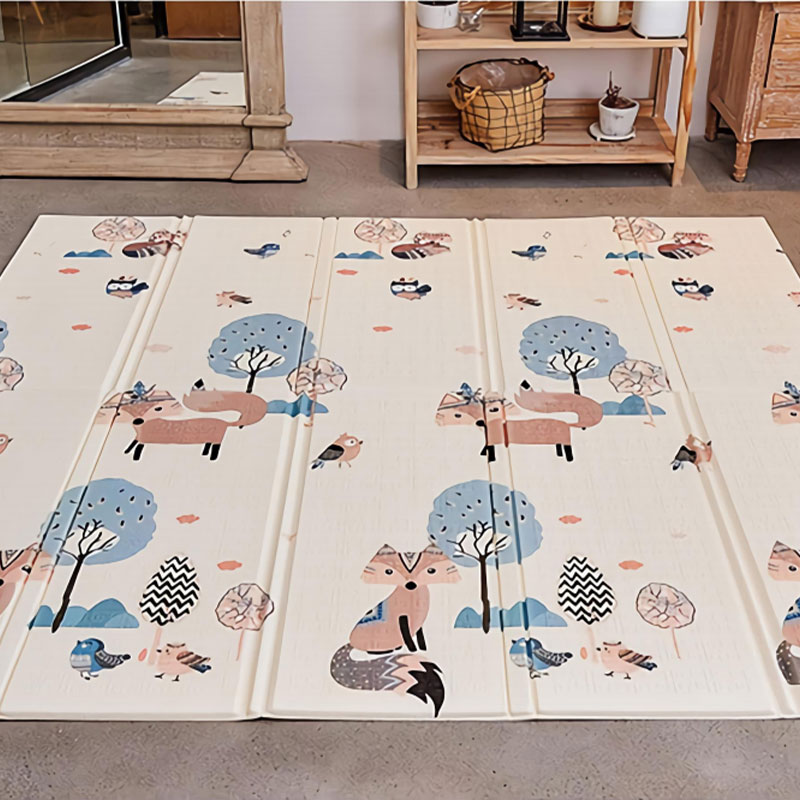 Thickened Foldable Baby Crawling Mat for HomeSoft foldable floor mat for infants and toddlers, offering a comfortable, non-slip, easy-clean space for daily crawling and play at home.View Product →
Safety and Practical Checks Before You Buy
Safety starts with the basics. Look for clear material information, a low-odor product, and a surface that does not feel sticky or leave residue on your hands. Check the edges: they should lie flat and not curl up into a trip hazard. If the mat is foldable, unfold it fully and let it settle before use. A mat that slides easily on your floor is not ready for a baby who is learning to push off.
Thickness matters, but more is not always better. A very soft mat can feel cozy, yet it may make standing practice wobbly. A mat that is too thin may not cushion a newly sitting baby. For a deeper look at thickness, materials, and safety, our crawling mat guide walks through the trade-offs.
Also think about cleaning before you buy. A wipeable surface is a practical advantage, but seams and fabric edges need attention too. If anyone in the home has allergies, choose a mat that can be wiped and dried thoroughly rather than one that traps dust.
Thickness, Size, and Foldability: Finding the Right Fit
For many families, a mat in the region of 1 cm to 1.5 cm is a practical middle ground: enough cushioning for sitting and crawling, but firm enough for pushing up. Newborns and young babies often do well with a smaller mat that is easy to keep clean. Crawlers and toddlers benefit from more space, especially if the mat will become a permanent play corner.
Size should match the room, not just the baby. A mat that is too large can crowd a small living space and make folding difficult. A mat that is too small will be abandoned once your baby starts rolling. Measure the floor area you have, then leave a little breathing room around the edges. Foldability is another everyday detail: a mat that folds flat is easier to store, but the folds should be tight and secure.
From Film to Floor: How a Good Mat Is Made
Behind a simple play mat is a chain of careful steps: film printing, lamination, foam bonding, cutting, and inspection. The surface film needs to hold color evenly, resist scuffs, and stay bonded to the foam through folding and wiping. At Morning Language, we work with printed composite films and mat surfaces every day, so we pay close attention to how a pattern looks after repeated use and how a surface feels against a baby's skin.
You can learn more about our production process and the equipment behind these materials. For families who want a mat that is easy to store and firm enough for daily play, the XPE folding mat is a practical option.
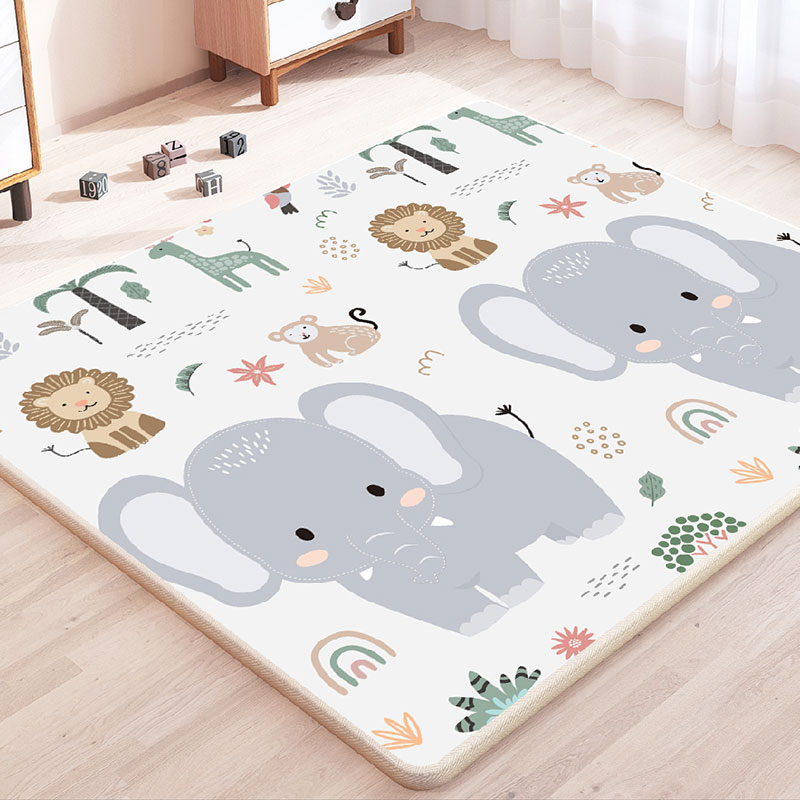 XPE Folding Household Floor Mat with Matte FilmFoldable XPE floor mat with matte PE film printing, designed for compact storage and everyday use in home or children’s areas.View Product →
Cleaning and Everyday Care
A baby activity mat sees more than play. It collects crumbs, dribbles, craft glue, and the occasional snack accident. For film-topped mats, start with a soft damp cloth and mild soap. Wipe in one direction, then rinse the cloth and wipe again. Avoid harsh solvents, bleach, or abrasive pads, which can dull the print or damage the surface.
Dry the mat fully before folding. Trapped moisture can create odors or weaken the bond between layers over time. If the mat has a fabric side, vacuum it gently and spot clean according to the maker's instructions. Store the mat flat or loosely folded rather than under heavy objects, and give it time to air out after cleaning.
Matching the Mat to Your Family's Rhythm
The best mat is the one that fits your routine. A newborn household may want a small, easy-to-wipe mat for short tummy time sessions. A family with a crawler may prefer a larger surface with a non-slip base. A toddler who builds and tumbles needs room to spread out, plus a mat that can be folded away when the day is done. If your mat travels between the living room, balcony, and park, a moistureproof mat can be a useful second layer.
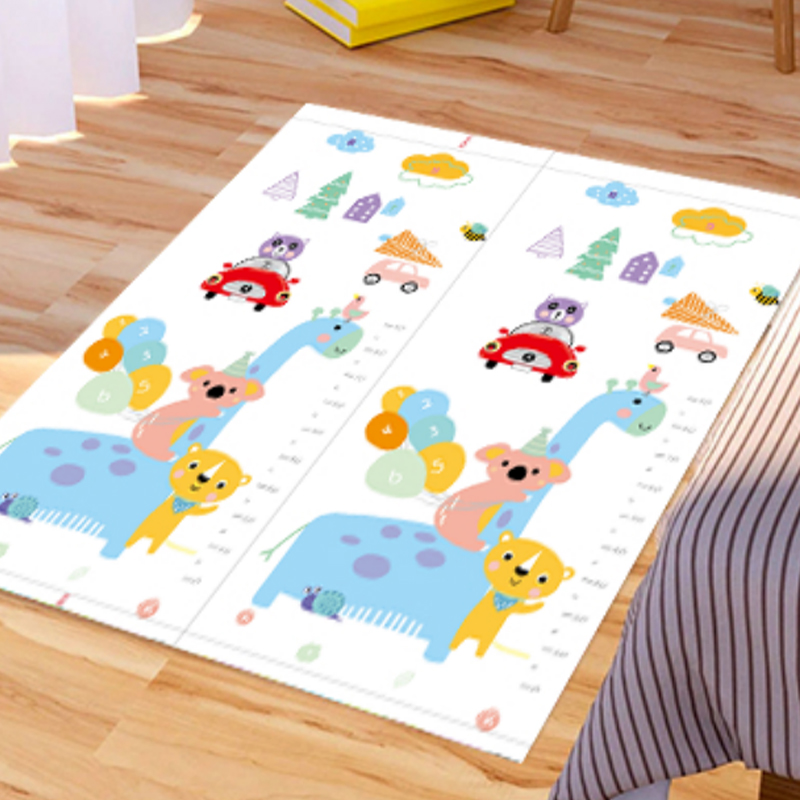 Foldable Moisture-Proof Outdoor Picnic and Camping MatMoisture-proof, dirt-proof folding mat for camping, grass, beach, and family outings; also usable as an indoor play or crawling mat.View Product →
Think about color and pattern too. A busy print can hide small marks, while a calm solid feels restful in a shared room. Neither is better; both are practical depending on where the mat will live.
Common Questions Parents Ask
When can I start using a baby activity mat?
You can use a mat from the early newborn days for supervised tummy time and floor play. Choose a firm, clean surface and keep sessions short at first.
How thick should a baby activity mat be?
For many families, about 1 cm to 1.5 cm works well for sitting and crawling. Check the product details and consider your floor: a hard tile floor may call for more cushioning than a carpeted room.
Are foam activity mats safe?
Look for clear material information, low odor, and a well-finished surface. Unfold a new mat and let it air out before use. Always supervise babies on any mat.
Can my baby sleep on an activity mat?
An activity mat is designed for supervised play, not overnight sleep. Use a firm, flat sleep surface that meets safety guidance for sleep.
How do I clean a baby activity mat?
Wipe film surfaces with mild soap and water, then dry fully. Vacuum fabric surfaces gently and follow the maker's care instructions.
A Calm, Practical Choice
A baby activity mat does not need to be complicated. Look for a comfortable surface, a sensible thickness, secure edges, and a care routine you will actually follow. Match the size to your room, choose a material that suits your cleaning habits, and give your baby a safe place to stretch, roll, and explore. If you are comparing options, start with the everyday details: how it feels, how it folds, and how easy it is to keep clean.