

 English
 Français
 русский
 عربى
 Español
If you have spent any time watching a baby learn to move, you know that the floor suddenly becomes the most important surface in the house. A baby crawling mat is not just a pretty square on the floor. It is where stretching, rolling, sitting, and those first determined crawls happen. It also gives parents a moment to breathe, because a soft, stable surface makes tumbles less dramatic and playtime more comfortable for everyone.
As a manufacturer of printed composite films and mat surfaces, we have seen how much difference the right material, thickness, and finish can make. The best choice is rarely the thickest or the most expensive one. It is the mat that fits your home, your baby’s stage, and the way you actually live day to day. Below is a practical guide to help you compare options with confidence.
Content
- 1 Why a Baby Crawling Mat Earns Its Place in the Home
- 2 Materials Matter: EPE, XPE, and the Surface You Touch
- 3 Thickness, Density, and Comfort: Finding the Right Balance
- 4 Safety and Everyday Use: What Parents Should Check
- 5 Foldable vs. Rolled Mats: Choosing for Your Space
- 6 Cleaning and Care: Keeping the Mat Fresh Without Harsh Chemicals
- 7 Matching the Mat to Your Family’s Routine
- 8 A Simple Buying Checklist
Why a Baby Crawling Mat Earns Its Place in the Home
Babies spend a surprising amount of time close to the floor. A crawling mat gives them a defined play area that is softer than bare flooring, easier to clean than carpet, and warmer than tile. It also helps parents create a small safe zone without rearranging the whole room.
The benefits are simple but real:
- Cushioning for knees, elbows, and the occasional backward tumble.
- A clean surface that is easier to wipe than rugs or carpet edges.
- Grip under small hands and feet as babies push and pivot.
- A visual boundary for playtime, especially in open-plan homes.
- Insulation from cold floors during morning play and diaper changes.
A mat does not need to be complicated to do this well. It needs to lie flat, stay in place, and feel comfortable enough that your baby is happy to spend time on it.
Materials Matter: EPE, XPE, and the Surface You Touch
Most foam crawling mats use EPE or XPE as the core. EPE is lightweight and resilient, which makes it a common choice for travel mats and budget-friendly play mats. XPE is denser and firmer. It tends to hold its shape well and feels more supportive under knees and hands, especially in thicker mats.
The top surface matters just as much as the foam. Printed films give the mat its pattern, color, and wipeable finish. A well-made composite film keeps the design protected under a durable layer, so it does not rub off during everyday cleaning. Texture also plays a role: a lightly embossed surface can feel less slick than a perfectly smooth one.
When you shop, ask what the foam is and what the top layer is made of. A mat with a gentle texture, secure edges, and a print that stays put is usually a better long-term choice than one that looks thick but feels unstable.
For a closer look at a thicker home option, see the product card below.
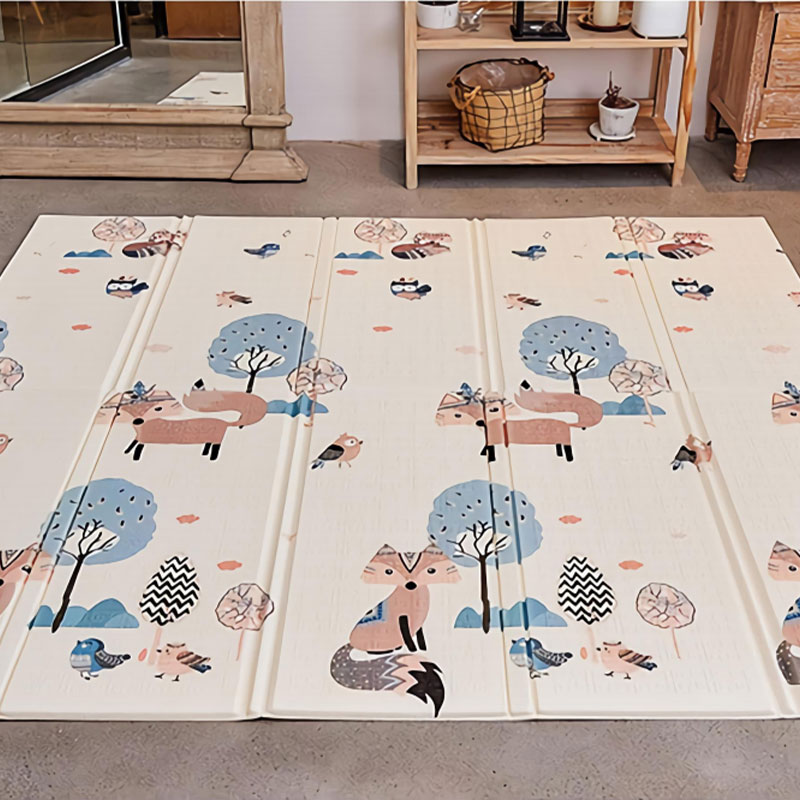 Thickened Foldable Baby Crawling Mat for HomeA soft, foldable crawling and play mat for infants, with printed patterns, non-slip surface, and easy-clean material for everyday home use.View Product →
Thickness, Density, and Comfort: Finding the Right Balance
Thickness is the first number parents notice, but it is not the whole story. A 10 mm mat can be perfectly comfortable for a toddler who is already mobile, while a 20 mm mat may suit a newborn during tummy time. Density matters just as much. A thin, dense mat can feel more supportive than a thick, soft mat that compresses all the way to the floor.
| Thickness | Best for | What to keep in mind |
|---|---|---|
| 10 mm (1 cm) | Travel, small spaces, toddlers on the move | Easy to store; check density so knees do not feel the floor |
| 15 mm (1.5 cm) | Everyday play, living rooms, nursery floors | A balanced choice for comfort and stability |
| 20 mm (2 cm) | Newborns, tummy time, extra cushioning | Softer underfoot; make sure edges stay flat |
Before buying, press a knee into the mat. It should cushion without sinking straight through. Then run a hand across the surface. It should feel grippy rather than slick, and the edges should sit flat against the floor. Those small checks tell you more than a thickness label alone.
Safety and Everyday Use: What Parents Should Check
Safety is not one label. It is a set of details that work together. Look for a mat that lies flat, has secure seams, and does not slide when your baby pushes against it. If the surface is printed, ask how the print is protected. A well-made composite film keeps the design under a durable layer, so it does not rub off during cleaning.
Simple checks before the mat goes on the floor
- Unfold or unroll it in a ventilated room and let it air out. A mild new-material smell should fade; a sharp chemical smell is a reason to pause.
- Press a knee into the mat. It should cushion without sinking all the way to the floor.
- Run a hand across the surface. It should feel grippy, not slick, and the edges should sit flat.
- Wipe a small corner with a damp cloth. Color and surface texture should stay intact.
We keep these details in mind during production, from film selection to lamination and cutting. You can learn more about our production process and how printed films are combined with foam cores. For a deeper look at materials and safety, this crawling mat guide covers the questions parents ask most often.
Foldable vs. Rolled Mats: Choosing for Your Space
Foldable mats are convenient in small homes. They fold into sections, store in a closet, and are easier to move between rooms or take to a grandparent’s house. Rolled mats are often simpler and can cover larger areas, but they need space to unroll and may take time to lie completely flat.
If you plan to move the mat often, folding wins. If you want a fixed play zone, a rolled mat can work well. Check the hinge points on any foldable mat. They should be reinforced and flat when opened. A hinge that traps crumbs or sticks up creates a trip point. Also consider weight: a thick foldable mat can be heavy, so look for a manageable folded size or a carry handle.
For a foldable option designed for home use, see the product card below.
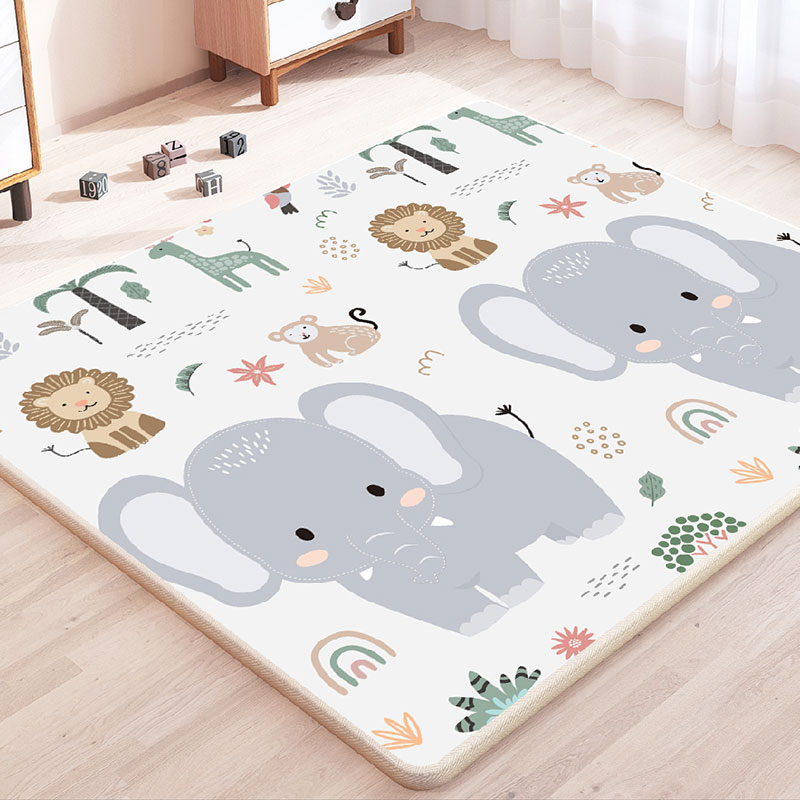 XPE Foldable Floor Mat for Home UseA space-saving folding mat with a matte PE-printed XPE surface, suitable for home and recreational settings and quick to fold away.View Product →
Cleaning and Care: Keeping the Mat Fresh Without Harsh Chemicals
Most baby crawling mats are designed to be wiped, not soaked. Use a damp cloth with mild soap and water. Avoid bleach, abrasive cleaners, and too much water around seams. Dry the mat fully before use, especially if it has folds. For crumbs, a soft brush or a vacuum with a smooth head works well. Rotate or flip the mat if possible so wear stays even.
Outdoor use is different. Sunlight and heat can age foam and printed films, so avoid leaving a mat in direct sun for long periods. Bring it inside after a picnic, shake off grit, and wipe it down before storing.
Matching the Mat to Your Family’s Routine
Think about how the mat will be used. A newborn needs a soft place for tummy time and a clean boundary for visitors. A crawler needs grip and enough room to move. A toddler may use the same mat for blocks, snacks, and pretend play. Families who travel or spend weekends outdoors may want a lightweight mat that can handle grass, sand, and damp ground.
It is often better to choose one mat for the main play area and a second, thinner mat for travel. That way you do not have to trade comfort for portability every time you leave the house. For outdoor trips, a moisture-resistant base and a wipeable top make cleanup much easier.
For a practical outdoor option, see the product card below.
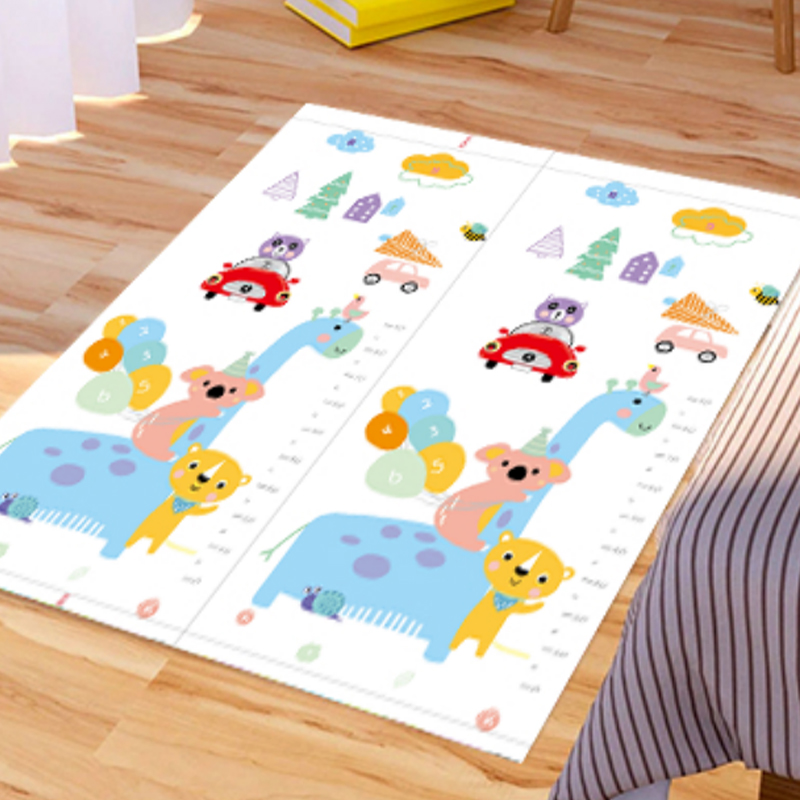 Foldable Outdoor Picnic and Camping MatA portable, moisture-proof mat for grass, beaches, camping, and travel that can also serve indoors as a play or crawling surface.View Product →
A Simple Buying Checklist
- Start with the stage: tummy time, crawling, or toddler play.
- Check the foam: EPE is lighter; XPE is denser and firmer.
- Press and kneel on the mat to judge real support, not just thickness.
- Look for a flat, grippy surface and secure edges.
- Ask how the print is protected and how the mat should be cleaned.
- Measure your space before choosing a size or fold pattern.
- Let the mat air out and test a small corner before full use.
A good baby crawling mat should feel like one less thing to worry about. It should give your baby room to move and give you confidence that the surface underneath is soft, stable, and easy to keep clean. If you keep those basics in mind, you can choose a mat that works for your home today and for the next stage of your baby’s development.