

 English
 Français
 русский
 عربى
عربى Español
A crawling mat looks almost too simple to think about: a soft, colorful surface rolled out on the floor. Underneath that surface, though, sits a short stack of engineered materials — a foam core, a printed film, an adhesive layer, and often a moisture-proof backing — and those layers decide whether the mat stays flat, wipes clean, and survives a year of daily use.
In its most familiar form, a crawling mat is a padded floor covering that gives an infant a clean, cushioned place to crawl, sit, and take first steps. The same construction keeps working long after the crawling stage ends: as a play mat for toddlers, a soft floor for a family room, and, in lighter versions, a moisture-proof picnic mat for parks, beaches, and campsites.
Our team has been printing and laminating films for mats and decorative coverings since 2019, so we tend to look at this product from the inside out. What follows is a practical walkthrough of the materials, thicknesses, designs, and care habits that decide whether a crawling mat earns its place in a home.
Content
What a Crawling Mat Is Actually For
A crawling mat is neither furniture nor a mattress. Its job is to turn a hard, cold, or slippery floor into a surface that is safe for a baby to move on and easy for an adult to live with. Almost every design decision in the product — thickness, foam density, print, backing — traces back to that dual purpose.
Before comparing prices, it helps to write down what the mat actually has to do:
- feel soft under knees and elbows, yet firm enough that a toddler can balance on it
- wipe clean after spills, snacks, and shed pet hair
- stay in place on tile, laminate, or concrete without curling along the edges
- arrive without a sharp plastic smell that lingers for weeks
- hold its colors and print through normal wear and routine cleaning
- fold or roll down small enough to store when guests arrive
Each of those points comes back to a material choice rather than to the pattern printed on top, which is why the next section moves quickly from appearance to structure.
The Layers Inside a Crawling Mat
Most crawling mats are built from three functional layers that are laminated into one sheet.
- A printed surface film, usually a composite film printed in five or six colors, finished matte or glossy depending on the design intent.
- A closed-cell foam core, most often EPE or XPE, which supplies the cushioning and the water resistance.
- A backing film, sometimes embossed, that adds grip on smooth floors and blocks moisture rising from below.
The printed film carries most of the visual value, and it is the layer we know best. Whether a design reads as wood grain, stone texture, or a simple cartoon scene comes down to ink laydown, plate registration, and lamination temperature rather than to artwork alone. It is also the layer where quality varies most between suppliers, which is why two mats that look identical online can behave very differently after a few months of use.
EPE and XPE: What the Foam Core Changes
Both foams are polyethylene-based, closed-cell, lightweight, and waterproof, so the choice between them is not about good versus bad. The differences appear in density, surface regularity, and how the mat behaves after repeated folding.
| Feature | EPE foam core | XPE foam core |
|---|---|---|
| Cell structure | Larger, softer cells | Finer, more uniform cells |
| Surface feel | Softer, slightly springy | Firmer and more even |
| Print appearance | Warm, lightly textured look | Crisp, smooth print surface |
| Folding endurance | Good for occasional folding | Better for frequent folding |
| Typical use | Picnic and moisture-proof mats | Baby crawling and play mats |
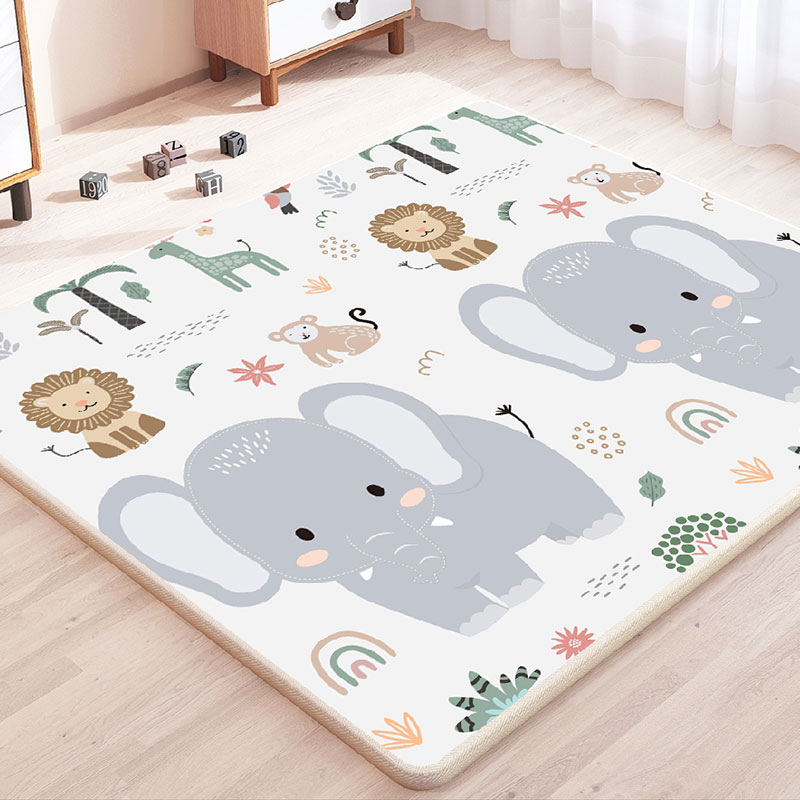 XPE Folding Mat for Home UseXPE household folding model matte film floor mats are printed on PE matte film, matte film can effectively eliminate light pollution, and delicate color is not harsh. ...View Product →
Thickness, Size, and Folding Design
Thickness is the specification buyers ask about first, and the one most easily misread. A 0.5 cm mat and a 2 cm mat can look identical in a product photo, yet they belong in different rooms.
- 0.5 cm and below: light, packable, and best suited to outdoor use where weight matters.
- 1 cm: the most common choice for a home with a baby, balancing cushioning against storage space.
- 1.5 cm to 2 cm: useful over tile or concrete, or when the mat doubles as a tummy-time and nap area.
Size deserves the same attention. Common formats include 150 x 180 cm, 180 x 200 cm, 200 x 200 cm, and panel-style folding sheets. Measure the play area before ordering and leave some clearance from furniture, so the mat does not bridge gaps or buckle against a sofa leg.
Then there is the folding question. A folding mat with a defined hinge line is easier to store than a rolled one, but that hinge is also where print cracking tends to appear first. A well-made foldable mat uses a foam core that tolerates repeated creasing and a film that was laminated at a temperature high enough to keep ink adhesion intact.
One further note: for a baby, thickness means comfort; for a toddler learning to walk, too much softness can make balance harder. A middle thickness with a firm core usually serves a family longer than either extreme.
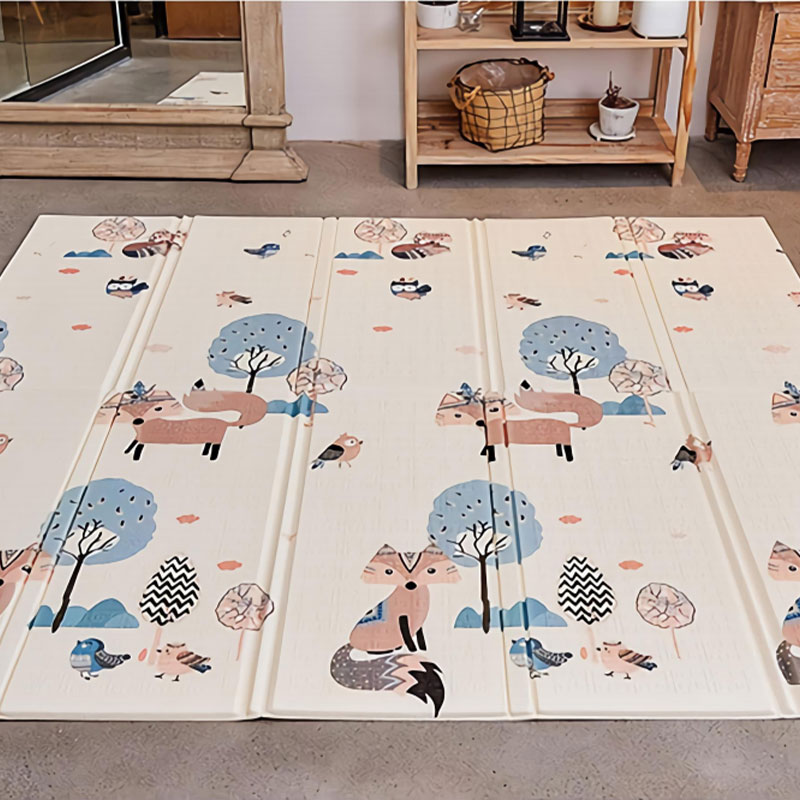 Thickened baby crawling mat baby home foldable crawling matBaby crawling mats are soft mats designed for infants and toddlers and are often used to provide a safe and comfortable space for crawling and moving around. Some mats...View Product →
Indoors and Outdoors: Two Different Jobs
Indoor mats and outdoor mats share a family resemblance but answer different requirements. Indoors, the priorities are cushioning, a non-slip backing that holds on smooth flooring, and a print that suits the room rather than fighting it. A mat used daily under a play table also needs to tolerate crumbs, crayon marks, and the occasional juice spill.
Outdoors, weight and moisture control take over. A picnic or camping mat is judged by how small it packs, how quickly it wipes free of sand and grass, and whether damp ground stays on the outside. A moisture-proof backing is the difference between a comfortable afternoon and a soggy one.
Many families end up with one of each, and that is a reasonable outcome rather than a marketing compromise.
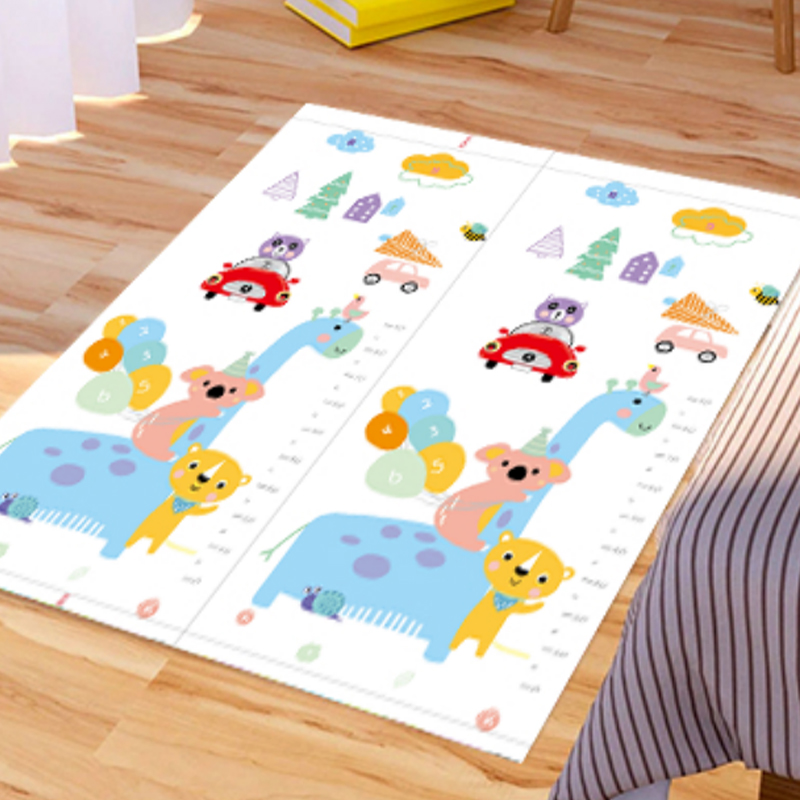 Outdoor picnic mat picnic mat moisture-proof mat camping picnic spring trip matOutdoor picnic mats an indispensable equipment in outdoor activities, especially in spring trips, camping, or family gatherings, they can provide a comfortable rest an...View Product →
Cleaning and Everyday Care
Most crawling mats are designed to be wiped rather than laundered, and a few simple habits keep them looking new for years:
- wipe with a damp cloth and mild soap; avoid solvents, bleach, and abrasive pads
- clean spills promptly, before liquid reaches the seam between film and foam
- let the mat dry fully on both sides before folding it away
- avoid leaving the mat in direct sun for long periods, which dulls printed colors
- check the edges and hinges now and then for lifting film or small tears
Parents often ask whether a mat can be rinsed or hosed down. If you want the short answer, our article on whether baby mats are waterproof and wipeable covers the surface behaviour in more detail, including what the film layer can and cannot tolerate.
What to Ask a Manufacturer Before Ordering
For importers, distributors, and brands buying in volume, the questions move from the nursery floor to the production line. The following list is the one we work through with new customers, and it usually settles a specification in a single conversation:
- Which foam core is required, and at what density and thickness?
- What film structure sits on top, and is it printed on the surface or laminated after printing?
- Which composite route will be used — extrusion, solvent-free, or dry lamination?
- What print width is needed, and how many colors does the design use?
- What are the tolerances for length, width, and thickness across a full production run?
- How will the mats be packed for export, and how many pieces per carton?
Our own line is organized around the film side of this product. Two five-color presses and two six-color presses handle the decorative layer, with a maximum printing width of 2400 mm. A 2300 mm extrusion laminator, a 2100 mm solvent-free laminator, and a 1350 mm dry laminator cover the three composite routes most orders require, while high-speed slitters and inspection equipment finish the work. Mats, wall stickers, and printed composite films made on this equipment ship to customers in Europe, the Americas, Africa, and across Southeast Asia.
If you would like to see how that capability is organized, the product and factory overview at Anhui Morning Language Science and Technology Materials Co., Ltd. is a reasonable place to start, and our team is always willing to discuss a specific specification directly.
Frequently Asked Questions
Are crawling mats waterproof?
The foam core and backing are waterproof, and the printed surface resists spills. The vulnerable point is the edge, where water can seep between the film and the foam if a mat is left wet for hours. Wiping and air drying solves almost every case.
What thickness is best for a baby?
For a baby from tummy time to crawling, 1 cm to 1.5 cm over a hard floor is a practical range. Thicker mats are more comfortable over concrete; thinner mats are easier to store and better suited to travel.
Can one mat be used both indoors and outdoors?
It can, but the compromise shows. An indoor mat is heavier and less portable; an outdoor mat is thinner and lighter. Many families keep a thick mat at home and a foldable moisture-proof mat for trips.
How do I keep the print from fading?
Keep the mat out of prolonged direct sunlight, clean with mild soap rather than solvents, and avoid dragging furniture across the surface. Good print adhesion, not just good ink, is what makes the difference over time.
A crawling mat is a small purchase with a long service life, and the difference between a disappointing one and a dependable one rarely comes down to the pattern. It comes down to the foam core, the printed film, the backing, and the honesty of the specification behind them.
Whether you are a parent choosing a mat for a first birthday or a buyer sourcing a private-label program, the same principle applies: define the job the mat has to do, then match the materials to it. If you have a specification in mind and would like a manufacturer's view on what is realistic, send it over — we are happy to talk through the details.