

 English
 Français
 русский
 عربى
عربى Español
Some materials announce themselves; decorative material film rarely does. It is the printed layer that makes a plain wall read as marble, or the surface that makes a play mat feel softer than the foam underneath. We manufacture composite packaging and decorative films in Guangde, Anhui, and since 2019 we have printed, laminated and slit this material almost every working day. What follows is our practical view of what decorative material film is, how the different families are built, where each one works best, and what to check before you commit to a specification.
Content
What Is Decorative Material Film?
Decorative material film is a thin, flexible plastic layer, usually PET, BOPP, VMPET or a combination of them, that has been printed, coated or laminated so it can change how a surface looks and, often, how it performs. Some grades arrive with an adhesive backing and a release liner, ready to press onto a wall, a door panel or a piece of furniture. Others are sold as plain rolls to factories that laminate them onto foam or board before the finished product reaches a shelf.
Two names get used almost interchangeably in the trade: colour printing film and printed composite film. The difference is usually structural. A single-layer printed film has a base, an ink design and sometimes a protective coating. A composite film adds further layers, such as a metallised layer for a soft pearl sheen, an adhesive layer, a foam layer or a barrier layer, and those extra layers are what give the finished material its strength, softness or moisture resistance. We keep a longer technical overview of the definition, applications and future trends of decorative material film on our news page for readers who want to go deeper.
The important point is that all of this is decided at the factory rather than on site. Colour, texture, gloss level and adhesion are fixed before the roll ships, which is why two films that look identical on a sample card can behave very differently after a year on a sunlit wall.
The Main Types of Decorative Material Film
In our own production we group decorative film into a few practical families. The table below is the simplified version we use when a customer is new to the category and wants to know what is possible.
| Type of decorative film | Typical build | Where it usually goes |
|---|---|---|
| Marble and tile effect film | Printed film with pressure-sensitive adhesive and release liner | Walls, kitchen splash areas, furniture fronts, rental refreshes |
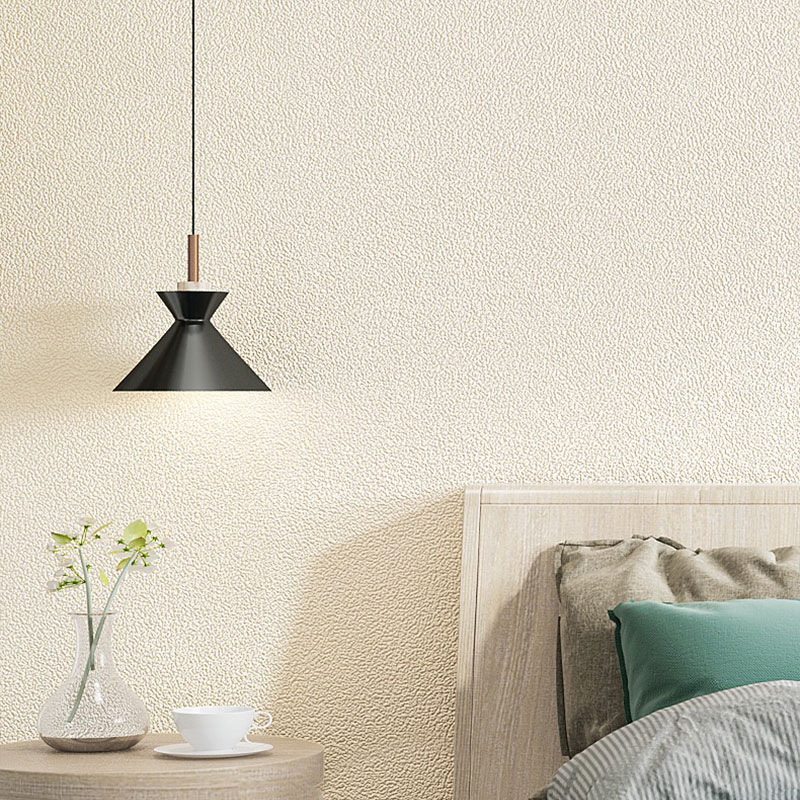
| Burlap and linen texture film | Printed or embossed film with a woven-look surface | Living rooms, feature walls, tatami surrounds, headboards |
| Colour printing film | Single-layer printed film on PET or BOPP base | Packaging, labels, gift wrap, general decoration |
| Printed composite film | Multi-layer laminate of printed film, adhesive and barrier layers | Construction, packaging, industrial panel surfaces |
| Foam-backed decorative film | Printed top film laminated to EPE or XPE foam | Crawling mats, picnic mats, floor mats |
The lines between these families are softer than the table suggests. A linen-textured film can be laminated onto foam and sold as a floor mat, and a marble print can be supplied without adhesive as a surfacing material for board. If your project sits between two columns, that is normal. Tell us the end use and we will work backwards from there.
How Decorative Material Film Is Made
Decorative film is not printed once and finished. It normally passes through three stages, and each one has its own trade-offs.
- Printing. The design goes onto the base film on a five- or six-colour press. Width matters here: our widest press runs to 2400 mm, which helps when a customer needs fewer seams across a large panel.
- Lamination. The printed film is bonded to another layer. Extrusion lamination, solvent-free lamination and dry lamination suit different combinations of ink, film and substrate, so a film destined for foam is not built the same way as one that goes straight onto a wall.
- Slitting and inspection. The finished roll is cut to the width the customer needs and checked. Thickness consistency, print registration and roll tension decide whether the film behaves well on someone else's machine.
Our equipment covers that chain in-house: two five-colour and two six-colour presses, a 2300 mm extrusion laminator, a 2100 mm solvent-free laminator, a 1350 mm dry laminator, high-speed slitters and product inspection equipment. In plain terms, we can print wide, laminate in more than one way and finish the roll without passing it between workshops.
Where Decorative Material Film Is Used
The same material keeps turning up in places that have very little to do with each other. These are the three groups we see most often.
Wall decoration and quick interior refreshes
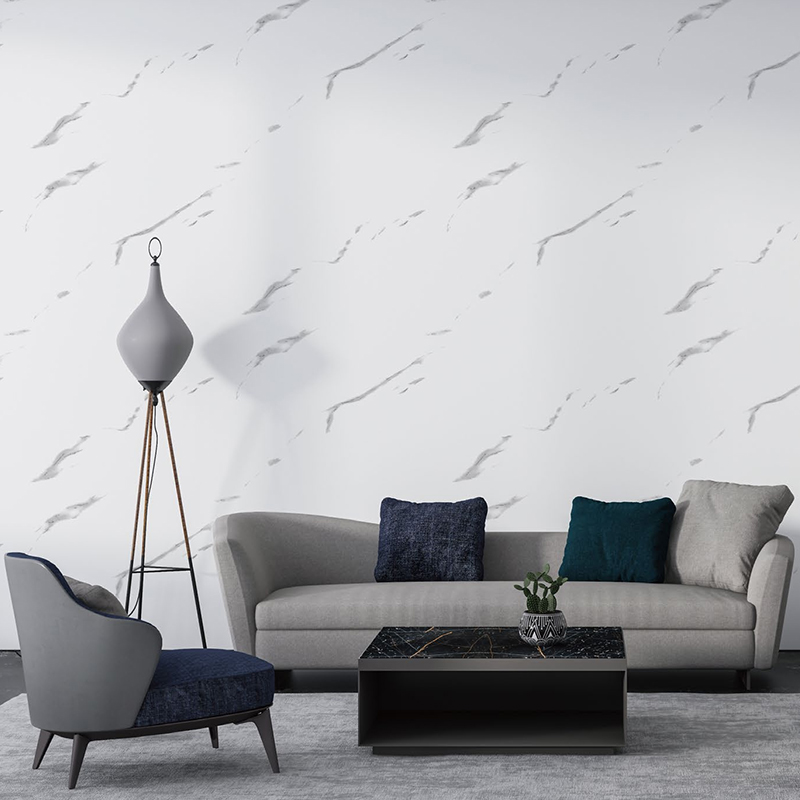
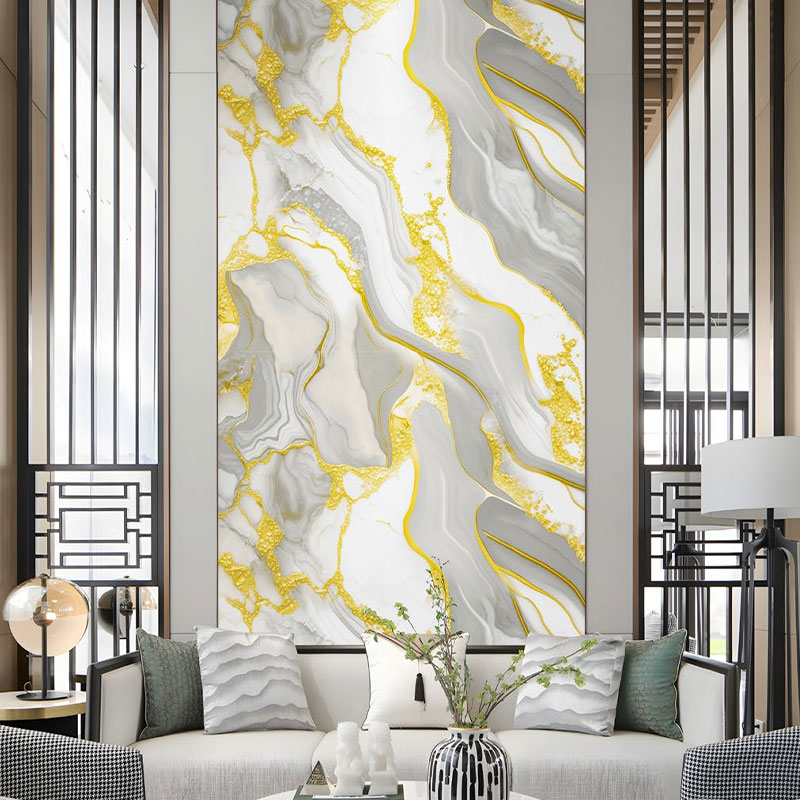
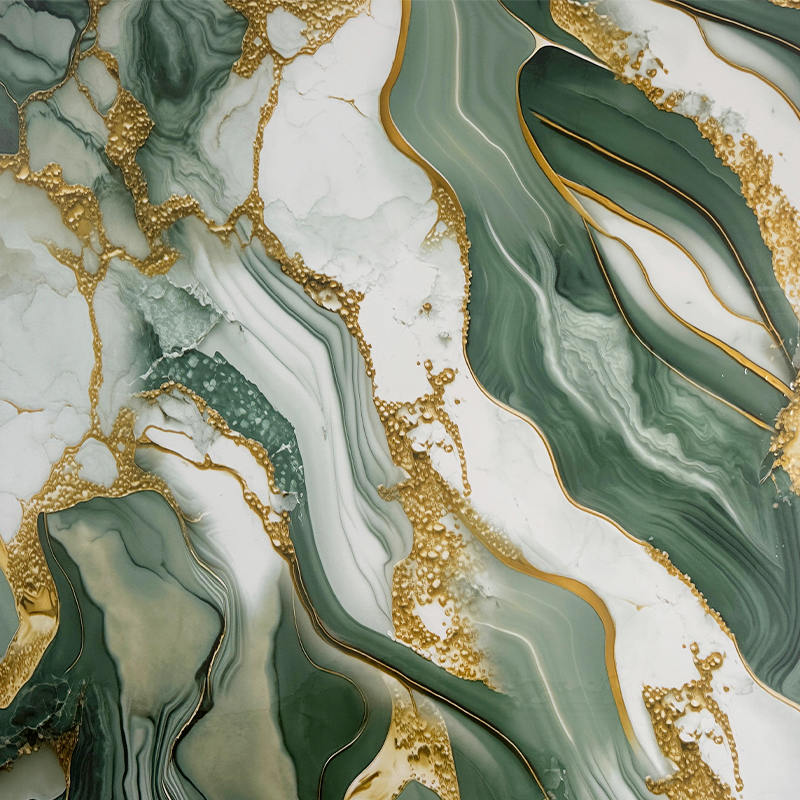
Wall film is the most familiar use. A marble or tile effect film can cover a tired splashback, an old counter front or a rented flat's wall without dust, cement or a contractor. The PVC waterproof and moisture-proof grades we make are aimed at damp, high-traffic spots such as kitchens, bathrooms and utility areas, where paper-based products tend to fail. Linen and burlap textures work better in living rooms and bedrooms, where the goal is warmth rather than shine.
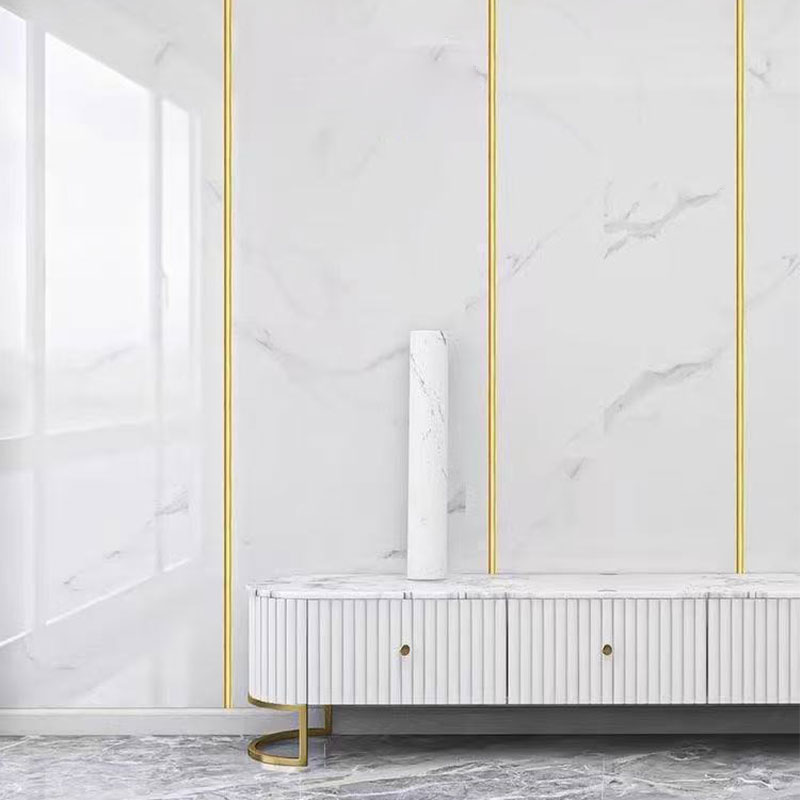 PVC Waterproof Marble-Effect Wall Sticker for Kitchens and BathroomsA printed PVC wall film with marble/tile look, made for damp kitchens, bathrooms and utility spaces needing moisture-proof, wipe-clean, removable surface upgrades.View Product →
Floors, play areas and the outdoors
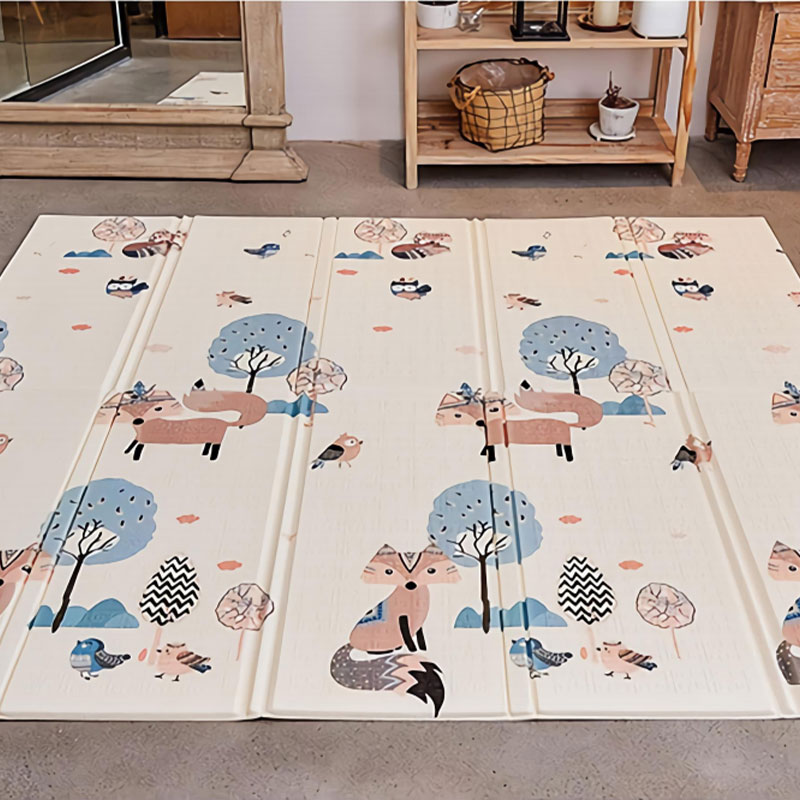
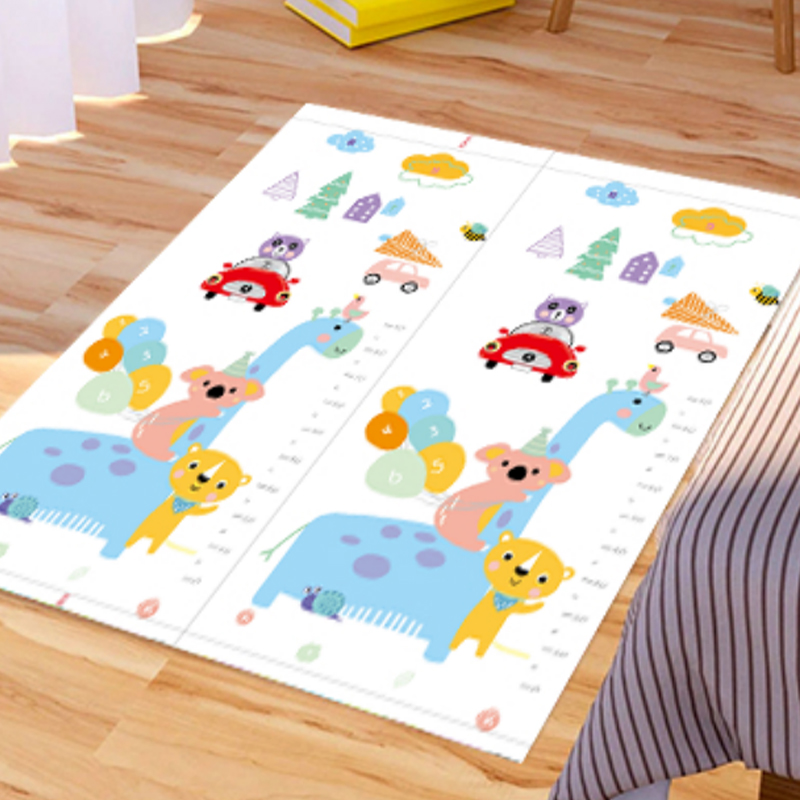
When the printed film is laminated onto EPE or XPE foam, it becomes something you can sit, crawl or lie on. Parents want a mat that cushions a fall, wipes clean and folds away easily; campers want the same sheet to keep ground moisture out of a sleeping bag. Both come down to one question: how good is the bond between the printed film and the foam, and how does it hold after repeated folding? That is the kind of product where film and foam have to be designed together rather than bought separately.
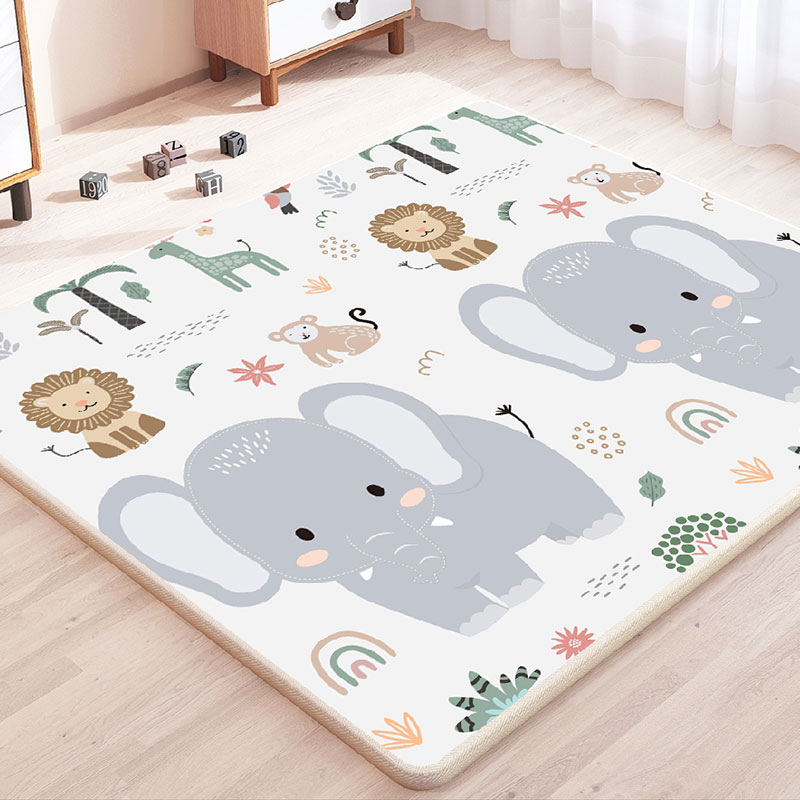 XPE Folding Printed Foam Mat for Home and PlayA cartoon-print XPE floor mat with matte PE film, folding compactly for home, mall or amusement-park crawling and floor play.View Product →
Packaging, construction and industrial surfaces
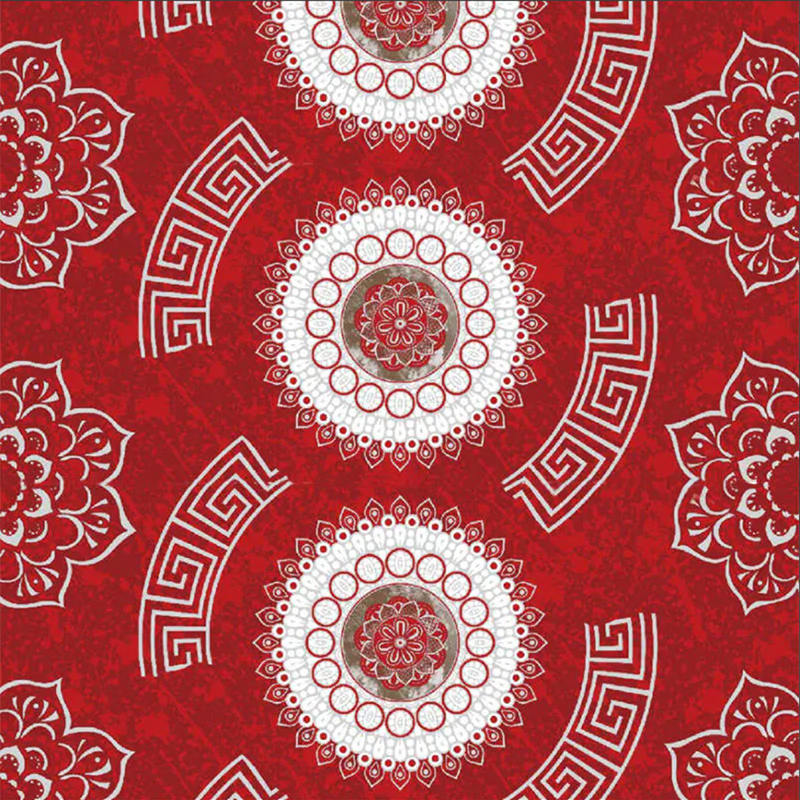
Not every roll ends up on a wall. Large-format colour printing film is bought by converters, packaging printers and building material suppliers who need a printed surface that can be laminated, bonded or wrapped at speed. Here the conversation is less about pattern and more about ink adhesion, roll width, core size and how the film behaves under heat, because a visible seam or a slipping web costs real money on a production line.
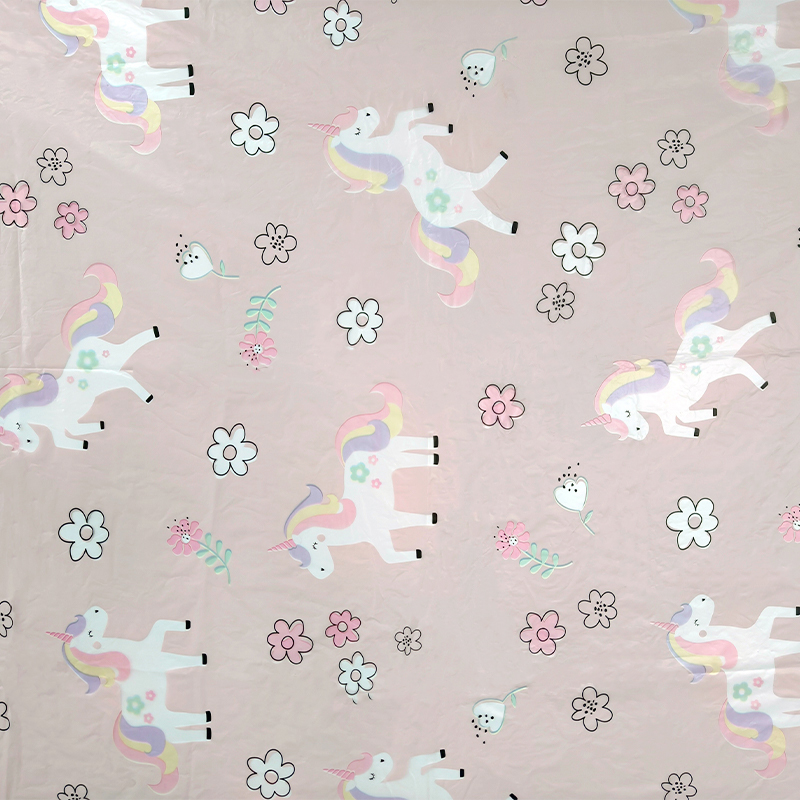 Large-Format Color Printing Film for Packaging and Industrial LaminationWide-format printed composite film in PE, BOPP, PET and VMPET materials, with strong ink adhesion for packaging, insulation and building wraps.View Product →
How to Choose the Right Decorative Material Film
Choosing a film is easier when you work in this order.
- Start with the surface, not the pattern. Is it flat, curved, damp, sunlit or walked on? That answer rules out more options than any colour chart will.
- Decide whether you need adhesive. Self-adhesive film is convenient for small jobs and awkward shapes; uncoated printed film laminated in a factory gives a cleaner, more durable result on large flat panels.
- Match the structure to the environment. Humid rooms want a waterproof film and a moisture-resistant adhesive. Outdoor use needs water and light resistance as well as a printable face.
- Check the practical numbers. Roll width, core diameter, thickness, print repeat length and roll length decide whether the material runs on your equipment without waste.
- Ask for a sample and test it the way you will actually use it. A sample left on a kitchen wall for two weeks tells you more than a specification sheet.
We would rather send three samples and a short list of questions than take an order that disappoints. That habit has served us well with buyers in Europe, the Americas, Africa and across Southeast Asia.
Questions We Hear Most Often
Is decorative material film the same as wallpaper?
Not quite. Wallpaper is paper-based and applied with paste. Decorative film is a plastic sheet, often self-adhesive, which is why it can go into a bathroom or onto a metal surface where paper would not last.
How long does it last?
There is no single number. Indoors, on a smooth and properly prepared surface, a good film lasts considerably longer than the same film applied over dust or rough plaster. Preparation does as much work as the material.
Can it be used outdoors?
Some grades can. Moisture-proof picnic and camping sheets are a good example, but they need the right backing and an ink system chosen with water and sunlight in mind. Tell us the use case and we will match the build.
What sizes can you produce?
Our presses print up to 2400 mm wide and we slit down to the width your line requires. Formats such as 300 mm x 2100 mm and 600 mm x 2400 mm are common starting points rather than limits.
Decorative material film is a small part of a finished room, a packed box or a folded mat, yet it is often the part that decides whether the whole thing looks and feels considered. If you are weighing up options for a product, we are glad to talk through the structure before you order, because that conversation usually saves both time and material.
You can also browse the full range of films and mats we manufacture to see how these materials come together as finished products.