

 English
 Français
 русский
 عربى
عربى Español
Content
- 1 What Decorative Material Film Actually Is
- 2 The Main Types of Decorative Film Material and What Sets Them Apart
- 3 Where Decorative Surface Film Gets Used in the Real World
- 4 Surface Textures and Patterns Available in Decorative Film
- 5 Key Quality Indicators When Buying Decorative Film Material
- 6 Lamination Methods: How Decorative Film Is Applied to Substrates
- 7 Common Problems With Decorative Film and How to Prevent Them
- 8 Environmental Considerations and Greener Alternatives
What Decorative Material Film Actually Is
Decorative material film is a thin, flexible sheeting product applied to the surface of substrates such as MDF, particleboard, plywood, metal, or rigid foam to give them an aesthetic finish. Rather than painting, lacquering, or veneering a surface from scratch, manufacturers and fabricators laminate a pre-printed, pre-textured film onto the base material, achieving a consistent, high-quality appearance at a fraction of the time and cost required by traditional finishing methods.
The film itself is a multi-layer construction. At its core is a carrier layer — most commonly PVC, PET, or PP — that provides mechanical strength and flexibility. On top of that sits a printed decoration layer, which can replicate wood grain, stone, fabric, solid color, metallic, or abstract patterns with photographic precision. A protective topcoat or laminate layer seals the surface, providing resistance to scratches, UV fading, moisture, and chemicals. Some decorative surface films also include a backing adhesive layer, making them self-adhesive for direct application.
This combination of aesthetics and protection makes decorative film materials a fundamental component in modern furniture manufacturing, interior paneling, retail displays, and architectural cladding. The global decorative film market spans everything from the thin wrap on a budget wardrobe door to the precision-laminated panels in a luxury hotel lobby.
The Main Types of Decorative Film Material and What Sets Them Apart
Choosing the right type of decorative laminate film starts with understanding the base material each product is built on, as this determines flexibility, durability, print capability, and compatibility with different lamination processes.
PVC Decorative Film
Polyvinyl chloride (PVC) is the most widely used base material for decorative surface film worldwide. PVC film is soft, highly flexible, and exceptionally easy to emboss with surface textures ranging from wood grain and stone grain to fabric and leather patterns. Its elongation at break — often between 100% and 250% — means it can wrap cleanly around curved profiles, moulding edges, and furniture legs without cracking or peeling. PVC decorative film is compatible with hot melt adhesives, EVA lamination, and contact cement, making it adaptable to a wide range of factory processes. The material is available in thicknesses from 0.12mm to 0.60mm and in widths up to 1,400mm. Its main trade-off is environmental: PVC contains chlorine and typically requires plasticizers, which has pushed some markets toward alternatives.
PET Decorative Film
Polyethylene terephthalate (PET) decorative film is valued for its superior clarity, stiffness, and chemical resistance compared to PVC. It is chlorine-free and more environmentally favorable, which has made it the preferred decorative film material in markets with strict chemical regulations such as the European Union. PET film is commonly used in high-gloss applications — the "piano black" or mirror finishes found on premium kitchen cabinetry and consumer electronics panels are typically PET-based. It bonds excellently to acrylic and glass substrates and is highly resistant to yellowing under UV exposure. The main limitation is lower flexibility compared to PVC, which makes it less suited for profile wrapping and more appropriate for flat panel lamination.
PP (Polypropylene) Decorative Film
Polypropylene-based decorative film offers excellent food-contact safety and is commonly used for furniture panels in children's rooms, kitchen cabinet interiors, and healthcare furniture where low chemical emissions are a priority. PP film is stiffer than PVC but more flexible than PET, and it bonds well to both paper-backed and direct lamination processes. It is increasingly used in Scandinavian and German furniture manufacturing where E0-grade emission standards are the baseline requirement.
Acrylic Decorative Film
Acrylic surface film (also known as PMMA film) is the premium choice for applications demanding outstanding gloss, optical clarity, and color depth. It is used to create the ultra-high-gloss finishes seen on luxury kitchen doors, bathroom vanities, and high-end retail furniture. Acrylic decorative material film is significantly harder and more scratch-resistant than PVC or PET alternatives, with a surface hardness typically rated at 2H–3H pencil hardness. It is also self-healing to a limited degree — fine surface abrasions can be buffed out. The trade-off is cost: acrylic film is considerably more expensive than PVC or PET film, and it requires precise lamination conditions to avoid delamination.
Melamine-Impregnated Decorative Paper Film
Melamine film — technically a resin-impregnated decorative paper rather than a pure polymer film — is one of the oldest and most widely used decorative surface materials in the panel furniture industry. It is pressed directly onto MDF or particleboard under heat and pressure, creating a permanently bonded, hard surface that is highly resistant to heat, moisture, and abrasion. Melamine decorative film is the standard surface material for flat-packed furniture, office desks, and kitchen cabinet carcasses. It cannot be used for profile wrapping and has limited flexibility, but for flat panel applications it delivers outstanding durability at very low cost.
Where Decorative Surface Film Gets Used in the Real World
Decorative film materials are used across a remarkably broad range of industries. Below are the primary application categories and what specific demands each places on the film product.
| Application | Typical Film Type | Key Performance Requirements |
| Furniture panel lamination | PVC, Melamine, PET | Adhesion strength, color consistency, scratch resistance |
| Kitchen cabinet doors | Acrylic, PET, PVC | High gloss, moisture resistance, heat tolerance |
| Profile and edge wrapping | PVC | High elongation, flexibility, hot melt compatibility |
| Wall panels and cladding | PVC, PET | UV stability, fire rating, pattern repeatability |
| RV and automotive interiors | PVC | Lightweight, flexibility, vibration resistance |
| Retail display and signage | PET, Acrylic | Print clarity, light transmission, surface hardness |
| Flooring overlay | PVC wear layer film | Abrasion resistance, dimensional stability, slip rating |
| Healthcare and lab furniture | PP, PET | Chemical resistance, low emission, anti-bacterial coating |
Surface Textures and Patterns Available in Decorative Film
One of the most commercially important attributes of decorative material film is the range of visual effects it can reproduce. Modern digital printing and precision embossing technology allow film manufacturers to create surfaces that are visually indistinguishable from natural materials at normal viewing distances.
Wood Grain Patterns
Wood grain decorative film is the single most popular category globally. Manufacturers use high-resolution rotogravure or digital printing to reproduce the grain, knot structure, and color variation of specific timber species such as oak, walnut, teak, pine, and maple. The best wood grain films additionally use synchronized embossing — a process where the embossed texture is precisely aligned with the printed grain lines — to create a tactile surface that both looks and feels like real timber. This technique, known as EIR (Embossed in Register), significantly elevates the realism of the finished surface.
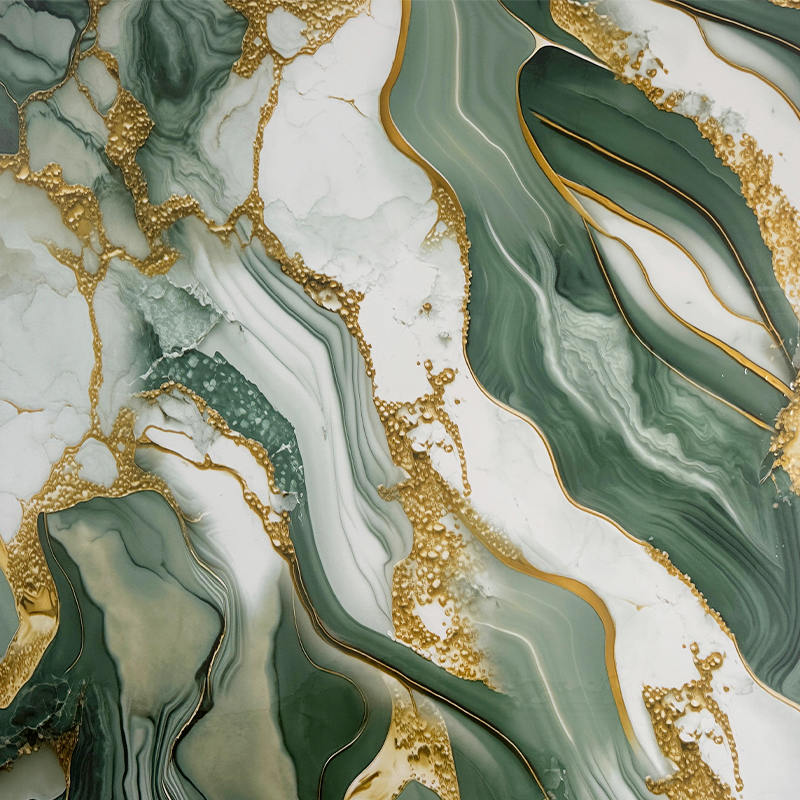
Stone and Marble Patterns
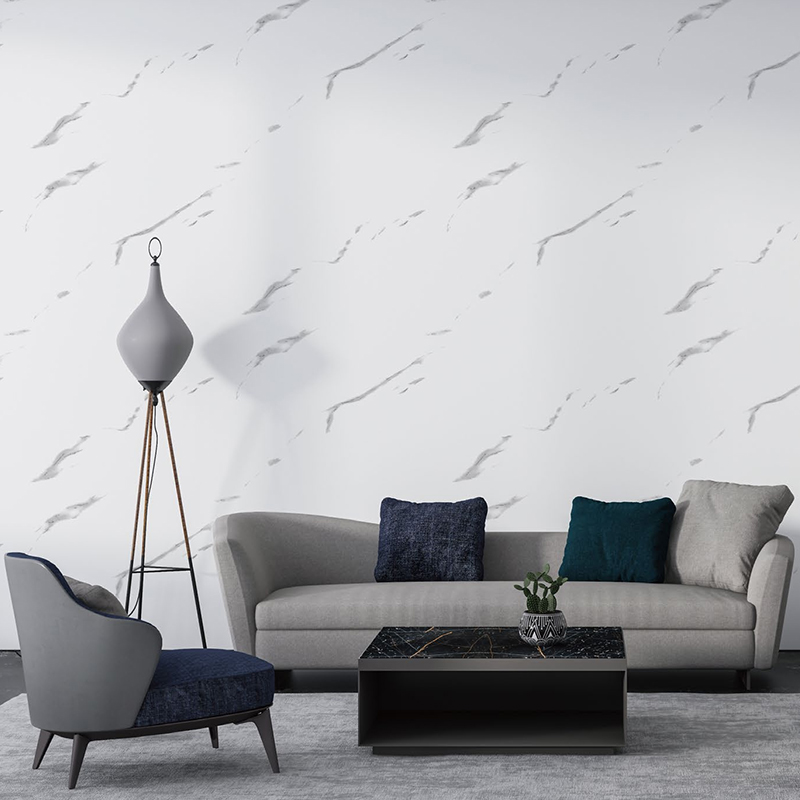
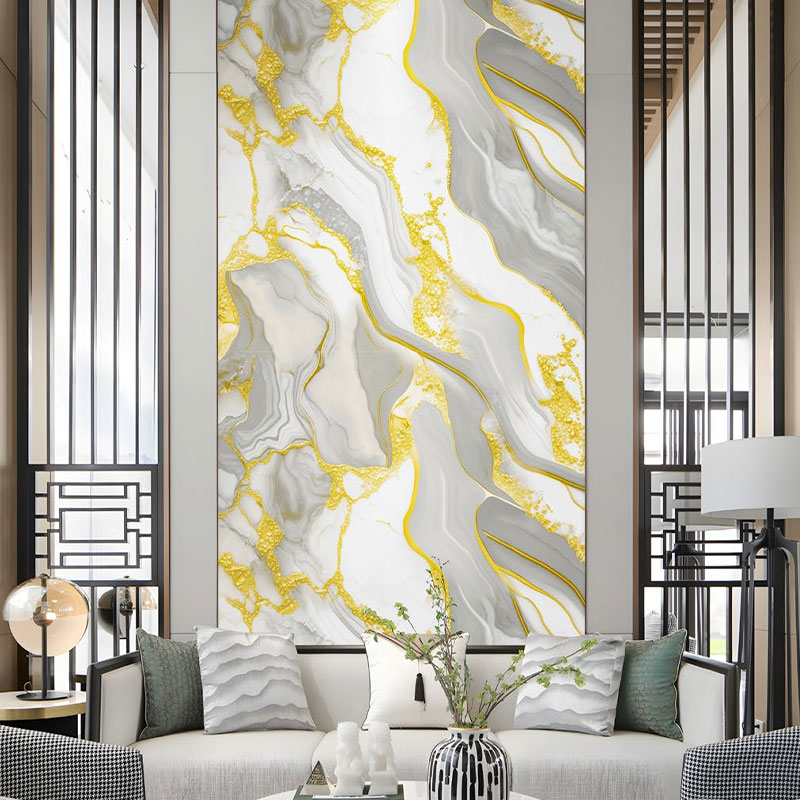
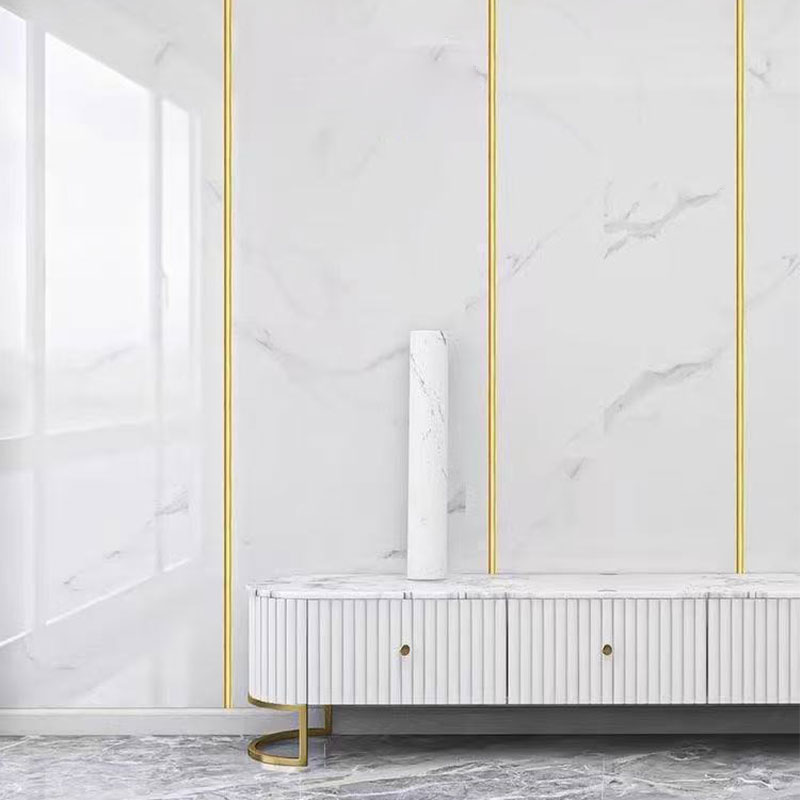
Stone-effect decorative surface film reproduces marble, granite, slate, travertine, and concrete appearances with remarkable accuracy. These films are used on furniture tops, bathroom vanity panels, wall cladding, and retail counters where the weight and cost of real stone would be prohibitive. A polished marble-look PET film can create a surface that passes a casual visual inspection as genuine stone while weighing less than 1kg per square meter. Surface gloss levels range from near-mirror for polished marble effects to heavily matte for slate and concrete appearances.
Solid Color and Metallic Finishes
Solid color decorative film in matte, satin, or gloss finishes is widely used in modern and minimalist furniture design. These films deliver perfectly uniform color consistency across large panel batches — something that is difficult to achieve with spray painting. Metallic decorative films use vacuum-metallized or pigment-based inks to create brushed aluminum, aged brass, chrome, and rose gold effects that are popular in kitchen cabinetry hardware panels, retail fixtures, and hospitality interiors.
Fabric and Textile Patterns
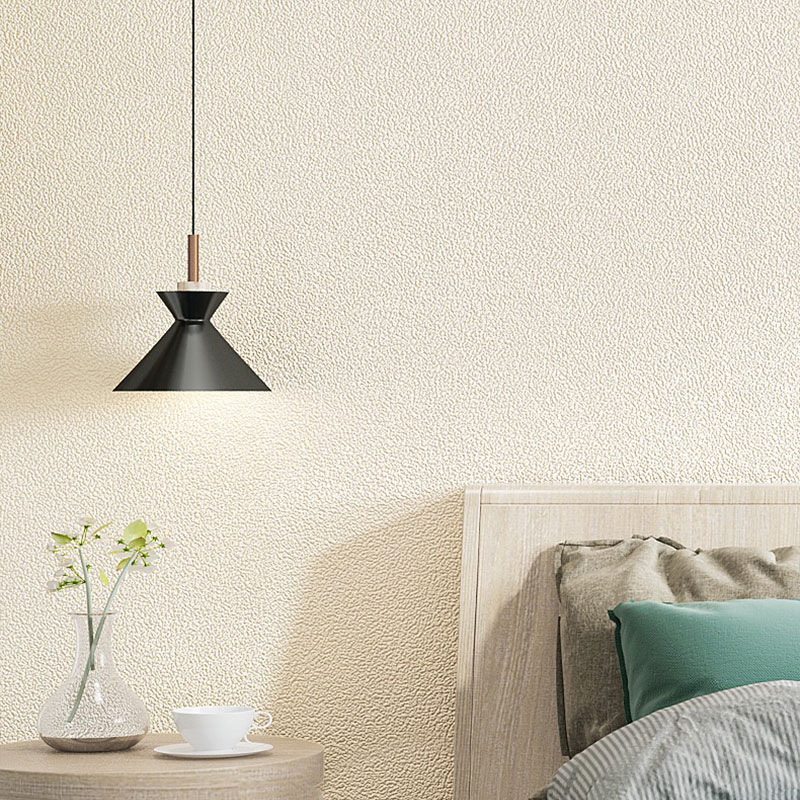
Fabric-effect films — including linen grain, woven texture, canvas grain, and carpet grain patterns — bring the visual warmth of textiles to hard surfaces without any of the maintenance issues real fabric involves. These films are heavily used in bedroom furniture, wall panels, speaker enclosures, and RV interiors where a soft, tactile visual impression is desired. The embossed texture of these films creates real surface depth that catches light at different angles, making the effect convincing even at close range.
Key Quality Indicators When Buying Decorative Film Material
Purchasing decorative laminate film for production use requires more than selecting a pattern you like. These are the technical quality factors that determine whether a film will perform reliably at scale and meet end-user expectations over time.
- Color consistency (Delta E): Delta E measures how much the color varies between rolls, batches, or production runs. For furniture manufacturing, a Delta E below 1.5 is generally required to ensure panels from different production batches can be used in the same furniture piece without visible color mismatch. Always request batch color data from suppliers before approving a film for production.
- Adhesion strength: The bond between the film and its substrate must resist peeling under thermal cycling, humidity changes, and mechanical stress. A peel adhesion test (typically measured in N/25mm) should exceed 8N/25mm for most furniture applications and 12N/25mm for high-stress environments such as kitchen or bathroom cabinetry.
- Surface abrasion resistance: Measured using the Taber Abraser test, this indicates how many cycles of abrasion the film surface can withstand before showing visible wear. For furniture surfaces, a minimum of 300 cycles at 500g load is typically required; flooring applications demand 2,000 cycles or more.
- UV resistance: Poor UV stability causes the film to yellow, fade, or chalk over time when exposed to natural or artificial light. Request accelerated weathering test results — specifically the color change (Delta E) and gloss retention after 200–500 hours of xenon arc exposure. Films used near windows or in retail environments should have a Delta E below 3 after 300 hours.
- Emission certification: Decorative films used in indoor furniture must comply with formaldehyde and VOC emission standards. Look for E0 or E1 certification under GB 18580 for the Chinese market, CARB Phase 2 for North America, or REACH/EN 717-1 compliance for Europe. GREENGUARD Gold certification is increasingly required by major retail furniture buyers globally.
- Thickness tolerance: Consistent film thickness across a roll and between rolls is critical for automated lamination processes. Thickness variation beyond ±5% can cause uneven adhesive distribution, visible surface undulation, and press setting inconsistencies. Request a thickness tolerance certificate from your supplier.
Lamination Methods: How Decorative Film Is Applied to Substrates
The method used to apply decorative material film to a substrate significantly affects the final quality of the laminated surface. Each method has specific requirements in terms of film type, adhesive, equipment, and substrate preparation.
Short-Cycle Hot Press Lamination
This is the most common method used in panel furniture manufacturing. The film, coated with a heat-activated adhesive, is placed onto the substrate panel and pressed in a heated platen press for 20–60 seconds at temperatures between 140°C and 180°C. The process is fast, consistent, and scalable to high production volumes. It works best with flat panels and requires films with good thermal stability and consistent adhesive coat weight. Melamine film and most PVC flat-lamination films are specifically engineered for this process.
Vacuum Membrane Pressing
Vacuum membrane pressing uses a flexible silicone membrane to press the decorative film onto three-dimensional routed panels, raised-panel door fronts, and contoured surfaces under vacuum pressure. The film is heated until pliable, then the vacuum draws it tightly over all surface contours including recessed edges and carved details. This method requires high-elongation PVC decorative film — typically 150% elongation or greater — to conform to complex profiles without tearing or whitening at sharp corners.
Roll-to-Roll Continuous Lamination
For long runs of continuous panels, sheeting, or flooring, roll-to-roll lamination feeds both the film and the substrate through a series of heated rollers that apply consistent pressure across the full width of the material. This method is highly efficient for flooring underlays, wall sheeting, and flexible panel products. It demands very consistent film thickness and width tolerances to prevent edge tracking or wrinkling on the lamination line.
Profile Wrapping
Profile wrapping is used to apply decorative film to linear moulding profiles, door frames, skirting boards, and edge banding. The substrate profile passes through a wrapping machine that applies hot melt adhesive to the profile surface, then guides the film around the profile using a series of rollers and guide blocks. The film must have sufficient flexibility to wrap around the profile's cross-sectional shape without creasing, and its edges must adhere firmly to the back face of the profile. PVC decorative film dominates this application due to its superior conformability.
Common Problems With Decorative Film and How to Prevent Them
Even high-quality decorative surface film can underperform if the application process or storage conditions are not properly managed. Here are the most frequently encountered problems and their root causes.
- Delamination or peeling edges: Usually caused by insufficient adhesive activation temperature, substrate surface contamination (dust, oil, or moisture), or storing laminated panels in high-humidity environments before the adhesive has fully cured. Ensure substrate moisture content is below 8% and press temperatures are calibrated regularly.
- Bubbles or blistering under the film: Trapped air or outgassing from the substrate creates bubbles beneath the film surface. This is most common with freshly manufactured MDF that hasn't fully off-gassed, or when lamination line speeds are too fast to allow complete adhesive wetting. Slow down the lamination speed or allow substrate panels to condition for 24–48 hours before laminating.
- Color variation between rolls: Different production batches of the same film SKU can exhibit visible color shifts, especially in solid colors and light wood grain patterns. Always request batch color data before production and maintain consistent lighting conditions when doing visual quality checks.
- Cracking at wrapped corners: When PVC film cracks or whitens at profile corners during wrapping, the film has exceeded its elongation limit. This can be caused by using too-thin film, applying the film at low ambient temperatures, or wrapping profiles with excessively tight radii. Switch to a higher-elongation film grade or preheat the film to 50–60°C before wrapping.
- Surface hazing or loss of gloss: Gloss-finish films can develop haze or micro-scratches during stacking, handling, or packaging. Use interleaving paper between panels and avoid sliding panels across each other. For acrylic and high-gloss PET films, apply a protective peel-off film during production and only remove it at the point of installation.
Environmental Considerations and Greener Alternatives
Environmental scrutiny of decorative material film has intensified significantly in recent years, particularly around PVC-based products. Buyers in European and North American markets increasingly require suppliers to disclose the plasticizer content of their films, confirm the absence of phthalate plasticizers, and provide lifecycle assessment data. Several specific developments are reshaping the market.
Phthalate-free PVC film using DINP or DOTP plasticizers is now the mainstream standard in European furniture manufacturing, replacing the legacy DEHP and DBP plasticizers that were restricted under REACH regulations. These next-generation plasticizers deliver comparable softness and flexibility with significantly lower toxicological profiles.
Bio-based PVC and PET films using partially bio-derived monomers are entering the market, allowing manufacturers to reduce the fossil-carbon content of their decorative film materials while maintaining full compatibility with existing lamination equipment. While these products currently carry a cost premium, regulatory trends and consumer demand for sustainable interior products are expected to drive adoption over the coming decade.
Recyclable mono-material decorative films — where all layers use the same polymer family to enable end-of-life recycling — are being developed by several major film manufacturers. These products aim to address the difficulty of recycling conventional multi-layer films where PVC, PET, and adhesive layers cannot be easily separated. For buyers building long-term sustainability strategies into their supply chains, specifying mono-material decorative film is a meaningful step toward a more circular material lifecycle.